Introduction: A Significant Judicial Turning Point
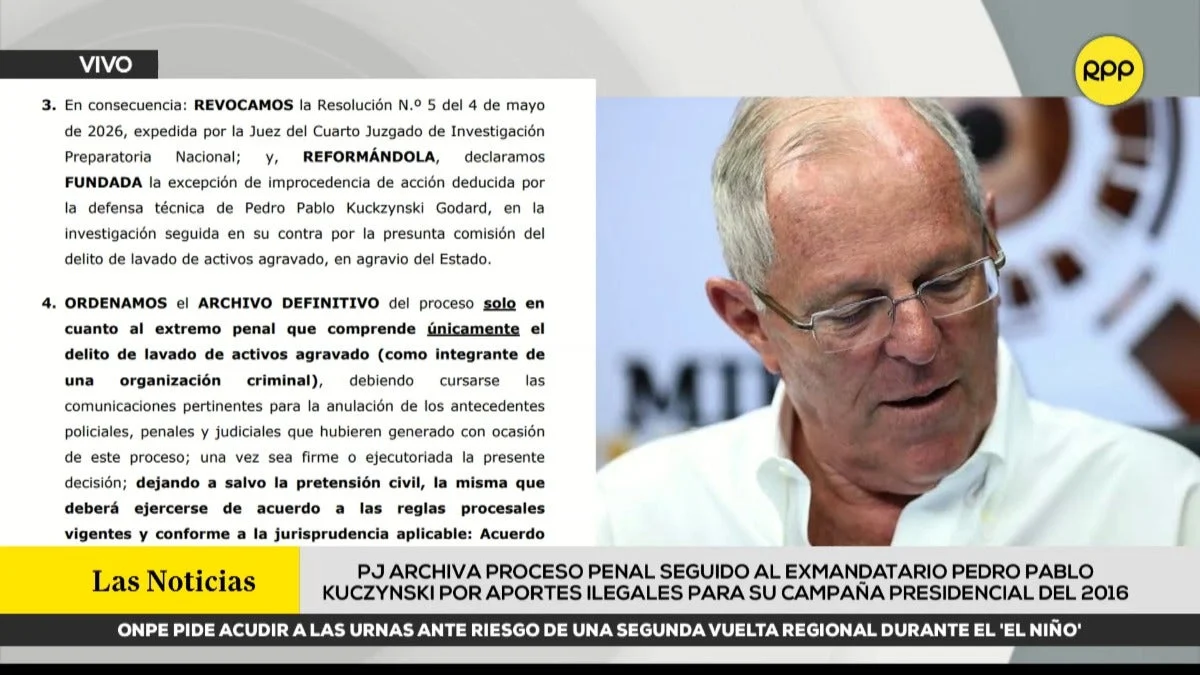
In a major legal development for former Peruvian President Pedro Pablo Kuczynski (PPK), the Third National Penal Chamber of Appeals has issued a landmark ruling, ordering the definitive archiving of criminal proceedings against him. The case, which centered on allegations of irregular financing for his 2016 presidential campaign, has been a focal point of Peru’s high-profile anti-corruption investigations for years.
By declaring the appeal filed by the former president "founded," the appellate court effectively reversed a previous decision by Judge Margarita Salcedo. The legal victory centers on the dismissal of charges related to aggravated money laundering and illicit association for criminal purposes. This ruling not only alters the trajectory of the ongoing investigations into Kuczynski but also raises significant questions regarding the evidentiary threshold required for prosecuting political figures in complex financial crimes.
The Core of the Legal Ruling
The resolution, dated August 20, provides a detailed legal justification for the termination of these specific charges. The Third National Penal Chamber of Appeals concluded that the arguments presented by Kuczynski’s defense team—specifically through a "motion of impropriety of action"—were sufficient to invalidate the prosecution’s theory of the case regarding the alleged money laundering and criminal association.
Key Judicial Findings:
- Reversal of Prior Decision: The court overruled Judge Margarita Salcedo’s May 4 decision, which had initially deemed the defense’s motion as "unfounded."
- Dismissal of Charges: The ruling explicitly mandates the "definitive archiving" of the case concerning the 2016 campaign financing irregularities.
- Expungement of Records: The court ordered the relevant authorities to proceed with the cancellation of all police, criminal, and judicial records generated by this specific process, effectively clearing the former president’s record regarding these specific allegations.
While the court cleared Kuczynski of these charges, it left the door open for the Attorney General’s Office and the Public Prosecutor’s Office to pursue civil reparations if they deem it appropriate, provided they follow established legal frameworks and jurisprudence.
Chronology of the Case: From Campaign to Courtroom
The legal saga surrounding Pedro Pablo Kuczynski is deeply intertwined with the broader "Lava Jato" investigations that have rocked Peruvian politics for nearly a decade.
2016: The Presidential Campaign
Kuczynski, an economist and former investment banker, ascended to the presidency in 2016. However, the subsequent years were marked by intense scrutiny into the funding sources of his electoral campaign. Prosecutors alleged that certain contributions were not properly declared and that the structures used to channel these funds amounted to money laundering.
2018–2020: Resignation and Judicial Scrutiny
Following a series of political crises and mounting pressure from the opposition, Kuczynski resigned from the presidency in 2018. The resignation accelerated the judicial proceedings against him, leading to house arrest and various restrictions on his movement as prosecutors built their case regarding his ties to the Odebrecht scandal and alleged irregularities in campaign financing.
2024: The Appellate Breakthrough
For years, the legal team representing PPK argued that the charges brought by the Public Ministry lacked the "impropriety of action"—essentially arguing that the facts as described by the prosecution did not constitute a crime under the Peruvian Criminal Code. The May 2024 decision by Judge Salcedo initially maintained that the case should proceed to trial. However, the August 20, 2024, ruling by the Third National Penal Chamber of Appeals marks the first time a high-level court has decisively struck down the core criminal charges of money laundering and illicit association in this specific investigation.
Supporting Data and Legal Context
The legal maneuver used by Kuczynski’s defense—the excepción de improcedencia de acción (exception of impropriety of action)—is a critical tool in the Peruvian judicial system. It allows a defendant to argue that even if the facts presented by the prosecutor were true, they do not constitute a crime under existing law.
Analyzing the "Criminal Organization" Narrative
Much of the prosecution’s case against Kuczynski relied on the premise that he led a "criminal organization" established specifically to facilitate money laundering. The appellate court’s decision to strike down the "illicit association" charge is significant because it challenges the prosecution’s broad application of criminal organizational theory.
Legal analysts note that the court’s decision suggests a growing judicial demand for higher standards of proof regarding the intent and the structure of alleged criminal organizations. By failing to provide sufficient evidence that Kuczynski’s 2016 campaign was a front for a criminal enterprise, the prosecution’s case collapsed under the scrutiny of the appellate chamber.
Official Responses and Stakeholder Positions
The ruling has ignited a firestorm of debate within the Peruvian legal and political spheres.
The Defense Perspective
Kuczynski’s legal counsel has consistently maintained that the allegations were politically motivated and lacked a firm foundation in the law. Upon the release of the August 20 resolution, the defense expressed satisfaction, stating that the court finally recognized that the actions of their client did not meet the legal definition of the crimes charged. They have long argued that the prosecution engaged in "excessive criminalization" of standard political campaign activities.
The Prosecutor’s Position
The Attorney General’s office, while respecting the independence of the judiciary, has faced criticism regarding its failure to secure a conviction in this instance. The Public Prosecutor’s Office indicated that they are reviewing the decision to determine if there are grounds for further legal recourse, though the "definitive" nature of the ruling makes further appeals difficult.
The Public Prosecutor (Procuraduría)
The Public Prosecutor assigned to the case has been given clear instructions by the court: the dismissal of the criminal charges does not preclude a separate civil claim. If the state determines that there was financial damage caused to the treasury, the Procuraduría maintains the right to file for civil damages, a process that operates on a lower burden of proof than the criminal trial.
Implications for the Peruvian Justice System
The archiving of this case carries profound implications for the ongoing anti-corruption efforts in Peru.
1. The Threshold of "Money Laundering" Charges
This ruling serves as a warning to prosecutors that "money laundering" charges—often used as an umbrella term in Peruvian politics—require specific, traceable evidence of illicit origins and clear mechanisms of concealment. The judiciary is signaling that political campaign finance irregularities must be addressed with surgical precision, rather than broad-brush allegations of organized crime.
2. Impact on Other Political Trials
Peru is currently managing dozens of corruption cases involving former presidents, ministers, and business leaders. This ruling sets a precedent that could embolden other defendants to file similar exceptions of impropriety of action. Legal experts suggest that this could lead to a wave of dismissals if other cases are found to suffer from similar evidentiary gaps.
3. Restoration of Reputational Standing
For Kuczynski, a former President who has spent years under the shadow of these allegations, the legal victory is a significant step toward reclaiming his public standing. While the civil aspects of the case remain, the removal of the "criminal" label regarding money laundering and illicit association is a major victory.
4. Public Trust and Judicial Independence
The debate continues regarding whether this decision reflects a fair application of the law or a sign of judicial leniency toward the political elite. Critics of the ruling argue that it undermines the "Lava Jato" investigations, while supporters claim it is a necessary check on overreaching prosecutors who have prioritized public perception over legal rigor.
Conclusion
The decision by the Third National Penal Chamber of Appeals represents a decisive shift in the judicial proceedings against Pedro Pablo Kuczynski. By ordering the definitive archiving of the money laundering and illicit association charges, the court has reinforced the necessity of adhering to strict legal definitions in criminal prosecutions.
While the civil liability of the former president remains an open question, the criminal shadow that has hung over his post-presidential life has been significantly diminished. As Peru continues to navigate the complexities of its anti-corruption agenda, this case will undoubtedly serve as a reference point for years to come—a reminder of the delicate balance between the state’s duty to prosecute corruption and the fundamental right of every citizen to a fair and evidence-based legal process.