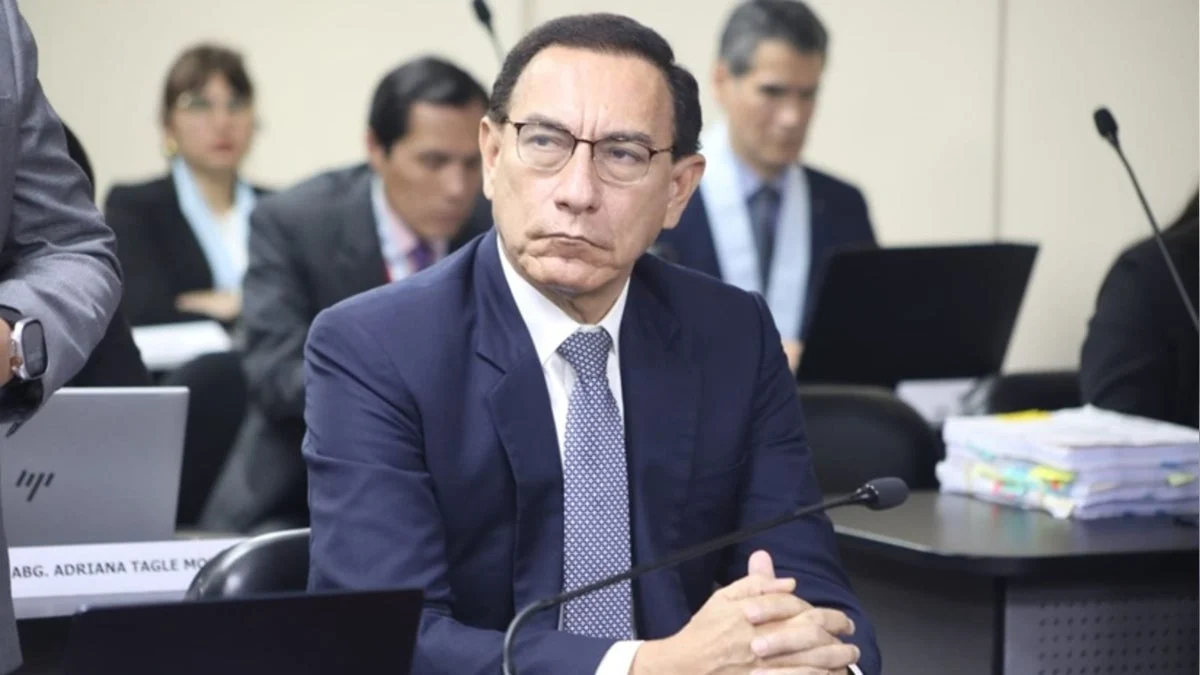
The Peruvian judicial system reaches a critical juncture this Thursday, August 20, as the Third Penal Chamber of the National Superior Court of Specialized Penal Justice begins the formal appellate review of the corruption case involving former President Martín Vizcarra. The session, scheduled for 11:00 a.m., represents a pivotal moment in one of the most high-profile corruption trials in the country’s recent history.
Vizcarra, who served as President of Peru from 2018 to 2020, was sentenced in the first instance to 14 years of effective imprisonment for the crime of bribery. The charges stem from his tenure as the Regional Governor of Moquegua, a period during which prosecutors successfully argued that he accepted S/ 2.3 million in illicit payments. As the legal teams prepare for oral arguments, the nation watches closely, balancing the implications of the verdict against the political legacy of the former leader.
The Core Allegations: Lomas de Ilo and the Moquegua Hospital
The prosecution’s case, which led to the 14-year sentence handed down by the Fourth National Penal Collegiate Court, rests on the assertion that Vizcarra engaged in a systemic "pay-to-play" scheme. During his time as Governor of Moquegua (2011–2014), Vizcarra allegedly facilitated the awarding of public infrastructure contracts to specific construction firms in exchange for substantial kickbacks.
Specifically, the court found evidence that the former governor solicited and received:
- S/ 1 million from the construction company Obrainsa in relation to the "Lomas de Ilo" irrigation project.
- S/ 1.3 million from the company ICCGSA regarding the construction of the Moquegua Regional Hospital.
According to the ruling delivered by Judge Fernanda Ayasta, these funds were not mere campaign contributions or professional fees, but calculated bribes designed to circumvent the standard public procurement processes. The judicial panel concluded that the evidence—ranging from bank records and testimonies from "collaborative witnesses" to internal corporate communications—was sufficient to prove that Vizcarra abused his authority for personal financial gain.
A Chronology of the Legal Battle
To understand the gravity of Thursday’s hearing, one must look back at the trajectory of the investigation that dismantled Vizcarra’s political career.
1. The Early Allegations (2020)
As Vizcarra’s presidency faced mounting pressure due to the COVID-19 pandemic and subsequent political instability, investigations into his past regional governance surfaced. Leaks from the "Club de la Construcción" investigations began to implicate him in bribery schemes tied to his time in Moquegua.
2. The Prosecution’s Formal Charge (2021–2023)
Following his impeachment and subsequent removal from the presidency in November 2020, the Attorney General’s office accelerated its investigations. In 2023, the prosecution formally requested a 15-year prison sentence, citing the severity of the corruption and the betrayal of public trust.
3. The First Instance Verdict (November 2024)
The Fourth National Penal Collegiate Court issued a landmark ruling, finding Vizcarra guilty of bribery. While the prosecution requested 15 years, the court settled on 14 years of effective imprisonment, citing the gravity of the institutional damage caused by the corruption.
4. Current Status: The Appeal (August 2025)
The defense, led by Vizcarra’s legal team, filed an immediate appeal, arguing that the first-instance verdict was based on biased testimony and lacked corroborating material evidence. The Third Penal Chamber of the National Superior Court of Specialized Penal Justice is now tasked with reviewing the lower court’s decision.
Supporting Data and Evidence
The prosecution’s case relies on a web of financial transactions and digital trails. Key evidence presented during the initial trial included:
- Financial Tracking: Forensic accounting revealed irregular cash flows that matched the timeline of the contract awards to Obrainsa and ICCGSA.
- Cooperating Witnesses: Former executives from the involved construction companies provided testimony detailing meetings at the Regional Government of Moquegua offices, where terms of the "commissions" were allegedly discussed.
- Digital Evidence: Emails and WhatsApp exchanges between company representatives and individuals within Vizcarra’s inner circle served as the "smoking gun" that tied the former president to the negotiations.
Conversely, the defense has maintained that these communications were misinterpreted and that the project awards were the result of legitimate administrative processes, suggesting that the "collaborative witnesses" provided false testimony to secure reduced sentences for their own legal infractions.
Official Responses and Legal Strategy
As the hearing approaches, the legal strategies of both parties have become clear.
The Defense: Pursuit of Absolution
The legal team representing Martín Vizcarra has stated that they intend to prove the existence of "procedural irregularities" during the first trial. Their strategy aims to:
- Discredit the testimony of key prosecution witnesses.
- Argue that the evidence provided by the construction firms is hearsay and lacks independent verification.
- Seek a complete reversal of the conviction, which would effectively mean an acquittal for the former president.
The Prosecution: Seeking Confirmation
The Public Ministry (Ministerio Público) remains steadfast in its position. The assigned Superior Prosecutor will argue that the 14-year sentence is proportionate to the severity of the crime. They contend that the ruling of the lower court was legally sound, thoroughly vetted, and supported by a robust body of evidence that leaves no room for reasonable doubt.
Personal Context: Health and Detention
Martín Vizcarra is currently incarcerated at the Barbadillo prison in the Ate district of Lima. This facility is notable for housing other high-profile figures, including former presidents. The former president’s health has recently become a point of concern; only days before this scheduled hearing, he was transferred to a medical facility to receive urgent treatment for renal complications.
While the court has allowed for his virtual participation in the hearing to accommodate his medical status, the logistical challenge of balancing his health needs with the rigors of the legal process remains a complicating factor. His family and legal team have expressed concerns regarding his physical well-being, though the judiciary has maintained that the judicial process must proceed according to the established timeline.
Broader Implications for the Peruvian State
The outcome of this appeal carries immense weight for the Peruvian judicial landscape and the country’s ongoing struggle with systemic corruption.
1. Strengthening the Anti-Corruption Framework
If the appellate court upholds the 14-year sentence, it will serve as a significant precedent, demonstrating that even former heads of state are not immune to the consequences of corrupt regional governance. It validates the efforts of the "Lava Jato" and "Club de la Construcción" investigative teams, which have faced political pushback for years.
2. Political Instability and Public Trust
Peru has experienced an era of profound political instability, with a succession of presidents facing impeachment, prison, or exile. The trial of Vizcarra—who was once seen as a reformist figure—further deepens public cynicism regarding the political class. A final verdict will, at the very least, provide a sense of legal closure to one chapter of this volatility, though it may also ignite renewed debate over the "weaponization" of the judicial system.
3. The Future of Judicial Independence
The Third Penal Chamber’s decision will be scrutinized not only for its legal logic but also for its perceived independence. In a country where judicial institutions are often the target of political maneuvering, the court’s ability to render a decision free from outside pressure is paramount.
As the hearing begins this Thursday, the eyes of the nation are fixed on the courtroom. Whether the Third Penal Chamber confirms, modifies, or overturns the 14-year sentence, the decision will undoubtedly leave a lasting mark on Peru’s institutional history, serving as a reminder that the wheels of justice—though often slow—continue to turn in the face of executive power.