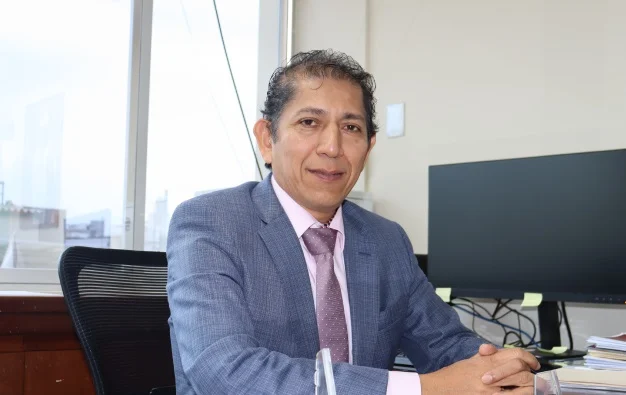
Lima, Peru – December 10, 2024 – The Ministry of Energy and Mines (MINEM) has officially reinstated Jorge Enrique Soto Yen to lead the General Directorate of Mining (DGM), a pivotal role in shaping Peru’s critical mining sector. This reappointment, formalized through Ministerial Resolution No. 432-2026-MINEM/DM and published on October 7th, marks Soto Yen’s second tenure at the helm of the DGM, having previously served in this capacity from January 2023 to July 2024. His return signifies a strategic move by the ministry to leverage his experience and expertise during a period of significant demands and evolving opportunities within Peru’s mining landscape.
The MINEM’s decision was underpinned by rigorous vetting processes. The Office of Human Resources at MINEM confirmed that Soto Yen meets all the established qualifications and requirements for the directorial position. Furthermore, the Office of Institutional Integrity conducted an assessment, determining that he is not involved in any real conflicts of interest, thus clearing the path for his renewed leadership. This thorough evaluation process underscores the ministry’s commitment to ensuring that key leadership roles are filled by individuals with the necessary credentials and ethical standing.
Soto Yen’s extensive academic background and professional career have equipped him with a comprehensive understanding of the mining industry and its intricate relationship with public administration and sustainable development. His reappointment is expected to inject a renewed sense of direction and stability into the DGM, an entity tasked with the promotion and management of numerous procedures crucial to the sector’s operational framework.
A Proven Leader Returns: Soto Yen’s Background and Previous Tenure
Jorge Enrique Soto Yen is a distinguished mining engineer, holding a degree from the National University of Piura. His academic pursuits have extended to advanced studies, including a doctorate in Mining, Civil Works, and Environment from the University of Oviedo in Spain. He further enhanced his qualifications with master’s degrees in Geographic Information Systems (GIS), Quality, Environment, and Occupational Risk Prevention, as well as Public Management from the Polytechnic University of Catalonia. His educational foundation is complemented by specialized training in public management and business, providing him with a multifaceted perspective essential for navigating the complexities of the mining sector.
During his previous tenure as Director General of Mining, Soto Yen was instrumental in overseeing the DGM’s operations from January 2023 to July 2024. This period likely saw him grappling with the immediate challenges and opportunities facing the Peruvian mining industry. His prior experience in this critical leadership role provides a valuable foundation for his current return, allowing him to hit the ground running and address ongoing initiatives and emerging issues without a significant learning curve. The continuity of leadership, particularly with a figure familiar with the DGM’s internal workings and external relationships, is often viewed as a positive factor in an industry that requires long-term planning and consistent policy implementation.
The resolution formalizing his reappointment, signed by the Minister of Energy and Mines, Guillermo Shinno Huamaní, emphasizes the ministry’s confidence in Soto Yen’s ability to effectively lead the DGM. This confidence is likely rooted in his past performance, his deep understanding of mining regulations, and his strategic vision for the sector’s future.
The Mining Landscape: Navigating Current Challenges and Opportunities
Soto Yen’s return to the DGM comes at a time of heightened expectations and significant pressures for the sector. The General Directorate of Mining plays a crucial role in Peru’s economic engine, serving as the primary interface for promoting and managing a wide array of procedures vital to the mining industry. This includes everything from the initial stages of exploration and permitting to the ongoing oversight of operational mines.
One of the foremost challenges facing the DGM, and by extension Soto Yen, is the imperative to invigorate mineral exploration. Peru boasts a rich geological endowment, but unlocking its full potential requires sustained investment in exploration activities. This involves creating an environment conducive to both domestic and international exploration companies, offering them the necessary regulatory clarity, fiscal incentives, and security to undertake risky but potentially rewarding ventures. The goal is to ensure a robust pipeline of future mining projects that can transition into development and production phases, thereby sustaining Peru’s position as a leading global mining power.
Furthermore, the current global economic climate and the fluctuating prices of key metals present both an opportunity and a challenge. Soto Yen has publicly articulated the need to strengthen institutional frameworks to capitalize on favorable metal price cycles. This means having efficient administrative processes, clear legal guidelines, and proactive government support to facilitate the rapid and responsible development of mining projects. The ability of the DGM to expedite approvals, resolve disputes, and provide technical assistance can directly impact the profitability and feasibility of new ventures.
The strategic importance of certain minerals, often referred to as strategic minerals, is also a key consideration. These are minerals essential for modern technologies, renewable energy, and national security. Peru has the potential to be a major global supplier of several of these minerals, and Soto Yen’s leadership will be crucial in developing policies and incentives that encourage their exploration and extraction. This requires a forward-looking approach, anticipating future global demand and positioning Peru to meet it.
Soto Yen’s Vision: Strengthening Institutions and Fostering Investment
In his recent public pronouncements, Soto Yen has emphasized a dual approach: strengthening institutional capacity and fostering a more attractive investment climate. He has underscored the critical need for public policies that are not only supportive but also proactive in guiding the sector’s development. This includes a comprehensive review of existing regulations to identify and remove unnecessary bureaucratic hurdles that can stifle innovation and delay project timelines.
Incentives for investment are another cornerstone of his strategy. These can take various forms, including tax benefits, streamlined permitting processes, and guarantees for investors. The objective is to signal to the global mining community that Peru is a stable, predictable, and profitable destination for capital. This requires close collaboration between MINEM, other government agencies, and the private sector to create a cohesive and supportive ecosystem.
Moreover, Soto Yen recognizes that robust infrastructure is a prerequisite for successful mining operations. This encompasses not only transportation networks like roads and railways but also reliable energy supply and access to water resources. The DGM, in coordination with other relevant ministries and agencies, will likely play a role in advocating for and facilitating the development of such critical infrastructure projects, which are often essential for bringing remote mining deposits into production.
The transformation of Peru’s geological potential into tangible new projects and development opportunities is a complex undertaking. It requires a holistic strategy that addresses the interconnectedness of policy, investment, infrastructure, and community engagement. Soto Yen’s vision appears to be centered on building this comprehensive framework, ensuring that Peru can effectively leverage its natural resources for sustainable economic growth and social progress.
Addressing Key Sectoral Impediments and Promoting Sustainability
Beyond the promotion of exploration and investment, Soto Yen’s agenda also includes tackling the persistent obstacles that hinder the mining industry’s progress. A significant area of focus will be the regulatory environment. Peru’s mining regulations, while designed to ensure responsible operations, can sometimes become overly complex or slow-moving, creating uncertainty and increasing project costs. Soto Yen’s leadership is expected to drive efforts to streamline these regulations, making them more efficient and predictable without compromising environmental and social standards.
Accompanying the development of exploration projects is another critical task. Expanding national mineral reserves is essential for long-term production sustainability. This means supporting companies that are actively engaged in exploration, providing them with the necessary technical and administrative assistance. The DGM’s role in this regard is to facilitate the discovery of new deposits, which will be vital for Peru’s future mining output and its contribution to global mineral supply chains.
A pressing issue that demands attention is the challenge of illegal mining and the broader push for formalization and sustainability. Illegal mining activities pose significant environmental and social risks, often operating outside the purview of regulatory oversight. Soto Yen’s leadership will be crucial in advancing initiatives aimed at formalizing these operations, bringing them into the legal framework where they can be subject to environmental protection measures, labor laws, and tax obligations. This is not only about combating illicit activities but also about ensuring that all mining operations in Peru adhere to principles of responsible and sustainable extraction.
The push for a formal and sustainable mining sector involves more than just regulatory compliance. It encompasses a commitment to environmental stewardship, respect for indigenous rights and local communities, and the implementation of best practices in mine closure and rehabilitation. Soto Yen’s renewed leadership at the DGM provides an opportunity to reinforce these commitments and ensure that Peru’s mining sector continues to evolve towards greater responsibility and long-term viability.
Implications of Soto Yen’s Return
Jorge Soto Yen’s reappointment to lead the General Directorate of Mining carries several significant implications for the Peruvian mining sector. Firstly, it signals a commitment to continuity and experience at a crucial juncture. His previous tenure suggests a deep understanding of the DGM’s operational dynamics and the challenges facing the industry. This continuity can foster greater stability and predictability, which are highly valued by investors.
Secondly, his focus on strengthening institutional capacity and streamlining regulatory processes is a direct response to long-standing industry concerns. If successful, these efforts could lead to more efficient project development, reduced investment risks, and a more competitive mining sector.
Thirdly, his emphasis on promoting exploration and the development of strategic minerals aligns with Peru’s national development goals and its potential to play a more significant role in the global supply of critical resources. This strategic vision could attract new investments and foster innovation in the mining value chain.
Finally, his commitment to addressing illegal mining and promoting sustainable practices reflects a broader societal demand for responsible resource extraction. His leadership will be instrumental in navigating the complex social and environmental dimensions of mining, aiming for a balance between economic development and long-term sustainability.
The coming period will undoubtedly be demanding for Jorge Soto Yen and the DGM. However, his return to a leadership position, backed by his extensive qualifications and stated vision, offers a promising prospect for the continued growth and responsible development of Peru’s vital mining sector. The success of his tenure will be measured not only by the volume of mineral production but also by the sector’s ability to contribute to sustainable economic growth, environmental protection, and social well-being across Peru.