Panama City, Panama – In a significant demonstration of regional leadership, Peru’s National Environmental Certification Service for Sustainable Investments (Senace) has showcased its pioneering advancements in modernizing environmental certification processes, particularly through the strategic integration of artificial intelligence (AI) and digital transformation. The impactful presentation, delivered at the "XIII Regional Policy Dialogue on Environmental and Social Licensing and Compliance in Latin America and the Caribbean," positions Senace as a leading entity in environmental assessment across the Latin American continent.
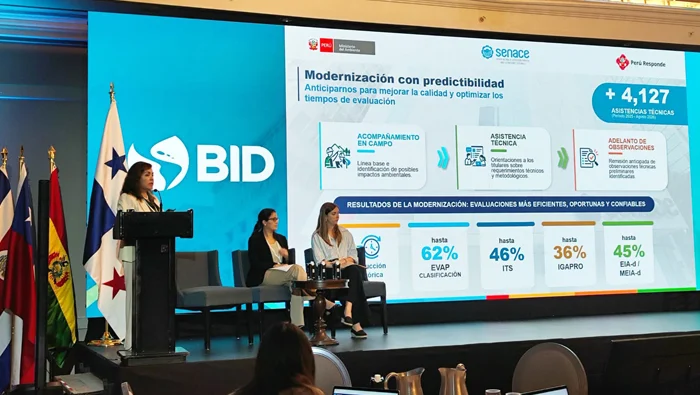
The event, held in Panama City, convened high-level environmental certification and oversight authorities from across the region. Senace’s executive president, Silvia Cuba Castillo, delivered a compelling keynote address titled "Modernization of the Environmental Licensing Process, Artificial Intelligence, and Digital Transformation." Her presentation highlighted Senace’s innovative approach, emphasizing transparency, robust technical expertise, and effective citizen participation in its operational framework.
Senace’s delegation detailed the implementation of cutting-edge intelligent applications, including its virtual assistant, Naya, a classification simulator, shared baseline data utilization, and AI applied to the admissibility phase of environmental assessments. These technologies are now integrated into the entirety of Senace’s environmental certification macro-process, significantly streamlining and enhancing the efficiency and rigor of its evaluations. The Peruvian delegation’s insights garnered considerable interest, sparking discussions on the potential for sharing these technological advancements to address the unique environmental certification challenges faced by other nations in the region.
"At Senace, we are dedicated to harnessing the power of technology to create tools that enhance the efficacy of our processes," stated Ms. Cuba. "We are committed to incorporating the voice of citizens into our evaluations and striving to provide a public service that aligns with the evolving needs of our nation. Our goal is to strike a delicate balance between economic growth and the imperative to protect our planet’s rich biodiversity, which is among the most valuable in the world."
Senace’s Strategic Vision: Modernization and Digital Transformation
The core of Senace’s presentation revolved around its multifaceted strategy to modernize environmental certification. This strategy is built on three interconnected pillars: technological innovation, digital transformation, and a steadfast commitment to transparency and citizen engagement.
Technological Innovation: Senace has actively embraced the potential of emerging technologies to revolutionize its operations. The development and implementation of AI-powered tools represent a significant leap forward. The virtual assistant, Naya, serves as a crucial interface for applicants and stakeholders, providing immediate access to information and guidance throughout the certification process. This not only improves user experience but also frees up human resources to focus on more complex technical assessments.
The classification simulator assists in accurately categorizing projects based on their potential environmental impacts, ensuring that appropriate levels of scrutiny are applied. The adoption of shared baseline data platforms promotes data standardization and accessibility, reducing redundancy and fostering a more cohesive understanding of environmental conditions. Furthermore, the application of AI in the admissibility phase streamlines the initial review of applications, identifying potential deficiencies early on and expediting the process for well-prepared submissions.
Digital Transformation: Beyond specific AI applications, Senace is undertaking a comprehensive digital transformation of its entire operational framework. This involves digitizing paper-based processes, establishing robust digital workflows, and ensuring seamless data management. The goal is to create a more agile, efficient, and accessible certification system. Digital transformation also extends to enhancing communication channels with stakeholders, providing real-time updates, and facilitating online submissions and consultations. This commitment to digitalization reflects a forward-thinking approach, ensuring Senace remains at the forefront of environmental governance in the digital age.
Transparency and Citizen Engagement: A cornerstone of Senace’s philosophy is its unwavering commitment to transparency and the meaningful participation of citizens. The organization understands that effective environmental governance requires the active involvement of all stakeholders. This commitment is manifested through various mechanisms, including public hearings, accessible information portals, and clear communication strategies. By fostering an environment of trust and openness, Senace aims to build consensus and ensure that environmental decisions are made with the collective good in mind. The integration of citizen feedback into the evaluation process not only strengthens the quality of assessments but also enhances the legitimacy and public acceptance of environmental certifications.
The XIII Regional Policy Dialogue: A Platform for Collaboration
The "XIII Regional Policy Dialogue on Environmental and Social Licensing and Compliance in Latin America and the Caribbean" served as a vital platform for fostering regional collaboration and knowledge exchange. The event brought together a distinguished assembly of environmental leaders, policymakers, and technical experts, all united by a shared commitment to strengthening environmental and social governance in the region.
The dialogue provided an invaluable opportunity for Senace to not only share its successes but also to learn from the experiences of other nations. The exchange of best practices, challenges, and innovative solutions is crucial for building a more resilient and sustainable future for Latin America and the Caribbean. The discussions underscored the growing recognition that effective environmental licensing and compliance are not merely regulatory hurdles but essential components of sustainable development, attracting responsible investment, and safeguarding natural resources for future generations.
Chronology of Senace’s Modernization Journey
Senace’s journey towards becoming a regional leader in environmental certification is marked by a strategic and consistent evolution:
- Founding and Mandate: Established as a public technical specialized entity, Senace was created to evaluate the environmental viability of large investment projects in Peru. Its autonomy and technical rigor are underpinned by its affiliation with the Ministry of Environment.
- Early Focus on Technical Rigor: In its initial phases, Senace concentrated on building a strong foundation of technical expertise, developing robust methodologies for environmental impact assessment, and ensuring compliance with national environmental regulations.
- Embracing Digitalization: Recognizing the transformative potential of technology, Senace began a systematic process of digitalizing its operations. This involved moving from paper-based systems to digital workflows, enhancing data management capabilities, and investing in IT infrastructure.
- Integration of Artificial Intelligence: The recent adoption of AI represents a significant acceleration in Senace’s modernization efforts. The development of tools like Naya, the classification simulator, and AI applications for admissibility demonstrate a proactive approach to leveraging cutting-edge technology.
- Regional Leadership and Knowledge Sharing: Senace’s participation and leadership in regional forums, such as the REDLASEIA, highlight its commitment to not only advancing its own processes but also contributing to the collective growth of environmental governance across Latin America. Its role in founding REDLASEIA and holding its first pro tempore presidency underscores this dedication.
Supporting Data and Evidence of Impact
While specific quantitative data on the impact of Senace’s AI integration was not detailed in the initial report, the qualitative outcomes and the interest generated at the forum provide strong evidence of its success. The following points support the claim of Senace’s advancements:
- Increased Efficiency: The implementation of AI-powered tools, such as Naya and the admissibility AI, is designed to significantly reduce processing times for environmental certifications. This translates to faster decision-making for investors and a more agile regulatory environment.
- Enhanced Accuracy: AI algorithms can process vast amounts of data and identify patterns that might be missed by human analysts, leading to more accurate and consistent environmental assessments. The classification simulator, for instance, aims to ensure that projects are assessed at the appropriate level of rigor.
- Improved Transparency and Accessibility: Digital platforms and virtual assistants like Naya make information more accessible to the public and project proponents. This transparency fosters greater trust and understanding of the environmental certification process.
- Focus on Biodiversity Protection: Senace’s stated commitment to balancing economic growth with the protection of Peru’s rich biodiversity, one of the world’s most diverse, indicates that its modernization efforts are aligned with crucial environmental conservation goals. The application of advanced evaluation techniques is key to achieving this balance.
- Regional Recognition: The significant interest generated by Senace’s presentation at the XIII Regional Policy Dialogue is a testament to the perceived value and innovation of its approach. The desire of other countries to learn from Peru’s experience speaks volumes about the effectiveness of its modernization strategy.
Official Responses and Perspectives
The positive reception of Senace’s presentation at the regional dialogue underscores the growing recognition of its innovative approach. The emphasis on AI and digital transformation reflects a broader trend in environmental governance, where technology is increasingly seen as a critical enabler of efficiency, transparency, and effectiveness.
Silvia Cuba Castillo’s statements encapsulate Senace’s forward-looking vision: "In Senace, we generate the tools that technology allows us, to give efficacy to the processes, incorporating the voice of the citizenry into the evaluations. We strive to provide a public service in line with the needs of the country, seeking the balance between economic growth and the protection of our biodiversity, one of the richest in the world." This quote highlights a dual focus on operational excellence and a deep-seated commitment to environmental stewardship.
The support from the Latin American Network of Environmental Impact Assessment Systems (REDLASEIA), with which Senace has had a foundational role, further validates its influence and collaborative spirit. The network’s objective is to foster regional cooperation and the sharing of knowledge in environmental impact assessment, a mission that Senace actively embodies.
Implications for Environmental Governance in Latin America and Beyond
Senace’s advancements carry significant implications for environmental governance across Latin America and potentially on a global scale:
- Setting a Regional Benchmark: Peru, through Senace, is establishing a new benchmark for environmental certification processes in the region. Its successful integration of AI and digital technologies offers a compelling model for other countries seeking to modernize their environmental regulatory frameworks.
- Accelerating Sustainable Development: By streamlining and enhancing the efficiency of environmental licensing, Senace’s approach can help accelerate sustainable development. Faster, more predictable, and more robust environmental assessments can attract responsible investment, leading to economic growth while ensuring environmental safeguards are maintained.
- Strengthening Environmental Protection: The use of advanced technologies like AI can lead to more accurate and comprehensive environmental impact assessments, resulting in better-informed decisions that protect biodiversity and natural resources.
- Fostering Regional Collaboration: The success of initiatives like REDLASEIA, with Senace’s active participation, highlights the importance of regional collaboration in addressing shared environmental challenges. By sharing best practices and technological innovations, countries can collectively enhance their environmental governance capabilities.
- Empowering Citizens: The emphasis on transparency and citizen participation ensures that environmental decisions are not only technically sound but also socially equitable and widely supported. Digital tools can further empower citizens by providing them with greater access to information and avenues for engagement.
- The Future of Environmental Certification: Senace’s trajectory suggests that the future of environmental certification will be increasingly defined by technological innovation, data-driven decision-making, and a commitment to open and participatory governance. The integration of AI and digital transformation is not merely an operational upgrade but a fundamental shift in how environmental responsibilities are managed.
In conclusion, Peru’s Senace has emerged as a significant innovator in the field of environmental certification. Its strategic embrace of modernization, particularly through the integration of artificial intelligence and digital transformation, not only enhances its own operational efficiency and effectiveness but also offers a powerful blueprint for other nations in Latin America and beyond. As the region continues to grapple with the complex challenges of balancing economic development with environmental protection, Senace’s leadership and pioneering spirit offer a beacon of progress and a testament to the transformative power of innovation in safeguarding our planet.