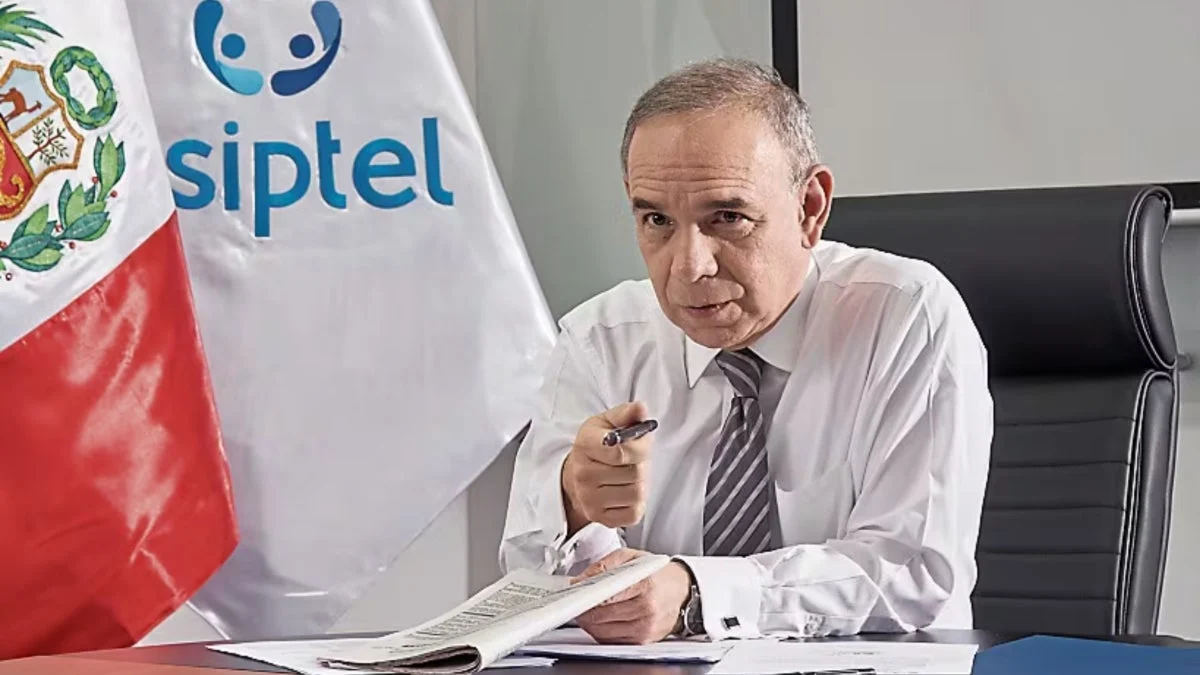
In a development that highlights the friction between regulatory independence and administrative oversight in Peru, Rafael Muente has officially resumed his duties as the president of the Supervisory Agency for Private Investment in Telecommunications (Osiptel). This marks his second return to the helm of the organization following a period of legal uncertainty. His reinstatement comes after the Tribunal of the Civil Service (TSC) modified a harsh dismissal order previously handed down by the Presidency of the Council of Ministers (PCM).
The saga, which has spanned nearly a year of administrative litigation, underscores the volatile nature of leadership within Peru’s key regulatory bodies. As of August 20, Osiptel confirmed that Muente is back in office, ending a nine-month absence that had left the agency’s leadership in a state of suspended animation.
The Core Facts: A Shift from Dismissal to Suspension
The legal pivot point for Muente’s return was a recent ruling by the Tribunal of the Civil Service. In November 2025, the PCM had issued a severe disciplinary sanction, ordering Muente’s immediate dismissal from his role as president of Osiptel. The charges were twofold: allegations of exercising undue influence over subordinate officials and failing to obtain proper administrative authorization for an international institutional trip.
However, upon reviewing the appeal filed by Muente’s defense, the Tribunal reached a distinct conclusion. The TSC found that the evidence presented by the PCM was insufficient to substantiate the claims of "undue influence." Specifically, the court ruled that there was no proof that Muente had coerced or improperly pressured other officials. The judges emphasized that a high-ranking position cannot, in isolation, be used as a basis to presume administrative wrongdoing.
While the Tribunal cleared his name regarding the allegation of influence, it upheld the finding concerning the unauthorized international travel. Consequently, the severe penalty of dismissal was commuted to a seven-month suspension without pay. Since Muente had already been out of office for nine months—surpassing the duration of the new sanction—the TSC’s ruling effectively paved the way for his immediate return.
Despite this partial victory, Muente’s legal team has signaled its intent to continue the battle, aiming to have the remaining sanction concerning the international trip overturned as well, arguing that the disciplinary process remains fundamentally flawed.
Chronology of a Regulatory Conflict
The recent events are merely the latest chapters in a prolonged series of clashes between Muente and the executive branch. Understanding the current context requires a look back at the timeline of his tenure:
- October 2024: The PCM orders a 365-day suspension for Muente without pay. The case centered on the agency’s expenditure of over S/ 57,000 for a "Senior Management Program" training course, which the government deemed an improper use of public resources.
- February 2025: After a four-month absence, the Tribunal of the Civil Service declares the 2024 suspension null and void. Osiptel defends the training program, arguing it followed all internal procurement protocols. Muente returns to his post.
- November 2025: The PCM launches a new disciplinary proceeding, citing the "undue influence" and "unauthorized travel" mentioned earlier, leading to his second removal from the presidency.
- August 20, 2026: Following the TSC’s decision to modify the dismissal to a seven-month suspension, Muente is reinstated as the head of Osiptel.
This history suggests a pattern of intense scrutiny by the PCM toward Osiptel’s leadership, raising questions about whether these administrative actions are objective disciplinary measures or symptomatic of broader political pressure.
The "War on Chips": Contextualizing the Friction
To understand why a regulator might face such consistent disciplinary hurdles, one must look at the nature of Osiptel’s recent policy shifts. Throughout his tenure, Rafael Muente positioned the agency as an aggressive advocate for consumer protection and security in the telecommunications sector.
Most notably, Muente spearheaded a campaign against the informal sale of SIM cards (chips). Under his leadership, Osiptel pushed for the strict prohibition of mobile chip sales in public spaces and informal markets, eventually resulting in the criminalization of such practices. This was a direct strike against a lucrative, albeit informal, sector of the telecom market.
Muente himself has not shied away from suggesting that these investigations are retaliatory. During his initial removal, he famously stated: "I have no doubt that I am an obstacle for many economic interests after having declared war on the street sale of chips." His argument is that by disrupting the illicit sale of SIM cards, he encroached upon the financial interests of powerful players, making him a target for administrative harassment.
Official Responses and Institutional Perspectives
The institutional response from Osiptel throughout these proceedings has remained largely supportive of its leadership. In previous instances, the agency explicitly stated that the processes followed by the President’s office regarding procurement and management decisions were consistent with existing legal frameworks.
From the perspective of the PCM, however, the disciplinary actions were framed as necessary steps to maintain public integrity and ensure that high-ranking officials adhere strictly to administrative protocols. The tension lies in the interpretation of "administrative adherence." While the PCM has focused on the technicalities of trip authorizations and procurement, the TSC—the neutral arbiter—has demonstrated a willingness to strike down the more severe allegations of ethical misconduct.
The Implications for Regulatory Independence
The reinstatement of Rafael Muente carries significant weight for the stability of Peru’s regulatory framework. The following points outline the broader implications of this case:
1. Protection of Regulatory Autonomy
The frequent removal and subsequent reinstatement of a regulator’s head creates a climate of instability. When a regulator is perceived to be under constant threat of dismissal by the political branch of government, their ability to make independent, long-term decisions regarding market competition and consumer protection is compromised.
2. The Limits of Disciplinary Action
The Tribunal’s decision to downgrade the dismissal to a suspension sends a message to the Executive: administrative sanctions must be rooted in concrete, provable facts. By dismissing the claims of "undue influence," the TSC has reinforced the principle that high-ranking officials enjoy a degree of protection against unsubstantiated political allegations.
3. Investor Confidence
Telecom companies operating in Peru rely on a predictable regulatory environment. When the leadership of the watchdog agency is in a state of constant flux, it can lead to uncertainty regarding policy continuity. Muente’s return suggests a return to the status quo, but the lingering legal battle ensures that the environment remains delicate.
4. The Role of the Tribunal of the Civil Service
The TSC has emerged as the most critical actor in this drama. By acting as a check on the PCM, it has prevented what could have been a permanent removal of a regulator who, while controversial, has consistently maintained the support of the administrative court’s legal interpretation.
Future Outlook: What Lies Ahead?
As Rafael Muente resumes his duties, the industry will be watching closely to see if he continues his aggressive regulatory agenda. The "war on chips" and other efforts to formalize the telecom sector have made him a polarizing figure. His return does not necessarily signal an end to the conflict; with his legal team continuing to challenge the remaining seven-month suspension, the legal battle is far from over.
Furthermore, the government’s reaction to his return remains a critical variable. Will the PCM respect the TSC’s decision, or will they seek further avenues to challenge the oversight agency’s leadership?
For now, Osiptel finds itself back under the guidance of its long-standing president. For the telecommunications sector, the reinstatement of Muente is a reminder that in the intersection of law, politics, and market regulation, the path to stability is rarely a straight line. The coming months will likely be defined by whether Muente can maintain his focus on policy implementation while simultaneously navigating the legal hurdles that have characterized his tumultuous tenure.
In the final analysis, the case of Rafael Muente serves as a case study in the complexities of governance in Peru. It highlights the necessity of robust, independent oversight bodies that are shielded from the volatility of political cycles, while also illustrating the heavy burden of proof required to remove those who hold the power to regulate multi-billion dollar industries. As Muente settles back into his office at Osiptel, the eyes of the nation’s telecommunications sector remain fixed on the balance between administrative accountability and the autonomy of the regulatory state.