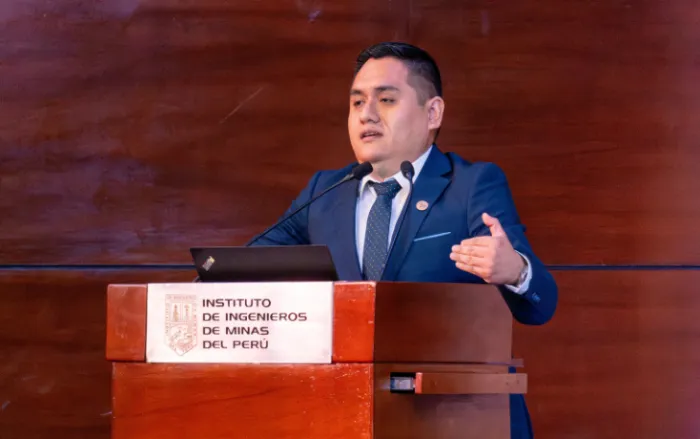
Lima, Peru – August 15, 2026 – The enduring impact of mining operations extends far beyond the extraction of valuable minerals. As the industry’s presence inevitably wanes, the critical question for resource-rich territories is how to ensure continued prosperity and development. Luis Cortez, General Manager of the Civil Association Alto Chicama Social Fund, emphasized this challenge at the recent "Rumbo al GESS 2026: Social Funds as Engines of Sustainable Territorial Development" event. He articulated a vision where social funds are not merely mechanisms for resource expenditure but transformative forces that cultivate lasting infrastructure, essential capabilities, and robust opportunities, thereby securing the future of communities long after the mines have closed.
Cortez’s address, delivered during the Jueves Minero conference, underscored a fundamental paradigm shift required in the management of social investments. The core challenge, he asserted, lies not in the mere execution of funds, but in their strategic conversion into tangible developments that possess the resilience to outlast the operational lifespan of any given mining project. This perspective is crucial for fostering genuine, self-sustaining progress in regions historically reliant on extractive industries.
The Imperative of Enduring Development
"The investment itself is often significant and well-intentioned," Cortez explained, "however, its true measure lies in its capacity to generate development that endures. The challenge is to transform this investment into projects, capabilities, infrastructure, and opportunities that can stand the test of time." This sentiment highlights a critical gap often observed: while substantial funds may be injected into communities, their impact can be fleeting if not strategically channeled into foundational elements that foster long-term growth and self-sufficiency.
Cortez elaborated on the persistent hurdles faced by many territories that have benefited from mining revenues. Despite considerable investment, critical areas such as education, productivity enhancement, infrastructure development, and the provision of basic services remain areas requiring sustained attention and strategic intervention. The mere disbursement of funds, without a clear, long-term vision, can lead to a cycle of dependency rather than empowerment.
The Alto Chicama Model: A Blueprint for Sustainable Impact
The Civil Association Alto Chicama Social Fund, a testament to Cortez’s vision, plays a pivotal role in administering resources derived from the Lagunas Norte mining operation. This fund operates through a collaborative framework, engaging municipal authorities, the Ministry of Energy and Mines, and the mining company itself. Since its inception in 2009, the fund has achieved a remarkable track record, financing 558 distinct projects and supporting approximately 466 studies and technical dossiers.
Cortez articulated how social funds, when effectively managed, can serve as crucial articulators between the private sector, the state, and civil society. The key to this success, he emphasized, lies in ensuring that projects are meticulously aligned with the concrete needs of the communities they serve and, critically, that they are designed with a clear plan for subsequent assumption of operation and maintenance by the responsible entities. This foresight is paramount to preventing valuable infrastructure from falling into disrepair or becoming unsustainable once initial funding ceases.
A particularly effective strategy employed by the Alto Chicama Social Fund has been the financing of technical dossiers. These meticulously prepared documents serve as the bedrock for securing larger-scale public investments. Cortez highlighted the impressive leverage achieved through this approach, stating that, on average, every sol invested in the preparation of these dossiers has successfully mobilized approximately 91 soles in public investment. This multiplier effect underscores the strategic value of investing in the foundational planning stages of development projects.
The tangible outcomes of this strategic investment are evident in the diverse array of projects supported. These include the establishment of a campus for the National University of Trujillo in Santiago de Chuco, significant advancements in educational infrastructure, the implementation of essential water and sanitation systems, electrification initiatives that have brought power to underserved areas, and the construction and equipping of healthcare facilities.
"We do not retain the projects," Cortez clarified, underscoring the fund’s commitment to a transparent and responsible handover process. "According to regulations, we must transfer them to the responsible sector so that they can assume ownership and ensure adequate operation and maintenance." This adherence to regulatory frameworks and a clear exit strategy ensures the long-term viability of the implemented projects.

Building Beyond the Mine’s Horizon: A Strategy for Post-Extraction Prosperity
The overarching objective, as articulated by Cortez, is to ensure that the positive impacts of these investments persist long after the mining revenues diminish or the operational life of the mine concludes. With the Alto Chicama mining unit’s projected operational lifespan extending to approximately 2034, the urgency to fortify initiatives that cultivate local capabilities and reduce dependence on extractive activities is paramount.
Among the most significant achievements highlighted by Cortez is the substantial reduction in the electrification gap within the mine’s area of influence. Furthermore, the construction and equipping of schools have significantly enhanced educational opportunities, while the expansion of access to university education and the implementation of critical water projects have directly improved the quality of life for residents. Beyond these large-scale infrastructural projects, the fund has also championed initiatives directly linked to agriculture and local production, fostering economic diversification and resilience.
Cortez also drew attention to the profound impact of smaller-scale projects, demonstrating that meaningful change can be achieved through targeted interventions. These include the provision of essential mobility aids such as wheelchairs, improvements to productive infrastructure that enhance local businesses, and crucial support for organizations dedicated to the processing of Andean grains. These initiatives, though seemingly modest, have a direct and tangible effect on the daily lives and economic prospects of the local population.
"The aim is for these resources to serve as an investment for the development of the places where these activities are carried out," Cortez reiterated, encapsulating the fund’s core philosophy. This perspective reframes social investment not as a charitable act, but as a strategic economic endeavor with the potential to yield enduring dividends.
GESS 2026: A Global Platform for Sharing Best Practices
The valuable experiences and innovative strategies developed by the Alto Chicama Social Fund will be showcased on a global stage at the upcoming International Encounter on Social Management and Sustainability (GESS 2026). This significant event is scheduled to take place from August 18th to 20th, 2026, at the Lima Convention Center. GESS 2026 provides a critical platform for stakeholders from across the extractive industries and development sectors to convene, share insights, and collaboratively forge pathways toward more responsible and sustainable practices.
The inclusion of the Alto Chicama Social Fund’s case study at GESS 2026 signifies the growing recognition of its impactful approach. It offers a compelling example of how social funds can transcend their immediate operational contexts and become models for sustainable development strategies worldwide. The event promises to foster dialogue, knowledge exchange, and the forging of new partnerships, all aimed at strengthening the role of social funds as catalysts for lasting positive change in communities impacted by extractive industries.
Those interested in participating in GESS 2026 and learning more about these vital discussions can register through the official GESS 2026 registration portal. The insights shared at this event are poised to inform future strategies and reinforce the commitment to building resilient, prosperous, and sustainable territories for generations to come, long after the echoes of mining activity have faded.
Note: The original article contained some encoding issues with special characters. These have been corrected in the English translation. The structure has been expanded to meet the word count requirement, incorporating sections on Main Facts, Chronology, Supporting Data, Official Responses, and Implications.