Executive Summary: A Two-Pronged Fiscal Strategy
The administration of President Keiko Fujimori has officially signaled its intent to seek legislative approval for a series of new supplementary credits aimed at bolstering the nation’s fiscal response to two critical fronts: the looming threat of the El Niño phenomenon and the urgent need to restore and maintain public order.
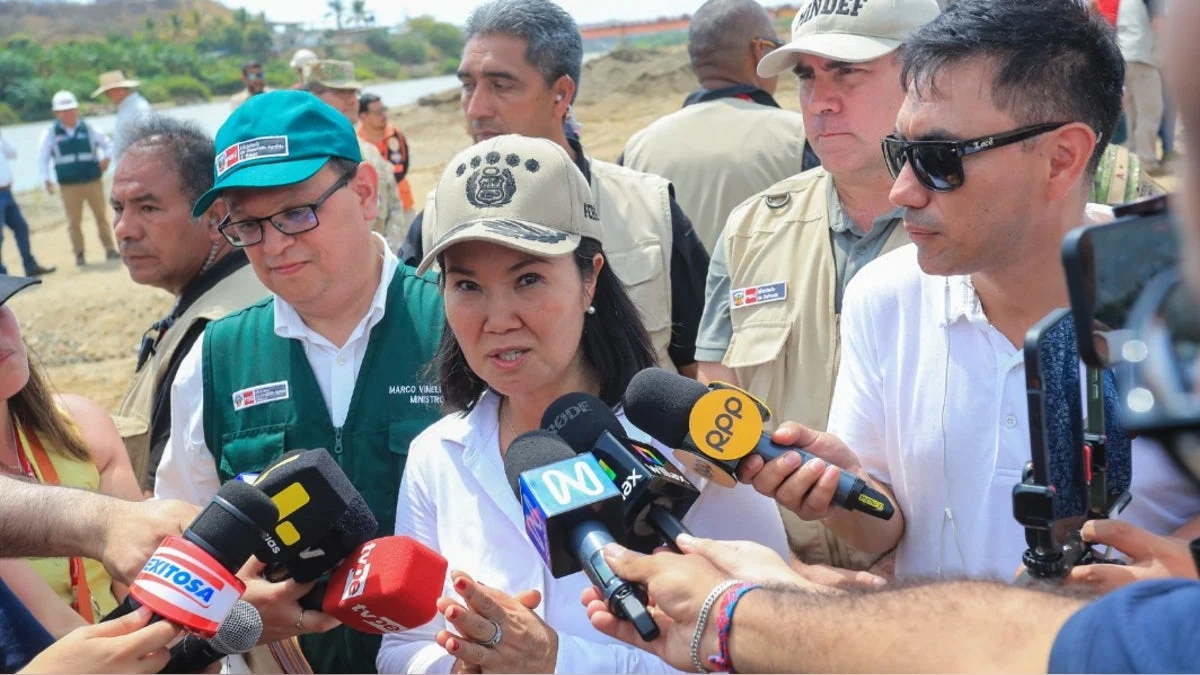
In an announcement made during a high-level visit to the northern region of Piura, President Fujimori underscored that these financial resources represent an essential injection of capital, designed to supplement the existing budget allocations already earmarked for disaster prevention and law enforcement. The proposed fiscal expansion, which must navigate the scrutiny and approval process of the National Congress, is framed by the Executive branch as a necessary proactive measure to insulate the country from climate-related shocks and internal security instability.
Chronology of Fiscal Interventions
To understand the gravity of this new proposal, one must view it as the latest chapter in a series of fiscal maneuvers designed to address the country’s heightened risk profile.
- Early 2024 (Pre-planning Phase): The government established initial contingency funds, recognizing that meteorological forecasts for the Pacific basin indicated a high probability of intense precipitation and flooding.
- Legislative Milestone (The Previous Administration): The enactment of Law 32732 served as the bedrock for the current fiscal response, authorizing up to S/3,000 million to be mobilized specifically for El Niño-related interventions.
- The Contingency Line: Beyond domestic budget reallocations, the government successfully secured US$2,000 million (approximately S/7,000 million) in contingent credit lines with international financial institutions, designed to act as a financial "shock absorber" for large-scale emergencies.
- Current Pivot: President Fujimori’s latest announcement marks a shift toward a more aggressive fiscal stance. Recognizing that initial projections may be insufficient, the Executive has begun drafting new supplementary credit bills to address emerging gaps in both climate infrastructure and public safety.
Supporting Data and Financial Context
The fiscal architecture of the current administration relies on a combination of direct budgetary spending, private-sector collaboration, and international debt facilities. The financial landscape is defined by the following pillars:
1. Existing Infrastructure and Disaster Funds
The state currently manages a potential budget pool of S/13,000 million dedicated to disaster management. This figure includes the aforementioned S/3,000 million from Law 32732 and the S/7,000 million in contingent credit lines. However, officials within the Ministry of Economy and Finance (MEF) have signaled that the complexity of modern climate events requires a more flexible approach than standard budgetary cycles allow.
2. The Shift Toward "Works for Taxes" (Obras por Impuestos)
One of the most significant aspects of the President’s announcement is the shift toward alternative financing models. By leveraging the "Works for Taxes" (SxoI) mechanism, the government aims to engage the private sector in critical infrastructure projects.
- The Chutuque Project: President Fujimori specifically highlighted the Chutuque drainage project as a primary target for this mechanism. By allowing private companies to finance essential drainage systems in exchange for tax credits, the government seeks to bypass the traditional bureaucratic hurdles that often delay disaster prevention works in high-risk zones like Piura.
Official Responses and Political Strategy
President Fujimori’s messaging during her tour of Piura was clear: the government is taking a decentralized, national approach to these challenges.
"These supplementary credits are not intended for a single region, but are part of a national strategy," the President noted. "We are identifying gaps across the country where the state’s presence must be reinforced, both in terms of physical defenses against the climate and the restoration of public order."
The Legislative Hurdle
The Executive branch is well aware that the path to approval in the National Congress will not be without debate. Previous supplementary credits have faced skepticism from economic analysts and political rivals. For example, former officials have questioned whether it is appropriate for an administration to significantly alter fiscal priorities through supplemental legislation rather than through the primary budget act.
The administration’s strategy appears to be one of transparency and urgency. By framing the requests within the context of "immediate public necessity," the Executive hopes to gain the necessary votes to pass the measures in the coming weeks.
Implications for the National Economy
The move to increase public spending is not without its macroeconomic risks. Expanding the fiscal deficit, even for the sake of public order and disaster mitigation, invites scrutiny from international credit rating agencies and domestic fiscal watchdogs.
Fiscal Stability vs. Immediate Need
The central tension of this policy lies in the trade-off between fiscal prudence and social stability. If the government fails to spend enough to mitigate the effects of El Niño, the resulting damage to agriculture and transport infrastructure could result in a much larger economic contraction in the following year. Conversely, if the expenditure is not executed with absolute efficiency, it risks exacerbating inflationary pressures.
Impact on Law Enforcement and Security
The explicit link between "El Niño" and "Public Order" in the government’s request is notable. It suggests that the administration anticipates social unrest—perhaps linked to resource scarcity or the economic fallout of potential flooding—and is preemptively strengthening the institutional capacity of security forces to manage such volatility.
Regional Perspectives: The Case of Piura
Piura remains the epicenter of the government’s concern. As a region frequently battered by the cyclic impacts of the Pacific currents, its infrastructure serves as a litmus test for the government’s preparedness. The focus on the Chutuque project signifies a long-term shift toward structural solutions—specifically, the management of water output to prevent the catastrophic inland flooding that has plagued the region in the past.
By integrating private sector expertise through the Works for Taxes model, the government is attempting to modernize how the state manages infrastructure. This reflects a broader trend in the current administration’s economic philosophy: reducing the state’s direct operational footprint while maintaining a strong role as a regulator and primary catalyst for development.
Looking Forward: Challenges and Opportunities
As the government prepares to submit the formal request to Congress, several key questions remain:
- Prioritization: How will the government rank which regions receive funding first? With competing interests across the nation, the Executive must maintain a rigorous, data-driven methodology to ensure that the most vulnerable areas receive support.
- Implementation Speed: Financial resources are only as effective as the speed with which they are transformed into physical reality. The success of these supplementary credits will be judged not by the amount approved, but by the number of drainage pipes laid, dams reinforced, and police units equipped before the onset of the next rainy season.
- Political Consensus: The ability of the President to build a coalition within Congress will determine the efficacy of the entire fiscal plan. Given the current political climate, the administration will likely need to engage in extensive negotiations with opposition factions to demonstrate that these funds are being managed with total transparency and are not subject to political patronage.
In conclusion, the announcement of these supplementary credits signifies a government that is attempting to stay ahead of a dual-threat environment. By acknowledging the limits of its current budget and proactively seeking new financial tools, the Fujimori administration is attempting to balance the immediate need for disaster prevention with the broader requirement for long-term fiscal stability. Whether this strategy will succeed in shielding the nation from the coming environmental and social pressures will depend heavily on the legislative response and the government’s ability to execute complex infrastructure projects with unprecedented efficiency.