In a move that signals a hardening of United States foreign policy toward foreign influence in critical infrastructure, the U.S. Department of State announced on Monday the revocation of the visa of Peruvian judge Juan Carlos Núñez Matos. The measure, which extends to the judge’s immediate family, is part of a broader, coordinated enforcement action under the newly established "Shield of the Americas" coalition—a strategic alliance aimed at curbing corruption and external interference in the sovereignty of Latin American nations.
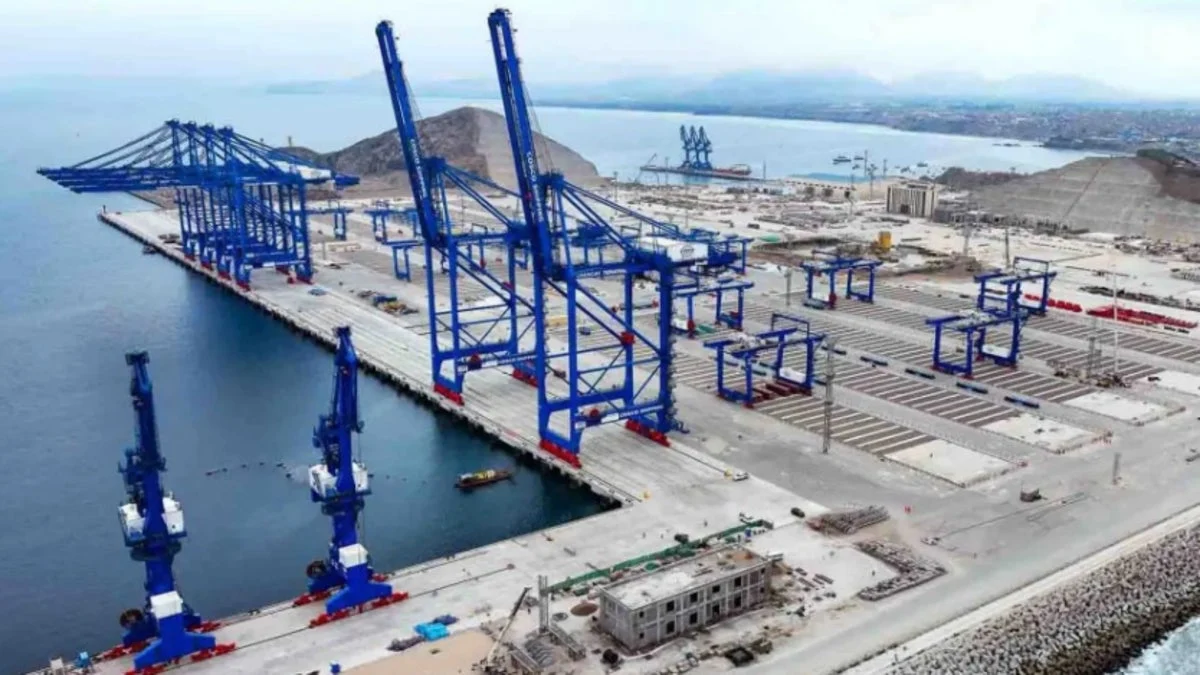
The sanctions against Judge Núñez Matos stem from a controversial judicial ruling issued in February 2026, in which he granted an amparo action favoring Cosco Shipping Ports Chancay Perú S.A. The ruling effectively barred the Peruvian state regulator, Ositrán (The Supervisory Agency for Investment in Public Transport Infrastructure), from exercising its full mandate to oversee, regulate, and sanction operations at the strategic Megapuerto de Chancay.
The "Shield of the Americas" Initiative: A New Regional Doctrine
The decision to penalize the magistrate is not an isolated incident but the first major implementation of the "Shield of the Americas" framework. This coalition, formally solidified during the "Doral Summit" held on September 22, 2026, involves the United States and several South American nations, including Peru, Bolivia, Colombia, and Ecuador.
At the summit, attended by U.S. President Donald Trump and regional heads of state, signatories pledged to synchronize their diplomatic and financial tools to combat transnational corruption and the erosion of democratic governance. According to the State Department, the move against Judge Núñez Matos is executed under Section 212(a)(3)(C) of the U.S. Immigration and Nationality Act, which allows for the restriction of entry to individuals deemed to have undermined democratic processes.
"The Shield of the Americas is not merely rhetoric; it is a coalition that acts," the State Department declared in an official statement. "When our partners commit to defending democracy against corruption and external predatory practices, we fulfill those promises together."
Chronology of the Chancay Dispute
The legal battle surrounding the Port of Chancay has been a focal point of Peruvian regulatory policy throughout 2026. The timeline of events highlights the high-stakes nature of the conflict:
- February 2026: Judge Juan Carlos Núñez Matos issues a first-instance ruling in favor of Cosco Shipping Ports Chancay Perú S.A., restricting Ositrán’s ability to supervise the port’s operations.
- March 2026: The U.S. Department of State’s Office of Western Hemisphere Affairs issues a public warning, stating that the loss of regulatory oversight at a facility as critical as Chancay threatens Peruvian sovereignty.
- July 2026: The Second Constitutional Chamber of the Lima Superior Court of Justice reverses the initial ruling, declaring the lawsuit filed by the Chinese-capital firm inadmissible.
- July 24, 2026: Cosco Shipping files a Constitutional Grievance Appeal (RAC), elevating the case to the Peruvian Constitutional Court.
- September 22, 2026: The Doral Summit takes place, formalizing the "Shield of the Americas" anti-corruption coalition.
- September 28, 2026: The U.S. Department of State formally announces visa restrictions against Judge Núñez Matos, citing his role in undermining the state’s regulatory authority.
The Regulatory Battle: Sovereignty vs. Corporate Interests
At the heart of the legal controversy is the question of whether a private entity, even one operating as a major commercial player, can be exempt from state oversight in a sector as vital as national infrastructure.
The initial ruling by Judge Núñez Matos stipulated that Ositrán should be prohibited from fiscalizing the terminal, limiting its role strictly to tariff setting. This decision sparked immediate alarm within the Peruvian government and among foreign observers. The U.S. government, through its regional diplomatic channels, was particularly vocal, characterizing the situation as a cautionary tale for the region.
"We are concerned by reports that Peru could be rendered unable to oversee Chancay, one of its most important ports, under the jurisdiction of predatory Chinese owners," the State Department noted on social media. "Let this serve as a warning: cheap Chinese money costs sovereignty."
U.S. Ambassador to Peru, Bernie Sanders, echoed this sentiment, emphasizing the long-term cost of short-term economic gains. "Everything has a price, and in the long run, the ‘cheap’ option becomes expensive. There is no higher price than losing one’s sovereignty," Sanders stated.
Judicial Reversal and the Role of the Constitutional Court
The judicial landscape shifted significantly in July 2026 when the Second Constitutional Chamber of the Lima Superior Court of Justice overturned the initial ruling. The court argued that Ositrán’s requests for information and its oversight activities do not constitute a "certain or imminent threat" to the company’s constitutional rights. Instead, the court reaffirmed that the terminal’s status as public infrastructure mandates it must operate within the established national regulatory framework.
Following this setback, the legal team for Cosco Shipping, led by attorney Ramiro Portocarrero, turned to the Constitutional Court. The company is seeking either an annulment of the second-instance judgment or a definitive ruling that would favor their interpretation of the regulatory limits. The case now sits as the ultimate arbiter of how the Peruvian state will interact with its largest foreign-invested infrastructure projects moving forward.
Global Implications and Strategic Tensions
The imposition of visa restrictions on a sitting judge is a profound diplomatic escalation. By targeting a judicial figure, the United States is signaling that the "Shield of the Americas" will not be deterred by the separation of powers or judicial independence when those mechanisms are allegedly used to facilitate corruption or facilitate foreign control over strategic assets.
Economic Impact
The uncertainty surrounding the supervision of the Port of Chancay has already caused friction between the Peruvian government and the investment community. While the port is essential for Peru’s export-led economy, the desire to attract foreign capital is now being weighed against the need for rigorous regulatory control.
Diplomatic Repercussions
The reaction from the Chinese government remains to be seen, but the rhetoric from the U.S. Embassy in Lima suggests that the "Shield of the Americas" intends to prioritize security and democratic integrity over unrestricted foreign investment. The alignment of the Peruvian judiciary with this international effort is being watched closely by other nations in the region who are currently navigating similar dilemmas regarding Chinese-funded infrastructure projects.
The Future of the "Shield"
The U.S. Ambassador to Peru, in his most recent public comments, reaffirmed that the coalition is committed to a "zero-tolerance" policy regarding institutional corruption. "We said we would act against the corruption that weakens our democracies. We are fulfilling that commitment to Peru," he stated.
As the Constitutional Court prepares to hear the case, the eyes of the international community are fixed on Lima. The final decision will not only determine the operational future of the Megapuerto de Chancay but will also serve as a litmus test for the effectiveness and reach of the "Shield of the Americas" in the coming years.
For Judge Núñez Matos, the sanctions represent a severe personal and professional consequence for a ruling that the United States deemed a bridge too far. For the broader geopolitical landscape, it serves as a stark reminder that in the current era of great power competition, the line between commercial infrastructure and national security has all but disappeared.