By Editorial Staff
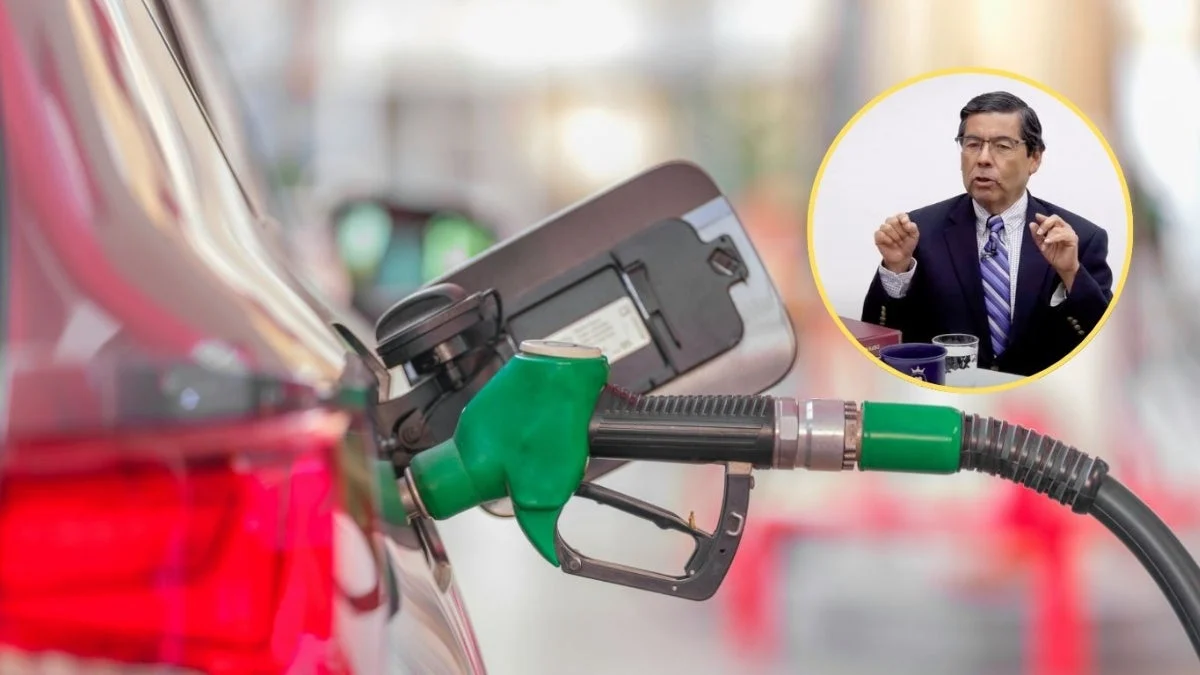
As fuel prices continue their relentless climb across Peru—a surge largely attributed to the intensifying geopolitical volatility in the Middle East—the national economy faces a critical juncture. In a decisive move, Senator Jaime Delgado Zegarra of the Ahora Nación party has formally requested that the Minister of Economy and Finance, Elmer Cuba, provide a concrete timeline and operational framework for the reactivation of the Fuel Price Stabilization Fund (FEPC).
The request, formalized via Official Letter No. 004-2026-2027-JRDZ-SR, underscores a growing sense of urgency among lawmakers and citizens alike. As transport unions mobilize and supply chains face potential paralysis, the pressure on the Ministry of Economy and Finance (MEF) to intervene has reached a breaking point.
The Core Issue: A Crisis of Volatility
The current crisis stems from a sharp upward trajectory in global crude oil prices. As a net importer of fuels, Peru is highly susceptible to international shocks. When conflict erupts in oil-producing regions, the ripple effects are felt almost immediately at local gas stations.
Senator Delgado’s communication to the MEF highlights a fundamental reality: the price of gasoline and diesel has now surpassed S/ 24 per gallon at the wholesale level. This represents a doubling of costs compared to the pre-war period, effectively squeezing the margins of small businesses and households alike.
"The FEPC was designed specifically to act as a shock absorber," Senator Delgado noted in his petition. "Its primary purpose is to prevent the extreme volatility of international petroleum markets from being passed on directly to the Peruvian consumer. When that mechanism is inactive during a crisis, the burden falls squarely on the shoulders of the most vulnerable."
Chronology: From Stability to Escalation
To understand the gravity of the current situation, one must look at the timeline of the recent economic downturn:
- Pre-Crisis Period: Fuel prices remained relatively manageable, buoyed by global supply chain recovery.
- Early August 2026: Geopolitical tensions in the Middle East spiked, causing immediate apprehension in global commodities markets.
- August 7, 2026: Minister Elmer Cuba announced that the government was exploring the implementation of a fiscal stabilization fund, aiming to reduce the cost of gasoline by up to S/ 1 per gallon.
- August 10, 2026: Nationwide discontent began to manifest. In the Ucayali region, the situation escalated as transport unions initiated an indefinite strike, leaving vehicles stranded along the vital Federico Basadre highway.
- August 11, 2026: Senator Jaime Delgado officially intervened, submitting the request for transparency and action from the MEF, citing the urgent need for a regulatory response to stabilize the national economy.
Supporting Data: The Ripple Effect on the Economy
The impact of fuel inflation is rarely contained within the transportation sector. Economists have long warned that "transport-led inflation" is the most dangerous variety for a developing economy like Peru’s.
The Transport-Food Nexus
When the cost of diesel rises, the cost of moving goods—specifically food—increases in direct proportion. In rural areas like Ucayali, where logistics are already complex, an increase in fuel prices leads to a "double-hit" scenario:
- Increased Operating Costs: Logistics companies pass the cost of fuel onto retailers.
- Increased Market Prices: Retailers, facing higher supply costs, raise the prices of agricultural products and essential goods.
Senator Delgado highlighted this during his recent address, stating, "What we are seeing in Ucayali is a canary in the coal mine. When fuel prices spike, the impact is felt instantly at the dinner table of every Peruvian family. It is a direct hit to food security."
Official Responses: The Government’s Balancing Act
Minister of Economy and Finance, Elmer Cuba, has found himself in a delicate position. On one hand, the government is committed to fiscal responsibility and avoiding excessive subsidies that could drain the national treasury. On the other, the social pressure from paralyzed trade routes and rising inflation is becoming politically untenable.
During his announcement on August 7, Minister Cuba defended the government’s capacity to act, noting that Peru remains one of the few nations in the region with the fiscal "space" to design such a fund without jeopardizing the country’s macroeconomic standing.
"We are aiming for a neutral fiscal effect," Cuba stated. "The goal is to smooth out the peaks in price volatility over time. This is not about subsidizing consumption indefinitely, but rather about providing a buffer during periods of extreme international turbulence."
However, critics—including Senator Delgado—argue that the government’s "announcements" are no longer sufficient. The demand is for a clear, actionable date for when the FEPC will be fully operational and how the funds will be distributed to prevent price gouging at the pump.
Implications: The Road Ahead
The standoff between the legislative branch and the executive regarding the FEPC has profound implications for Peru’s immediate future.
1. Fiscal Implications
If the government successfully implements the stabilization fund, it must manage the "clawback" mechanism—a process where the government recovers the subsidy when international prices eventually drop. This requires a high degree of transparency to maintain public trust.
2. Social Stability
The ongoing protests in Ucayali serve as a warning. If the government fails to provide relief, the likelihood of similar protests spreading to other regions, such as Puno, Arequipa, or the northern coast, is high. The transport sector is the backbone of the Peruvian economy, and any prolonged stoppage could trigger a contraction in GDP growth for the third quarter.
3. Legislative Oversight
Senator Delgado has committed to a rigorous fiscalization process. By requesting official information, he is setting a precedent for parliamentary oversight. "We will be watching," Delgado warned. "We are going to verify that this fund is not just a policy on paper, but a mechanism that delivers real, measurable relief to the consumer."
Conclusion: A Test for Economic Governance
The crisis surrounding fuel prices in Peru is a classic test of modern economic governance. It requires a fine-tuned balance between global market realities and domestic social needs. As the Ministry of Economy and Finance prepares its next steps, the eyes of the nation remain fixed on the gas pump and the price boards that dictate the daily cost of living for millions.
For the government, the reactivation of the FEPC is not merely an economic adjustment—it is an exercise in crisis management. For Senator Delgado and the legislative bloc, it represents a fundamental duty to hold the administration accountable to the citizens they serve.
As the situation in Ucayali continues to unfold, the message from the streets is clear: the cost of inaction is far higher than the cost of intervention. The coming days will be decisive in determining whether the government can stabilize the economy or if the country faces a wider wave of social and economic unrest. The focus now turns to the Ministry of Economy and Finance, where the technical decisions made this week will have lasting consequences for the Peruvian economy in the months to follow.