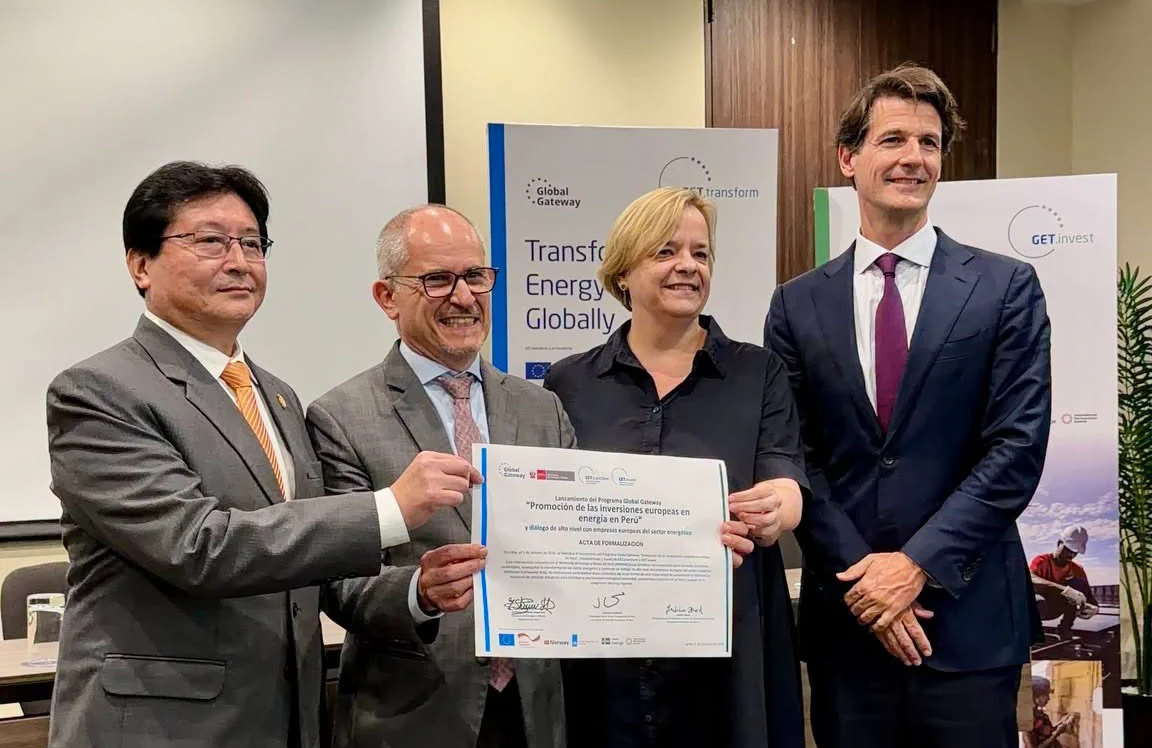
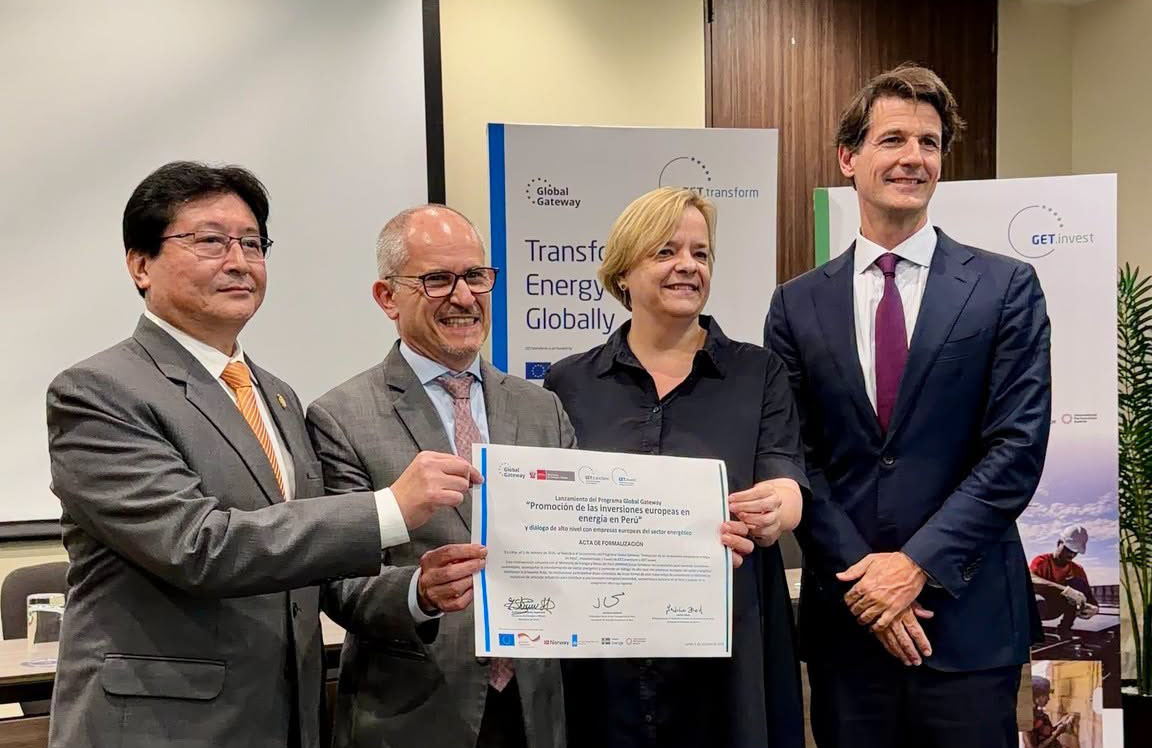
Peru stands at a critical juncture in its industrial development. As the nation seeks to balance its status as a global mining powerhouse with the urgent necessity of global climate commitments, the energy sector has become the primary theater of transformation. In a significant move to accelerate this shift, Germany and the European Union (EU) have formalized a strategic partnership aimed at revolutionizing Peru’s energy landscape. Under the umbrella of the European Global Gateway initiative, this collaboration promises to modernize grid infrastructure, optimize regulatory frameworks, and bridge the gap between policy intent and private capital investment.
Main Facts: A Multimillion-Euro Catalyst for Change
The partnership is anchored by a financial injection of approximately S/24 million, comprising a €5 million contribution from the European Union and an additional €1 million from the German government. However, the significance of this initiative extends far beyond its immediate monetary value. By deploying two specialized instruments—GET.transform and GET.invest—the EU and Germany are targeting the structural bottlenecks that have historically hindered the large-scale integration of renewable energy sources in the Andean nation.
The initiative is specifically designed to support the "Sistema de Interconexión Eléctrica Andina," a regional effort to create a more resilient, integrated, and efficient energy grid. By fostering a climate of technical excellence and institutional transparency, the program aims to de-risk investments, making Peru a more attractive destination for international green energy developers.
Chronology: Building the Foundation for a Greener Future
The launch of these instruments marks the culmination of months of bilateral dialogue between Lima and Brussels. While the formal unveiling took place in late 2026, the groundwork was laid much earlier through a series of high-level diplomatic missions and technical audits.
- Phase I (2025): Preliminary discussions regarding the "Global Gateway" strategy in Latin America identified Peru’s energy sector as a priority for technical cooperation.
- Phase II (Early 2026): Technical teams from the German Agency for International Cooperation (GIZ) and EU energy advisors conducted field studies, identifying key regulatory hurdles and infrastructure gaps in the Peruvian national grid.
- Phase III (Mid-2026): Harmonization of goals between the Peruvian Ministry of Energy and Mines (MINEM) and the European commission, focusing on the alignment of local policies with international standards for sustainable energy.
- Phase IV (Late 2026): The official launch of GET.transform and GET.invest, signaling the beginning of the implementation phase for the S/24 million funding package.
Supporting Data: The Renewable Potential of Peru
Peru’s geographical diversity provides it with an enviable array of natural resources that, if harnessed correctly, could position the country as a leader in the global energy transition. According to industry data, the country possesses a unique mix of high-altitude wind corridors, abundant solar irradiance in the southern deserts, and massive hydroelectric potential in the Andes.
Despite this, the transition has been slow. Current data suggests that while renewable projects are increasingly cost-competitive, their "bankability" remains hampered by complex administrative permitting and outdated grid infrastructure. The EU-German initiative addresses this by providing:
- Technical Expertise (GET.transform): Focused on grid management, forecasting, and the creation of regulatory "sandboxes" that allow for the testing of new technologies before full-scale deployment.
- Investment Facilitation (GET.invest): A dedicated mechanism that assists project developers in reaching the "Financial Close" stage. This includes market intelligence, business model development, and matchmaking services to connect local project owners with European green finance institutions.
Official Responses: Aligning Visions for Success
The partnership was inaugurated with a series of high-level statements that underscored the necessity of a stable institutional environment.
The Perspective of the European Union
Ambassador Sabine Bloch, representing the European interests in the region, offered a pragmatic assessment of the challenge. "The energy transition is not merely a matter of passing laws or importing new technology," Bloch stated. "It is about creating the ‘enabling conditions’ that allow potential to materialize into concrete infrastructure. We are here to help build those conditions—transparent, predictable, and fair."
Bloch emphasized that international investors require a stable rule of law. "Confidence in institutions is the silent partner of every energy project. When rules are clear, capital flows naturally," she added.
The Commitment from the Peruvian Government
Minister of Energy and Mines, Guillermo Shinno, welcomed the initiative as a cornerstone for national development. Addressing the audience during the launch, Shinno acknowledged the systemic inefficiencies that have traditionally stalled energy projects. "We are fully aware that the administrative burden has been a bottleneck for our renewable energy sector," Shinno admitted. "My ministry is committed to streamlining these processes. We are not just looking for funding; we are looking for the ‘know-how’ to ensure that our solar, hydro, and wind projects reach completion without being lost in bureaucratic red tape."
Implications: The Road Ahead for Peru
The implications of this partnership are multifaceted, touching upon economics, environment, and regional geopolitics.
Economic Diversification
For Peru, moving away from a fossil-fuel-reliant grid is not just an environmental imperative; it is an economic one. As the world transitions toward carbon-neutral supply chains, Peruvian exports—particularly in mining—will increasingly be judged by the carbon footprint of the electricity used to produce them. By greening the grid, Peru protects the competitiveness of its primary exports.
The "Global Gateway" Strategic Context
The European Global Gateway is often viewed as the EU’s response to the growing influence of global powers in infrastructure development. Unlike other financing models, the European approach emphasizes the "soft infrastructure" of standards, technical training, and environmental sustainability. By anchoring its presence in Peru through these mechanisms, the EU is positioning itself as a partner of choice for long-term, sustainable development.
Challenges of Execution
Despite the optimism, the success of this project hinges on the local capacity for implementation. The "ball is in the court" of the Peruvian public sector, as noted during the event. The ability to coordinate between regional and national authorities, resolve land-use disputes, and maintain political stability will determine whether this S/24 million investment acts as a catalyst for a multi-billion dollar shift or remains a localized pilot project.
Conclusion: A Green Horizon
The collaboration between Germany, the European Union, and Peru represents more than just a financial grant; it is a transfer of institutional expertise designed to modernize one of the most vital sectors of the Peruvian economy. By focusing on both the regulatory framework (GET.transform) and the commercial viability of projects (GET.invest), the initiative addresses the entire value chain of the energy transition.
As Peru moves forward, the success of this partnership will likely serve as a blueprint for other nations in the region. If the country can successfully navigate the administrative hurdles and leverage European technical standards, it will not only secure its own energy future but will also signal to the global market that it is ready to become a premier destination for sustainable, high-impact investment. The path toward a cleaner, more efficient grid is now open—the challenge for the coming years will be to ensure that the progress remains as steady as the winds of the Andes.