By Investigative Desk
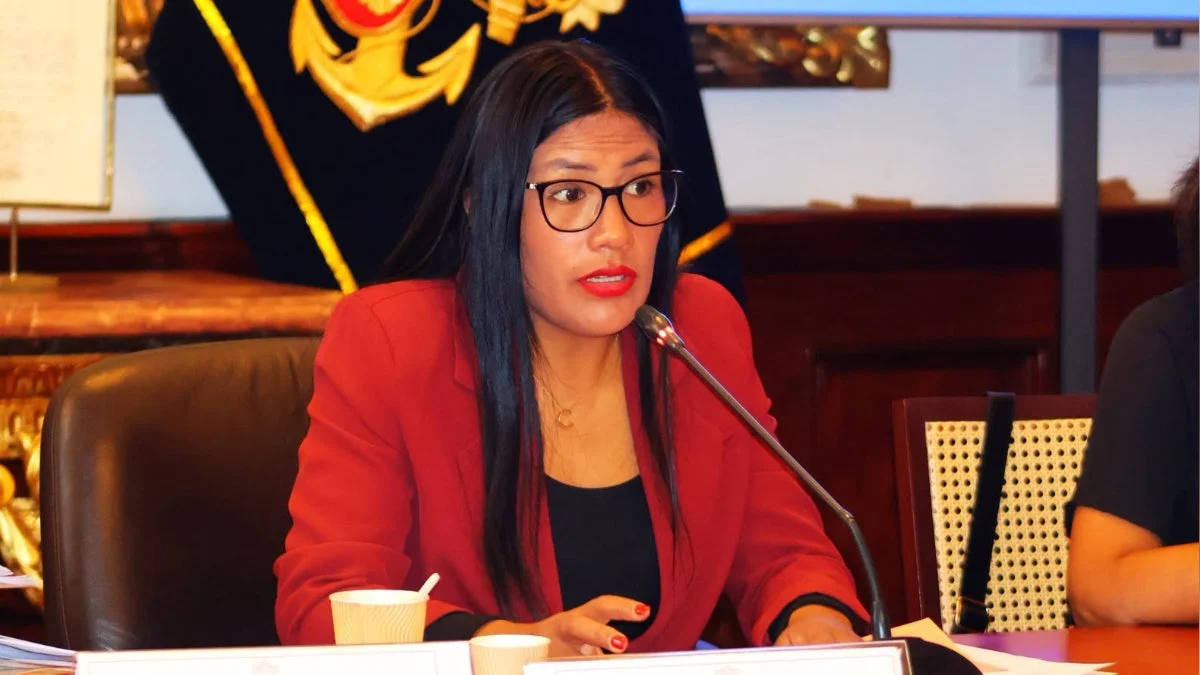
In a damning exposé that has sent shockwaves through the Peruvian political establishment, a former high-ranking aide to Congresswoman Catherin Palomino—a representative for the Huancavelica region under the Juntos por el Perú banner—has leveled grave accusations against the lawmaker. According to a report broadcast this Sunday by the investigative program Panorama, Palomino is alleged to have orchestrated a systematic scheme of kickbacks linked to public works funding, while simultaneously extorting her own staff to finance her personal and political expenses.
The allegations suggest a pervasive culture of corruption within the congressman’s office, characterized by the weaponization of public budget processes for private gain and the financial exploitation of subordinates under the threat of termination.
The Core Allegations: "The Real Business of Congress"
At the heart of the scandal is a whistleblower—a former trusted advisor whose identity remains protected—who provided Panorama with a detailed account of how Palomino allegedly manipulated the legislative process. The whistleblower claims that the congresswoman viewed her position as a conduit for "commissions" rather than public service.
The Kickback Scheme
According to the testimony, the lawmaker allegedly facilitated the allocation of state funds from the Ministry of Economy and Finance (MEF) to various regional governments and municipalities, but only on the condition that kickbacks were paid. In a chilling quote attributed to Palomino by her former aide, she purportedly stated: "When we manage these projects, a percentage comes back to us; that is the real business of Congress."
This practice appears to have prioritized personal enrichment over project feasibility. The report highlights a specific case involving the Municipality of Capillas, in the province of Castrovirreyna. Despite the fact that the project in question—an infrastructure work in the health sector—showed almost zero physical progress, Palomino’s office allegedly pushed through formal requests for additional budgetary allocations. The whistleblower claims he advised against the request due to the lack of advancement, only to be overruled by the congresswoman.
Chronology of Institutionalized Coercion
The investigation outlines a pattern of behavior that evolved from administrative misconduct to overt financial exploitation of staff.
- Early Tenure: Upon joining the legislative office, the whistleblower alleges that he and other staff members were quickly integrated into a system where personal expenditures were treated as "office expenses."
- The "Contribution" Mandate: The congresswoman reportedly institutionalized a policy where staff were required to surrender a portion of their monthly salaries to cover her personal needs, including food, utilities, and travel.
- The Vehicle Crisis: A critical inflection point occurred when the vehicle used by the congresswoman for her regional work broke down. Rather than utilizing official parliamentary allowances for repairs or a replacement, Palomino allegedly ordered her staff to personally cover a 2,000-sol rental fee. Failure to contribute, according to the aide, was met with threats to their job security.
- The Christmas Campaign: As the year drew to a close, the demands reportedly intensified. The whistleblower cited an instance where the congresswoman justified these financial impositions by pointing to her political commitments, stating: "Look, I have many commitments, and even more so now that Christmas is coming, and each one of us is going to reach into our pockets to fulfill them."
Supporting Data: Evidence of a Toxic Work Environment
The testimony provided by the former advisor is not merely anecdotal. Panorama reported that the whistleblower possesses a comprehensive archive of evidence, including documentary records, audio recordings of conversations, and digital messages that appear to corroborate the claims of coercion.
Financial Exploitation of Staff
The list of expenses that staff were allegedly forced to subsidize is extensive. It includes:
- Community Outreach: Financing the purchase of gifts, food, and supplies promised by the congresswoman to community leaders during her "representation weeks" in Huancavelica.
- Operational Overheads: Payment for office signage, basic utilities (electricity and water) for the decentralized office, and even the congresswoman’s daily meals.
- Travel and Logistics: Constant demands for payment of travel expenses and per diems that should have been covered by the congressional budget.
The whistleblower characterized the environment as a survival game: "To survive in this job, we have to give a part of our salary to cover all the congresswoman’s demands."
Official Responses and Denials
In the wake of the broadcast, Congresswoman Catherin Palomino has responded to the allegations, though her defense has already been challenged by the very evidence presented in the report.
The Congresswoman’s Statement
Palomino submitted a written response to Panorama in which she flatly denied all allegations of financial extortion or illicit cobros (illegal collections) from her personnel. She further claimed that the whistleblower had not accompanied her during her weeks of representation, attempting to undermine his credibility by distancing herself from his presence during regional trips.
The Contradiction
The program’s investigation immediately countered this defense by presenting official photographs—sourced from the congresswoman’s own public social media and official parliamentary records—that clearly show the whistleblower accompanying Palomino on her regional visits. This discrepancy has raised significant questions regarding the congresswoman’s transparency and the veracity of her defense.
The whistleblower remains undeterred by the denials. He has expressed his full willingness to present his evidence to the Public Prosecutor’s Office and the Congressional Ethics Committee. "She will know who I am because I have the truth," he told the program, signaling that he is prepared to testify under oath.
Implications: A Crisis of Legislative Integrity
The accusations against Palomino touch upon a wider, long-standing issue in Peruvian politics: the "mochasueldos" (salary-slashing) phenomenon, where congresspeople use their staff as personal bank accounts. However, the added layer of alleged kickbacks for public works projects elevates this from a labor dispute to a major criminal corruption scandal.
Institutional Impact
- Trust in Public Funding: The revelation that budgetary requests for health projects in vulnerable regions like Huancavelica were potentially influenced by kickbacks undermines public trust in the Ministry of Economy and Finance’s allocation process.
- Congressional Ethics: The Congressional Ethics Committee is now under immense pressure to launch a formal investigation. The existence of audio and documentary evidence makes a mere "administrative review" unlikely to suffice.
- Political Stability for Juntos por el Perú: The involvement of a party representative in such a scandal forces the parliamentary bench to address the integrity of its internal vetting processes. Silence from the leadership could be interpreted as complicity.
- Legal Consequences: If the allegations of "influence peddling" and "extortion" are proven, Palomino could face not only removal from office but also severe criminal penalties, including incarceration.
Moving Forward
As the case unfolds, the focus will shift to the Public Prosecutor’s Office (Ministerio Público). The whistleblower’s commitment to provide his evidence to legal authorities marks the beginning of what is likely to be a protracted and damaging legal battle.
For the people of Huancavelica, the allegations are a bitter pill. Represented by a legislator they expected to secure vital infrastructure, they are instead confronted with the possibility that their regional development was being treated as a commodity for sale. The outcome of this investigation will serve as a bellwether for whether the Peruvian justice system is truly capable of holding its elected officials accountable for the abuse of power.
The scandal underscores the urgent need for structural reform in how congressional offices are audited, particularly regarding the handling of sensitive budgetary requests and the oversight of personnel management. Until then, the case of Catherin Palomino stands as a stark reminder of the fragile state of democratic accountability in the region.