Introduction: A Clash of Parliamentary Privilege and Patient Confidentiality
The Peruvian Congress is currently embroiled in a heated debate concerning the boundaries of legislative oversight versus the fundamental right to medical privacy. At the center of this firestorm is Congressman Christian Aranda, a member of the Renovación Popular party, who has been accused of exposing the sensitive personal information of a pregnant woman in Abancay. The patient, who had sought a therapeutic abortion, suddenly found her medical journey thrust into the national spotlight after the lawmaker intervened in the hospital’s administrative processes.
As the Ethics Committee prepares to evaluate the conduct of the congressman, his colleague and fellow committee member, Javier Cipriani, has stepped forward to offer a robust defense. The unfolding situation highlights a profound tension within the Peruvian political landscape: the extent to which a legislator’s power to "fiscalize" (oversee) public institutions justifies the public disclosure of private health data.
Chronology of the Controversy
The Disclosure on Social Media
The controversy ignited when Christian Aranda utilized his official X (formerly Twitter) account to publish a formal document he had sent to the Guillermo Díaz de la Vega Regional Hospital in Abancay. The document, intended as an official inquiry, demanded that hospital authorities verify the legal requirements for a therapeutic abortion being performed on a patient who was approximately 20 weeks pregnant.
Critics, including journalists and privacy advocates, immediately flagged that the document included the full name and personal identifiers of the pregnant woman. While Aranda eventually deleted the post following a wave of public outrage, the damage to the patient’s privacy had already been done, sparking a national debate on the ethics of digital communication by elected officials.
The Denial and the Digital Footprint
In the wake of the backlash, Aranda maintained a defensive posture. He denied that he had intentionally exposed the identity of the patient, suggesting that the document was meant to serve as a standard exercise of his legislative duties. However, social media users were quick to archive the post, providing evidence of the exposure before the deletion occurred. This discrepancy between the congressman’s defense and the digital evidence has fueled further accusations of dishonesty, complicating his position before the Ethics Committee.
The Call for Oversight
Following the incident, civil society organizations and medical associations condemned the intervention, noting that the solicitation of clinical information without the patient’s consent is a direct violation of both the Peruvian Constitution and the General Law of Health. The hospital’s administration has yet to formally comment on the breach, but pressure is mounting for a full investigation into how an official legislative request was handled and subsequently publicized.
Supporting Data: Legal Framework and Ethical Standards
The Sanctity of Medical Records
Under Peruvian law, the confidentiality of medical records is absolute, barring specific legal exceptions. The law stipulates that health data is sensitive personal information, and any unauthorized disclosure can lead to both administrative sanctions and criminal liability.
Legislators possess the right to fiscalize public entities, including hospitals. However, this power is not absolute. Legal experts argue that while a congressman can ask if "protocols are being followed," they have no legal standing to access, much less publish, the specific medical history or the identity of a patient undergoing a procedure.
The Limits of Legislative Fiscalization
The debate hinges on the definition of "fiscalization." Supporters of Aranda argue that he was performing his constitutional duty to ensure that public funds and resources—and by extension, health protocols—are being used correctly. Detractors, however, point out that the legislative function does not override the fundamental rights of the individual. If a lawmaker intends to verify a protocol, they are expected to do so through confidential channels that do not compromise the privacy of the citizenry.
Official Responses and Political Maneuvering
Javier Cipriani’s Defense of His Colleague
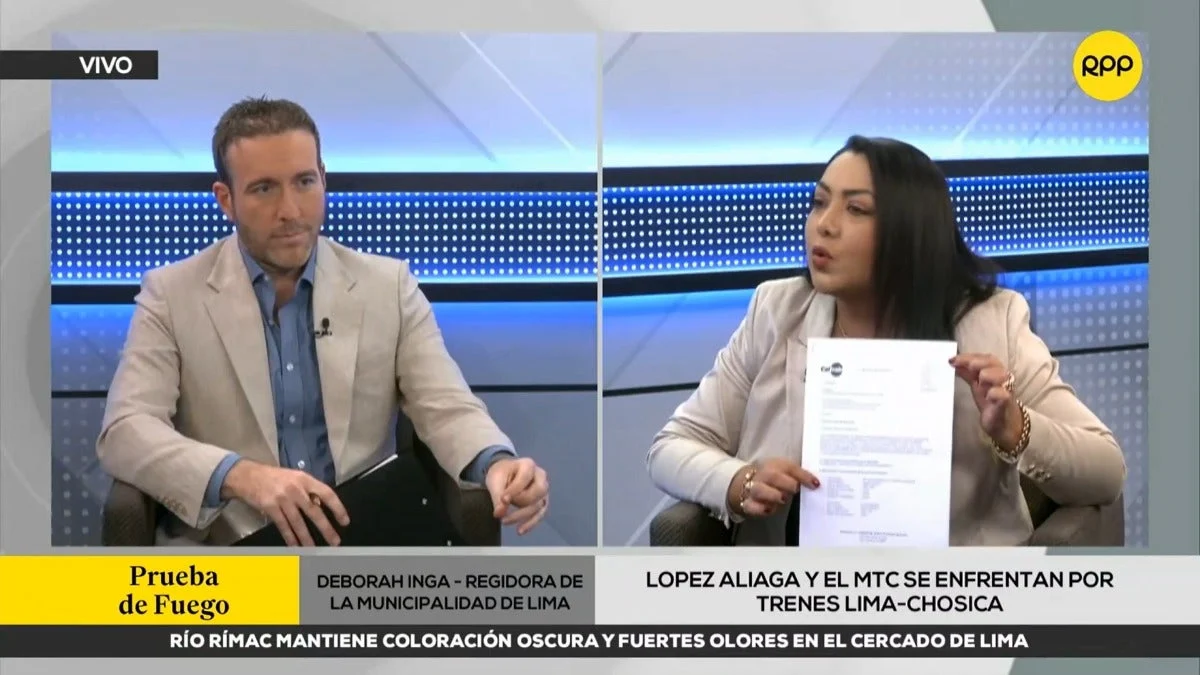
Javier Cipriani, a prominent member of Renovación Popular and a sitting member of the Ethics Committee, became the first high-profile voice to defend Aranda publicly. In an interview on the RPP program Prueba de Fuego, Cipriani attempted to draw a hard line between "administrative mistakes" and "criminal acts."
"There is a distinct difference between committing a procedural fault and committing a crime," Cipriani stated. "I firmly believe that Christian has not committed a criminal offense."
Cipriani admitted that he had reached out to Aranda personally to offer his support, characterizing the public backlash as an "unfair attack" against his party member. He further attempted to contextualize Aranda’s actions by attributing them to the "vehemence of youth," though he conceded that public officials must adhere to established behavioral codes. His comments, however, have drawn fire from the opposition, who argue that his position on the Ethics Committee makes his public defense of the accused a clear conflict of interest.
Aranda’s Justification
In a subsequent statement posted to his social media, Congressman Aranda defended his actions by framing himself as a guardian of the law. He claimed that his office had received a complaint regarding the abortion procedure and that he had a duty to investigate whether the hospital was adhering to the strict guidelines required for therapeutic abortion.
"The purpose of my action was never to access confidential clinical information or to interfere with the medical decisions of a patient," Aranda wrote. "My intent was to ensure that the legislative and sanitary protocols were being strictly followed." He remains adamant that his inquiry was a legitimate administrative act, ignoring the fact that the disclosure of the patient’s name was the primary point of contention, not the inquiry itself.
Implications for the Future
The Ethics Committee’s Looming Decision
The case of Christian Aranda now rests in the hands of the Ethics Committee. If the committee finds that the disclosure of the patient’s identity constitutes a breach of congressional ethics, Aranda could face a range of penalties, from a public reprimand to temporary suspension from his legislative duties.
However, the political composition of the committee raises questions about impartiality. With members like Cipriani openly defending Aranda before the investigation has concluded, the integrity of the process is already being questioned by the public.
The Chilling Effect on Healthcare
Beyond the political fallout, the incident has created a "chilling effect" for women in Peru seeking reproductive healthcare. Medical professionals in Abancay and across the country have expressed concerns that if lawmakers continue to monitor and publicize individual cases, patients will be afraid to seek necessary medical attention for fear of being exposed to public scrutiny.
The medical community is calling for stricter protections for patient data, specifically regarding how such information is requested by third parties, including government officials. They argue that the privacy of the patient must be the paramount concern, even in the face of political investigations.
A Test for the Peruvian Congress
This incident serves as a litmus test for the current Congress. It asks whether the institution is capable of self-regulation or if partisan loyalty will continue to supersede the protection of citizen rights. If the legislature fails to hold its members accountable for the violation of privacy, it risks further erosion of public trust in the institution of the Parliament.
As the investigation progresses, the focus will remain on whether Aranda’s actions were an honest attempt at oversight gone wrong, or a calculated political maneuver that weaponized a vulnerable citizen’s medical situation for ideological gain. For the woman at the center of this, the incident has been a traumatic violation of her private life, and for the nation, it remains a stark reminder of the fragile balance between those who govern and the people they are sworn to protect.
Conclusion
The controversy surrounding Christian Aranda is far from resolved. It encapsulates the broader, ongoing struggle in Peru regarding the reach of political power into the private lives of citizens. As the Ethics Committee begins its formal inquiry, the outcome will likely set a precedent for how future legislative inquiries are handled, potentially forcing the Congress to implement stricter guidelines on the use of personal data. Whether this will result in genuine reform or remain a mere political spectacle remains to be seen, but one thing is clear: the right to privacy in the healthcare system must be defended against the encroachment of political agendas.