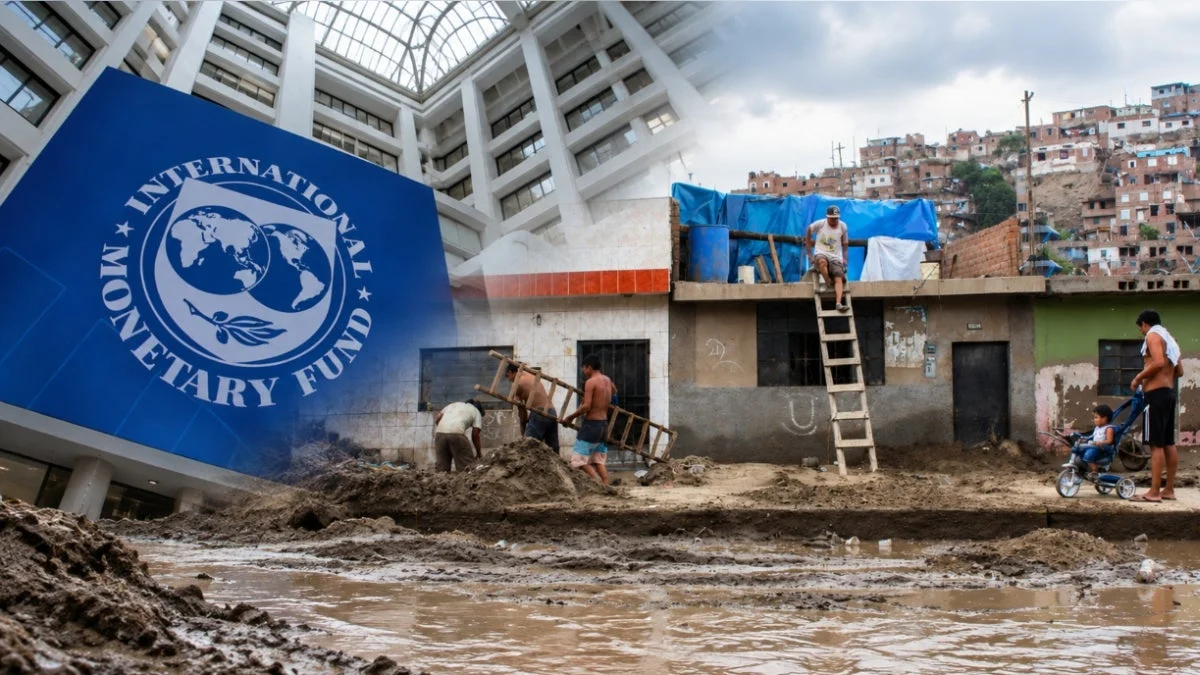
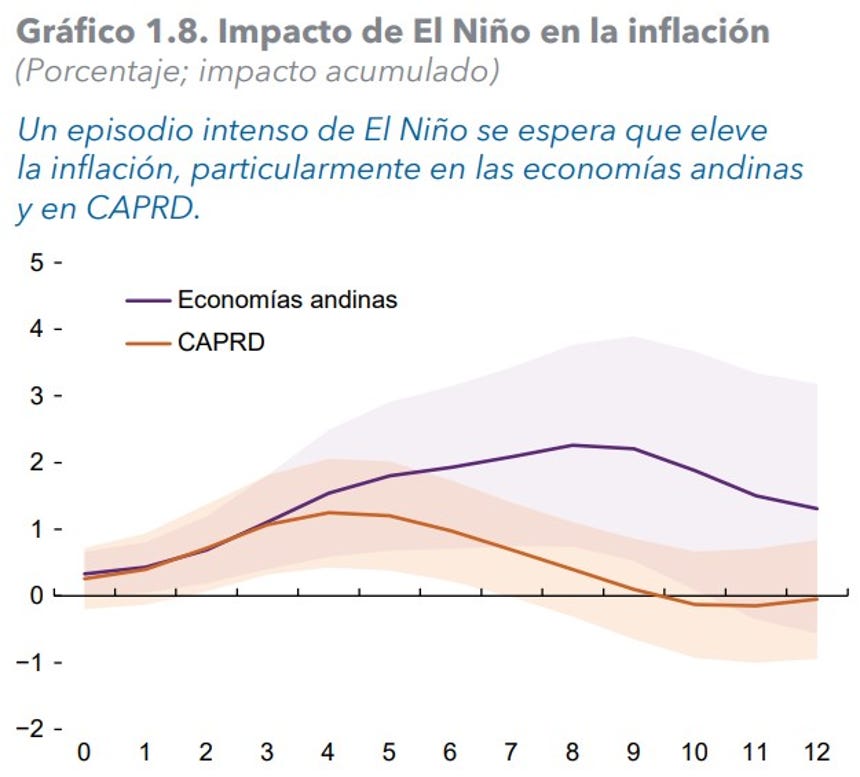
The International Monetary Fund (IMF) has issued a sobering forecast regarding the potential impact of an intense El Niño phenomenon on the Latin American landscape. In its latest report, Regional Economic Outlook: The Americas, the multilateral organization highlights that the Andean region—specifically Peru, Colombia, and Ecuador—alongside Central American nations, face the highest risk of significant economic contraction. The warning is clear: climate-induced shocks are no longer distant threats, but immediate catalysts for structural damage to agriculture and infrastructure, which in turn threaten to destabilize regional inflation and dampen Gross Domestic Product (GDP) growth.
The Anatomy of the Crisis: Agricultural and Infrastructure Vulnerability
The IMF’s assessment focuses on the dual-threat nature of a severe El Niño. Unlike cyclical economic fluctuations, an extreme weather event of this magnitude disrupts the physical foundations of a country’s economy.
Agriculture: The Frontline of Inflation
The primary transmission mechanism between climate and the consumer’s wallet is the agricultural sector. As rainfall patterns shift and temperatures fluctuate, crop yields are compromised. In Peru, for example, the impact is already being felt in the supply chains for staples such as tomatoes, green peas, and corn. When these essential goods become scarce due to crop destruction or logistical bottlenecks caused by flooding, the subsequent rise in prices is immediate.
The IMF report explicitly notes that an intense episode of El Niño creates "adverse weather phenomena of great magnitude," which leads to an inevitable surge in food prices. This "food inflation" is particularly devastating for lower-income households, who spend a larger percentage of their earnings on basic provisions.
Infrastructure: The Economic Multiplier Effect
Beyond the fields, the IMF identifies infrastructure as a critical point of failure. Intense rains and potential flooding threaten to wash away roads, bridges, and power grids. This physical destruction does more than cost money to repair; it disrupts the movement of goods and labor, effectively lowering the country’s productive capacity. When infrastructure is compromised, the cost of logistics rises, adding a "hidden tax" on every product that moves through the country, further fueling the inflationary cycle.
A Chronology of Climate-Economic Interdependence
To understand the severity of the IMF’s warning, one must look at the historical and current trajectory of climate impacts in the region:
- Pre-2024 Context: Persistent weather instability began to signal changes in ocean surface temperatures, laying the groundwork for the current El Niño cycle.
- Early 2026: Projections of growth for the Andean region began to be adjusted downward as meteorological models predicted a high-intensity El Niño event.
- September 2026: The National Institute of Statistics and Informatics (INEI) of Peru confirmed that the phenomenon had begun to manifest in the markets, with a marked increase in the price of basic food items.
- October 2026 (Present): The IMF releases its Regional Economic Outlook, confirming that inflation in Peru has reached 4.5% annually, breaching the central bank’s target range of 1% to 3%.
- The 2027 Outlook: The IMF projects a cooling of the Peruvian economy, with growth slowing to 2.9% in 2027, down from the 3% estimate for 2026, largely attributed to these persistent climatic and supply-side pressures.
Supporting Data: The Numbers Behind the Warning
The data provided by the IMF and local statistical agencies paints a picture of a region struggling to maintain price stability under duress.
Inflationary Pressures
The 4.5% inflation rate in Peru is particularly concerning because it is "broad-based." The IMF highlights that inflation excluding food and energy—often referred to as core inflation—is also hovering at 4.5%. This indicates that the inflationary pressure is not just a temporary supply shock related to a single crop; it is becoming embedded in the wider economy. When core inflation rises, it suggests that businesses are adjusting their long-term pricing expectations upward, a trend that is notoriously difficult for central banks to reverse without aggressive and often painful interest rate hikes.
GDP Projections
The IMF’s downward revision of Peru’s growth from 3% in 2026 to 2.9% in 2027 serves as a quantitative warning of the "climate tax" on national productivity. While 0.1% might appear marginal, in the context of emerging markets, this represents millions of dollars in lost potential, reduced tax revenue, and stalled poverty reduction efforts.
Official Responses and Policy Challenges
The response to this crisis is a delicate balancing act for central banks and government ministries. In Peru, the Central Reserve Bank (BCRP) has been actively managing interest rates to contain inflation, but they face a "no-win" scenario: keep rates high to fight inflation, or lower them to stimulate an economy weakened by climate disasters.
The Role of International Support
The BCRP has recently sought authorization from Congress to increase its contribution to the IMF by over $2.7 billion. This strategic move is designed to bolster the country’s international reserves and provide a financial cushion should the economic fallout from El Niño necessitate emergency liquidity. By increasing its stake in the IMF, Peru is signaling to international markets that it is preparing for a period of extreme volatility.
Government Mitigation Efforts
National governments across the affected regions are under immense pressure to accelerate infrastructure "climate-proofing." This involves reinforcing bridges, improving drainage systems, and investing in resilient agricultural technologies. However, these investments require significant fiscal space, which is often limited in countries already managing high debt-to-GDP ratios.
Implications for the Future: A Paradigm Shift
The IMF’s report suggests that we are entering a new era where climate risk must be integrated into all macroeconomic forecasting. The implications are profound:
- The End of Predictable Cycles: Traditional economic models, which rely on historical data to predict future growth, are being rendered obsolete by the increasing frequency and intensity of climate events.
- Social Stability: Inflation driven by food prices is a historically reliable trigger for social unrest. The IMF’s warning serves as a tacit alert to political leaders: if the price of food is not stabilized, the political stability of the Andean and Central American regions will be at risk.
- The Necessity of Structural Reform: The report implies that short-term monetary policy (interest rates) is insufficient to combat supply-side shocks caused by climate change. Governments must move toward structural reforms that diversify agricultural production and make critical infrastructure redundant and resilient.
- Regional Cooperation: Because weather events do not respect national borders, the IMF emphasizes that the "Andean and Central American blocks" must coordinate their responses. Sharing data, logistics, and emergency supplies could mitigate the localized impacts of El Niño.
Conclusion
The IMF’s latest analysis is more than a technical document; it is a call to action for governments in the path of the coming storm. The combination of stalled GDP growth and stubborn inflation creates a precarious economic environment for millions of citizens in Peru, Colombia, and Ecuador.
As the world watches the development of this El Niño, the message is clear: the cost of inaction will be measured not only in the millions of dollars lost to infrastructure damage but in the daily rising cost of living for the most vulnerable populations. The path forward requires a synthesis of prudent monetary policy, proactive fiscal investment in climate resilience, and a renewed commitment to regional cooperation. Only through such comprehensive strategies can the region hope to weather the economic pressures that the changing climate is increasingly imposing upon them.