By Political Affairs Desk
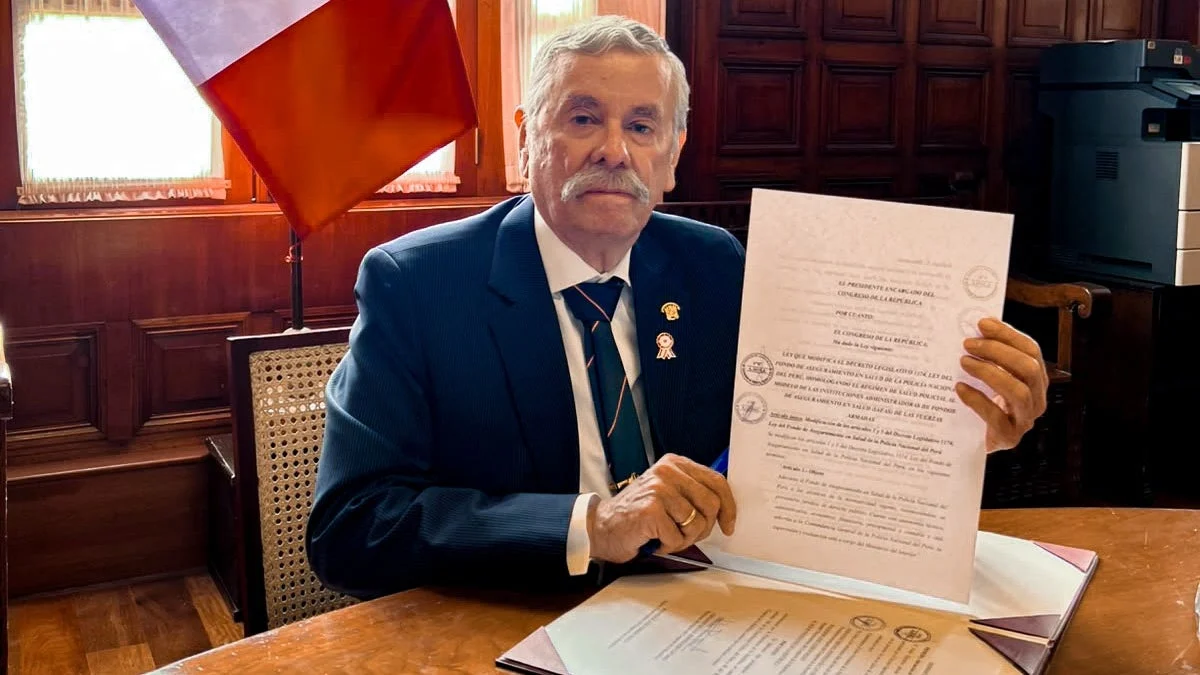
In a significant move that has reignited the debate over judicial independence and the scope of military authority in Peru, the Congress of the Republic officially promulgated a law this week that significantly expands the jurisdiction of the military-police justice system. The legislation, which mandates that members of the National Police and the Armed Forces be tried exclusively within the military-police forum for alleged crimes committed in the line of duty, was enacted by the President of Congress, Fernando Rospigliosi.
This promulgation follows the failure of the Executive Branch to either sign or formally observe the bill within the constitutionally mandated 15-day period. By exercising his constitutional prerogative, Rospigliosi bypassed the Presidency, effectively forcing the measure into law.
Main Facts: The Core of the New Legislation
The newly enacted law introduces a structural change to how the Peruvian state holds its security forces accountable. The legislation centers on the modification of the Military-Police Penal Code and the New Criminal Procedure Code. Its primary objective is to create a "shield" for military and police personnel, ensuring that their actions—when performed in the exercise of their functions—are evaluated solely by military-police courts rather than the civil justice system.
A critical component of the law is the explicit prohibition of double jeopardy. By invoking the legal principle of ne bis in idem ("not twice for the same"), the law prevents an officer from being subjected to simultaneous investigations in both civil and military courts for the same set of facts. In instances where a conflict of jurisdiction arises, the law dictates that the Penal Chamber of the Supreme Court must prioritize the military-police jurisdiction, provided the acts in question occurred during the fulfillment of military or police duties.
For the Armed Forces, the definition of a "function-related crime" has been broadened to include any act committed during military operations aimed at maintaining internal order or conducted within the framework of a declared state of emergency. For the National Police, the scope of the military forum now encompasses tasks related to crime prevention, criminal investigation, identity control, intelligence, and border surveillance.
Furthermore, the law introduces a severe punitive measure: life imprisonment for any military or police official found to be collaborating with criminal gangs or organized crime syndicates by leveraging their official position.
Chronology of the Legislative Process
The road to this law was marked by intense parliamentary friction and procedural maneuvering.
- Initial Drafting and Consolidation: The final text was a consolidation of various legislative proposals, including a primary initiative authored by Fernando Rospigliosi himself. The bill sought to resolve what proponents called "legal uncertainty" for officers operating in high-risk zones.
- The June 23rd Vote: After months of committee review, the bill reached the Plenary. On June 23, the proposal was approved in a second round of voting with 52 votes in favor, 43 against, and 5 abstentions.
- The Attempted Blockade: Following the approval, several members of the opposition—notably Ruth Luque, Sigrid Bazán, and Flor Pablo—filed motions for reconsideration. These motions were intended to pause the bill’s progress and force a re-evaluation of the language, particularly regarding the risks of impunity. However, the ruling majority in Congress successfully pushed back, and these motions were ultimately rejected.
- The Presidential Silence: Upon the bill reaching the desk of the Presidency, the Executive Branch remained silent. By failing to exercise its power to observe the law within the 15-day constitutional window, the Executive effectively allowed Congress to unilaterally finalize the process.
- Promulgation: On this past Monday, exercising his role as the head of the Legislative branch, Fernando Rospigliosi officially signed the law into the public record.
Supporting Data: Defining "Function-Related Crimes"
The technical definitions within the law are what analysts describe as the most "elastic" aspects of the legislation. By defining "function" to include standard police duties—such as criminal investigation and intelligence—the law effectively removes these areas from the purview of civilian prosecutors and judges.
For the military, the definition is tied to the concept of "internal order." Historically, this is a point of contention in Peru, where the use of military forces to quell domestic protests or civil unrest has frequently led to human rights investigations. Under the new law, any lethal incident or excessive use of force during these operations would likely be channeled through military courts, which critics argue are structurally inclined to protect their own personnel.
The inclusion of life imprisonment for corrupt officers is seen by some analysts as a "legislative sweetener," designed to build public support for the law by appearing tough on crime, even as the core of the bill limits the reach of civil accountability.
Official Responses and Political Polarities
The passage of the law has deepened the divide between the Congressional right and the progressive opposition.
The Proponents’ Stance
Defenders of the law, such as Congressman José Cueto and César Revilla, argue that the military and police are currently in a state of "judicial paralysis." They contend that officers are often afraid to act against criminals because they fear being dragged through the civil court system for years, even when their actions were justified by their professional duties. From their perspective, the military-police forum is the only venue with the technical expertise to understand the nuances of military operations and tactical decision-making.
The Critics’ Stance
Conversely, opposition members like Ruth Luque have been vocal about the dangers of this shift. During the debates, Luque stated, "The initiative distorts the concept of function-related crimes." Critics argue that by removing civilian oversight, the law creates a "zone of impunity." They express concern that the military justice system lacks the independence necessary to investigate human rights violations, as the hierarchy in such courts is often beholden to the same command structure as the defendants.
Implications for the Future of Justice in Peru
The promulgation of this law carries profound implications for the rule of law in Peru.
Erosion of Civilian Oversight
The most immediate implication is the weakening of the civil judiciary’s authority over the security forces. Historically, international human rights bodies have emphasized that human rights violations committed by security forces should be tried in civilian courts to ensure impartiality. This law moves Peru in the opposite direction, potentially putting the country at odds with inter-American human rights standards.
The Risk of Impunity
There is a palpable fear among civil society groups that the law will discourage victims of police or military misconduct from coming forward. If the investigation and trial process are conducted internally, the transparency that usually accompanies civil court proceedings—where evidence is public and judicial independence is theoretically higher—will be significantly diminished.
Impact on Institutional Morale
While the law aims to boost the confidence of officers in the field, it also risks creating a two-tier justice system. If the public perceives that soldiers and police are "above the law" or subject to a different set of rules than ordinary citizens, the legitimacy of the state could suffer.
Constitutional Challenges
Legal experts have suggested that the law may face future challenges before the Constitutional Court. Opponents argue that the definition of "function-related crimes" violates the constitutional principle that military jurisdiction should be limited strictly to military-specific offenses (such as desertion or insubordination) and not extended to common crimes or human rights abuses committed against civilians.
As the law enters into force, the eyes of the international community and legal observers in Peru will remain fixed on the first few cases to be processed under this new framework. Whether this change will truly provide "legal security" to the forces, or whether it will serve to insulate them from the essential checks and balances of a democratic society, remains the central question of the legislative term.