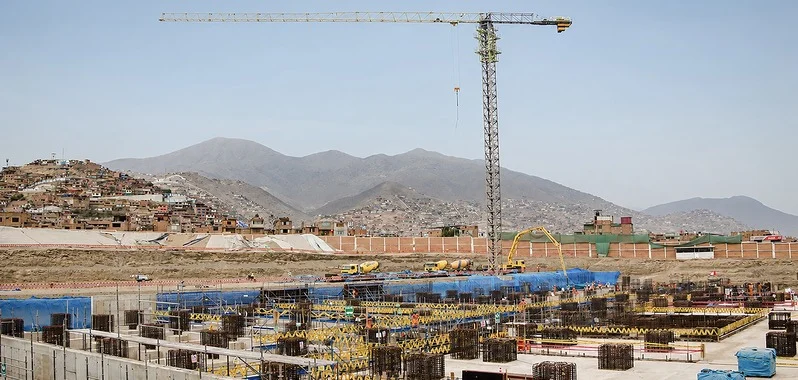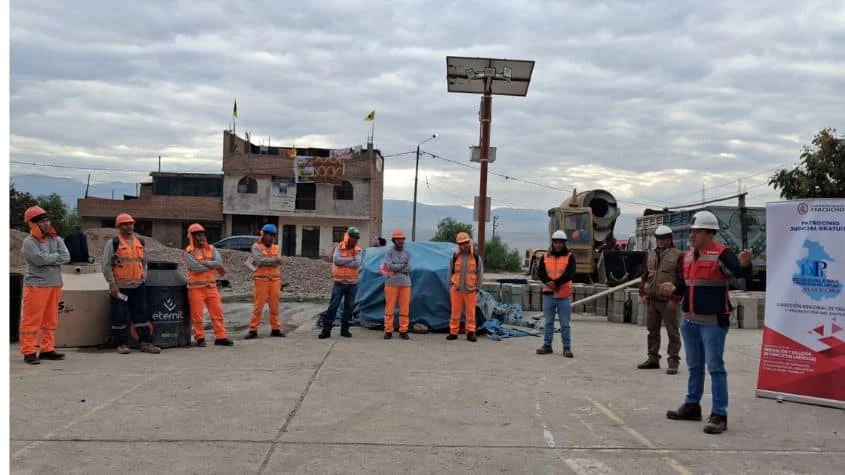
The landscape of healthcare infrastructure in the Peruvian Andes is undergoing a significant transformation. The Autoridad Nacional de Infraestructura (ANIN) has officially commenced the execution phase of the "La Esperanza Regional Hospital," a landmark project located in the district of Amarilis, Huánuco. With a total investment exceeding S/ 230 million, this facility is poised to become a critical pillar for oncology services and specialized medical care, addressing a long-standing deficit in regional health infrastructure.
The project, which represents a massive leap forward for the local community, is being executed under the sophisticated Fast Track delivery method, utilizing the NEC4 ECC contract framework. This strategy is designed to merge design and construction phases, ensuring that the facility moves from the drawing board to reality with unprecedented efficiency.
Main Facts: The Scope of the Project
The project, officially titled "Creation of Hospital Health Services in La Esperanza," is far more than a simple building construction. It is a comprehensive healthcare solution designed to provide the Huánuco region with a modern, high-complexity facility.
The scope of the contract awarded to J & S Servicios Generales S.A.C.—a member of the Constructora Rigaservices S.A. group—is expansive. It encompasses the entire project lifecycle, including:
- Pre-investment and Technical Studies: Finalizing the profile and the comprehensive technical expediente.
- Infrastructure Construction: The development of a state-of-the-art facility designed to house advanced diagnostic and treatment centers.
- Medical Equipment and Furnishing: The procurement and installation of cutting-edge medical technology.
- Operational Integration: Rigorous training for medical staff, technology transfer, and the final commissioning of the facility.
- Maintenance: A four-year post-construction maintenance period to ensure the long-term sustainability of the equipment and physical structure.
With an investment totaling S/ 230,849,146.35, the hospital is scheduled for completion on April 4, 2029.

Chronology of the Project
The journey toward the La Esperanza hospital has been characterized by intense planning and inter-institutional coordination. While the formal signing of the contract and the "first stone" ceremony signify the beginning of the physical works, the groundwork was laid months prior through rigorous feasibility studies.
- Preliminary Phase: Identification of the health gap in the Amarilis district, focusing on the lack of specialized oncological services.
- Contractual Award: Selection of the construction consortium under the NEC4 standard, emphasizing international best practices in construction management.
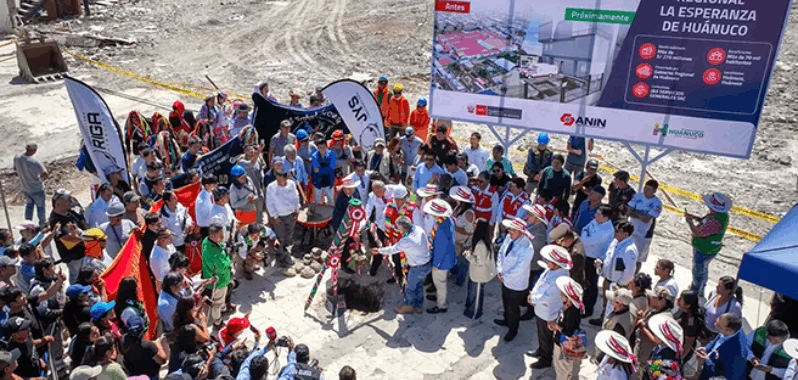
- Formal Commencement: July 2026, marked by the official signing of the contract and the groundbreaking ceremony attended by high-ranking officials.
- Execution Period (2026–2029): The ongoing phase, utilizing Fast Track methodologies to parallelize design and construction.
- Project Completion: Targeted for April 4, 2029, followed by the activation of the four-year maintenance contract.
Technical Methodology: The NEC4 and Fast Track Advantage
The decision to utilize the NEC4 (New Engineering Contract) framework is a strategic move by ANIN to mitigate the traditional risks associated with public works in Peru, such as delays, cost overruns, and litigation.
The Fast Track modality is particularly relevant for a project of this scale. By integrating the design and construction stages, the project team can begin physical works on foundations and structural shells while the final interior design and equipment specifications are being refined. This approach is intended to shave months, or even years, off the traditional delivery timeline, ensuring that the residents of Huánuco gain access to life-saving oncology services as quickly as possible.
Furthermore, the NEC4 contract promotes a collaborative approach. Unlike traditional contracts that often pit the client against the contractor in adversarial legal battles, the NEC4 framework requires both parties to work toward the project’s success, sharing risks and maintaining a transparent, open-book accounting process.
Official Responses and Stakeholder Vision
The groundbreaking ceremony was marked by a sense of shared responsibility and optimism. Hernán Yaipén Aréstegui, the Chief of ANIN, emphasized that the contract signing was the culmination of meticulous planning and the start of a critical "delivery phase."

"This project is a testament to what can be achieved when national infrastructure agencies and local governments align their objectives," Yaipén Aréstegui noted during the ceremony. He urged regional and local authorities to maintain constant communication, emphasizing that the "Fast Track" system requires a level of institutional agility that can only be sustained through consistent collaboration.
Antonio Pulgar Lucas, the Regional Governor of Huánuco, provided a perspective rooted in the immediate needs of his constituents. "For years, families in our region have had to travel long distances—often to Lima—to receive treatment for cancer. This hospital is not just a building; it is a promise of health and hope for our families," he stated. Governor Pulgar highlighted that the project addresses a profound human need, and he pledged full regional support to overcome any logistical hurdles that may arise during the construction phase.
Implications: A New Era for Huánuco’s Healthcare
The impact of the La Esperanza Regional Hospital will be felt far beyond the physical boundaries of the district of Amarilis. By establishing a dedicated oncology center, the project addresses one of the most critical healthcare shortages in the interior of the country.
Strengthening the Regional Network
The inclusion of a Medical Functional Program ensures that the hospital will operate as a hub within the regional health network. This connectivity means that patients from remote areas of Huánuco will have a clear, established pathway for referrals, diagnostics, and long-term care.
Economic and Social Multiplier Effect
The investment of over S/ 230 million serves as a significant economic stimulus for the region. Beyond the creation of jobs during the construction phase, the hospital will require a large staff of highly skilled professionals—doctors, nurses, technicians, and medical physicists—thereby creating a long-term employment ecosystem in the region.

Sustainability and Maintenance
Perhaps the most innovative aspect of the project is the four-year maintenance clause. Historically, public hospitals in Peru have suffered from "the gift that becomes a burden"—where infrastructure is delivered, but quickly degrades due to a lack of funds for maintenance or technical expertise for equipment repair. By including four years of maintenance in the initial contract, ANIN is ensuring that the state-of-the-art equipment remains functional from day one, providing a stable window for the regional government to build its own operational capacities.
Challenges Ahead
Despite the optimism, the project faces a complex road ahead. The geography of the Huánuco region presents logistical challenges for the transport of specialized medical equipment and construction materials. Furthermore, maintaining the Fast Track schedule will require perfect synchronization between the engineering teams, the suppliers of high-tech medical machinery, and the regulatory bodies overseeing the building’s safety and environmental standards.
However, the use of the NEC4 framework provides a robust toolkit for conflict resolution and change management. If the collaboration between ANIN, the regional government, and the construction consortium remains as fluid as it was at the commencement, the project stands a high chance of setting a new standard for hospital construction in Peru.
Conclusion
The La Esperanza Regional Hospital project is a landmark in the modernization of Peru’s public infrastructure. By prioritizing specialized oncology services and adopting international management standards like the NEC4 contract, the Autoridad Nacional de Infraestructura is signaling a shift toward more reliable, efficient, and sustainable public works.
As the construction begins in the heart of Huánuco, the focus will now shift to the execution phase. For the thousands of families currently awaiting better healthcare access, April 2029 marks more than just a completion date; it represents the arrival of essential care, right where it is needed most. The success of this project will likely serve as a blueprint for future hospital developments across the nation, demonstrating that with the right contractual tools and political will, high-quality, complex infrastructure can be delivered to the heart of the provinces.