Loreto, Peru — The silence of the Amazon rainforest is frequently punctured by the quiet, creeping disaster of oil spills. In a significant development for environmental justice, the Organismo de Evaluación y Fiscalización Ambiental (OEFA) announced in December 2018 that it would launch formal oversight actions in Lote 64, a contentious oil block located in the heart of the Loreto region. This intervention follows persistent, documented allegations by the Federation of the Achuar Nationality of Peru (FENAP) regarding severe, unaddressed environmental liabilities.
For the indigenous Achuar and Wampis nations, this announcement is a long-overdue acknowledgement of a reality they have lived with for years: the systematic degradation of their ancestral lands and the poisoning of their lifeblood—the rivers.
The Core Conflict: Lote 64 and the Burden of Neglect
The grievances presented by the FENAP revolve around a legacy of environmental negligence dating back to 2012. During the operation of the block by the company Talismán, significant oil spills occurred in the sector of Situche Central, specifically near the 2x and 3x oil wells within the community of Putuntsa.
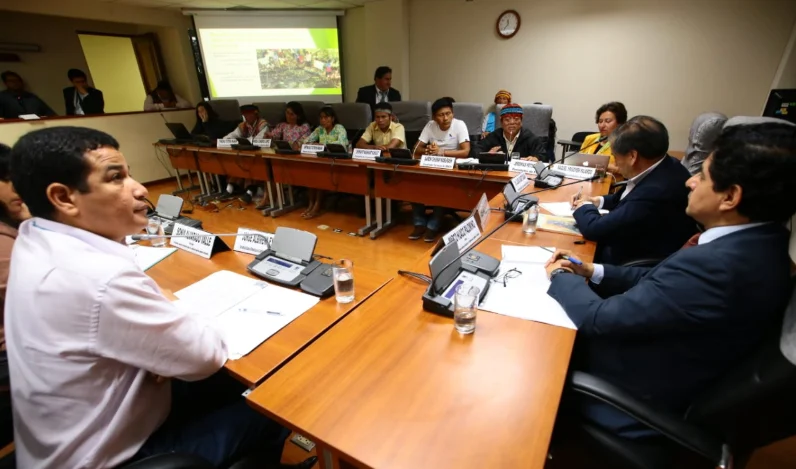
Despite the passage of time, these sites remain unremediated. During a working session convened by the Congressional Commission for Andean, Amazonian, and Afro-Peruvian Peoples, Environment, and Ecology (CPAAAAE), indigenous leaders presented harrowing accounts of the current state of these areas. Shiwiant Mashiant, president of the AIM basin organization—a constituent of FENAP—testified that the contamination has seeped into the primary water sources upon which both the Achuar people and their livestock depend.
The environmental footprint of these spills is not merely a statistical issue; it is a human rights crisis. When water sources are compromised, the entire socio-ecological fabric of the indigenous community begins to unravel, leading to forced displacement, loss of traditional food sovereignty, and a burgeoning health emergency.
A Chronology of Dispossession and Contamination
To understand the current tension, one must look at the timeline of industrial activity in these territories:
- 2012: Major oil spills are recorded in the Situche Central sector of Lote 64 under the stewardship of Talismán. These incidents mark the beginning of a long-standing "environmental liability"—a term often used by authorities to mask the human suffering caused by corporate neglect.
- 2018: The conflict intensifies as indigenous organizations, supported by legal entities like the International Institute for Law and Society (IIDS) and Peru EQUIDAD, ramp up their demands for the cancellation of Lote 64.
- December 2018: Following the congressional testimony, the OEFA publicly commits to fiscalization actions for the first quarter of 2019 to evaluate the magnitude of the unremediated sites.
- The Ongoing Struggle: Throughout this period, the transition of operations to companies like Geopark has occurred without the prerequisite "social license," leading to claims of violations of international standards regarding the right to Prior Consultation.
The Shadow of the Norperuano Pipeline
While Lote 64 occupies the center stage of this particular protest, it is far from an isolated incident. Jeremías Petsein Peas, president of FENAP, has drawn urgent attention to the widespread contamination linked to the Norperuano Pipeline, specifically in the communities of Chuintar and Uwinsta.
Petroperú, the state-owned enterprise, stands accused of failing to remediate spills that have occurred along the pipeline’s path. The human toll is becoming increasingly visible. Petsein Peas described a demographic suffering from a cluster of symptoms: chronic stomach issues, unexplained skin lesions, and persistent headaches. These conditions are disproportionately affecting the most vulnerable members of the community—women and children—who are often the primary users of the contaminated river waters.
Wrays Pérez, president of the Autonomous Territorial Government of the Wampis Nation (GTANW), characterized the state’s response as a failure of moral and political duty. "For the Amazon, there is no money to remedy this impact," Pérez stated during the congressional meeting. "Nothing is being done. Petroperú knows it must remediate the Norperuano Pipeline."
Official Responses and the Search for Justice
The congressional hearing brought together several state actors, including representatives from the Ministry of Health (MINSA). Recognizing the severity of the medical reports, MINSA officials committed to conducting a comprehensive health diagnostic and providing emergency care to those residing near the contaminated zones.
However, for the indigenous leadership, health aid is a bandage on a gunshot wound. The fundamental demand remains the systemic change of the extractive model. Both the FENAP and the Wampis Nation argue that their constitutional rights—and their rights under ILO Convention 169—were violated because they were never consulted regarding the contracts signed with extractive companies like Geopark.
The lack of a social license is not merely a bureaucratic hurdle; it is a manifestation of the lack of consent from the rightful stewards of the land. The indigenous nations argue that without their explicit agreement, these contracts are legally and morally illegitimate.
Implications: A Battle for Territorial Autonomy
The struggle of the Achuar and Wampis nations is indicative of a broader, global conflict: the clash between national economic extraction agendas and the territorial rights of indigenous peoples.
1. Environmental Degradation and Biodiversity Loss
The Amazon is a fragile ecosystem. Oil contamination in the headwaters of the river basins does not stay local; it travels downstream, affecting biodiversity, fish populations, and the overall health of the rainforest. The failure to remediate these sites ensures that the cycle of destruction continues for decades, potentially causing irreversible damage to the regional flora and fauna.
2. The Erosion of State Legitimacy
When a state like Peru fails to enforce its own environmental regulations, it undermines the rule of law. The fact that indigenous groups must travel to the capital to lobby Congress for basic environmental cleanup reflects a centralized, top-down governance model that ignores the realities of the Amazonian peripheries.
3. Legal Precedents
The support provided by legal organizations such as the IIDS and Peru EQUIDAD suggests that this fight will continue in the courts. By framing their struggle around the lack of "Prior Consultation," these nations are utilizing international human rights law to hold both the state and private corporations accountable. This approach challenges the "business as usual" model of the extractive industry in Peru.
Conclusion: The Path Forward
The announcement by the OEFA to inspect Lote 64 is a small, technical victory in a much larger, existential battle. However, as the history of the region demonstrates, monitoring is not the same as remediation. Until the state moves beyond temporary oversight and commits to a binding, long-term plan for the full remediation of the Norperuano Pipeline and the Lote 64 spills, the Achuar and Wampis nations will continue their fight.
The resilience of these communities, who have organized themselves into autonomous territorial governments, signals a shift in the landscape of Amazonian politics. They are no longer merely "affected populations" waiting for aid; they are active political agents demanding the right to decide the future of their own territories.
As the world watches the escalating impacts of climate change, the stewardship of the Amazon by its original inhabitants is not just a local issue—it is a global necessity. The demand of the Achuar and Wampis is clear: stop the pollution, acknowledge the rights of the indigenous, and begin the long process of healing the land. Anything less is a continuation of the same neglect that has scarred the Amazon for far too long.