Introduction
In a significant move to bolster the sanitation infrastructure of southern Peru, the Ministry of Housing, Construction, and Sanitation (MVCS) has officially launched a major project to modernize the water supply network in the province of Ilo, Moquegua. With a financial commitment exceeding S/ 15.5 million, this initiative aims to address the long-standing challenges of water distribution, aiming to provide reliable and consistent service to approximately 13,000 residents.
The project, which is being executed by EPS Ilo S.A. under the supervision of the Technical Organization for the Administration of Sanitation Services (OTASS), represents a critical step in the region’s commitment to improving public health and urban development through modernized hydraulic engineering.
Main Facts: Engineering a Sustainable Future
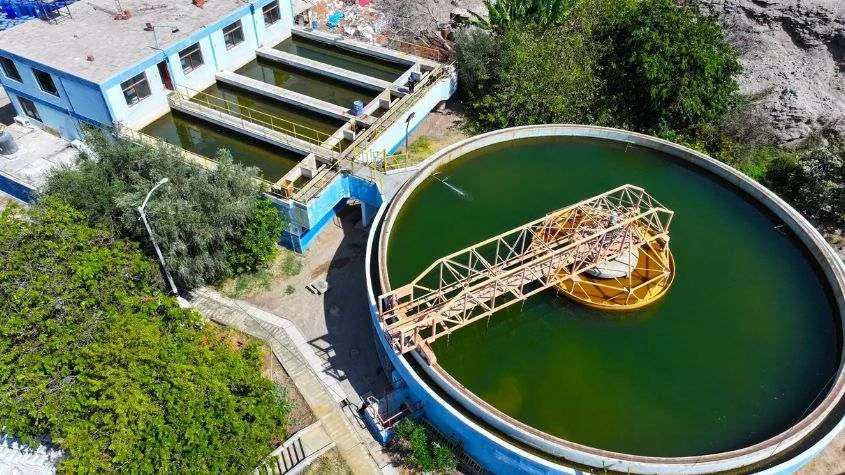
The core of this investment lies in the installation of a new, high-efficiency conduit line. Spanning over 5.3 kilometers, the new pipeline will connect the reservoir R-1 of the Cata Catas Potable Water Treatment Plant (PTAP) to the Costa Azul Distribution Chamber.
Beyond the primary pipeline installation, the project is comprehensive in its technical scope. It includes:

- System Integrity: The installation of specialized chambers designed for air and water purging, which are essential for maintaining pressure stability and preventing pipeline corrosion.
- Strategic Integration: An essential empalme (junction) connection will be constructed in the "18 de Mayo" young town (pueblo joven), ensuring that the expansion benefits historically underserved areas.
- Infrastructure Modernization: By replacing outdated or vulnerable sections of the network, the project aims to drastically reduce physical water losses—a persistent issue in aging municipal grids—and minimize the frequency of emergency service interruptions.
The financial framework for this project is anchored in the Agreement No. 013-2025/OTASS-EPS ILO S.A. and authorized by the Executive Presidency Resolution No. 000002-2026-OTASS-PE. With a total budget of S/ 15,537,364, the project is expected to be completed within a 180-day calendar window.
Chronology: From Planning to Execution
The path to this infrastructure upgrade has been a structured process of institutional collaboration.
- Project Formulation (2025): The necessity for the line was identified through technical assessments conducted by EPS Ilo S.A., highlighting the bottleneck between the Cata Catas treatment plant and the Costa Azul distribution point.
- Institutional Alignment: OTASS formalized the transfer of funds under the 2025 agreement, ensuring that the necessary capital was ring-fenced for this specific infrastructure work.
- Administrative Approval (2026): With the issuance of the Executive Presidency Resolution early in 2026, the project received the final administrative green light, transitioning from paper to the construction phase.
- Site Handover (Current Status): Following the recent official handover of the land, mobilization of machinery and crews has commenced. The 180-day countdown for the project began upon the formal commencement of site work.
Supporting Data and Demographic Impact
The province of Ilo is a vital economic and industrial hub in Moquegua. For the 13,000 residents directly impacted, the project is more than a technical upgrade; it is a quality-of-life imperative.
- Service Reliability: The current system often struggles with pressure drops, especially during peak demand hours. By optimizing the transit from the PTAP Cata Catas to the distribution point, the pressure will be more evenly distributed across the grid.
- Technical Specifications: The 5.3 km line is designed to handle increased flow rates, future-proofing the area against urban growth over the next decade.
- Economic Efficiency: By reducing "non-revenue water" (water lost to leaks before reaching the consumer), EPS Ilo S.A. will be able to manage its resources more efficiently, potentially stabilizing operational costs in the long term.
Official Responses and Institutional Strategy
During the site handover ceremony, the Executive President of OTASS emphasized the agency’s ongoing commitment to the province. A key point of the official discourse was the status of EPS Ilo S.A. following its exit from the "Transitional Support Regime" (RAT).

"The departure from the RAT does not mean the end of our partnership," the OTASS representative noted. "On the contrary, the Ministry and OTASS remain committed to providing the technical and financial scaffolding necessary to ensure that local sanitation providers can operate independently and effectively."
The strategy is clear: rather than simply offloading responsibility, the state is continuing to act as a guarantor of service quality. This "post-RAT" phase is characterized by targeted interventions—like the Cata Catas project—that address specific structural weaknesses rather than broad, systemic failures.
Implications for the Future of Sanitation in Peru
The Moquegua project serves as a microcosm for the broader challenges and solutions facing the Peruvian sanitation sector. As cities grow, the infrastructure designed decades ago often fails to keep pace.
1. The Decentralization of Responsibility
By empowering local entities like EPS Ilo S.A. to manage large-scale capital projects with central government oversight, the state is fostering a model of "responsible autonomy." This model is intended to build local institutional capacity, ensuring that when future repairs or expansions are needed, the local utility has the expertise to execute them.

2. Addressing "Water Poverty"
Water security is a pillar of national development. Projects like this reduce the reliance on secondary, often unmonitored water sources, which can pose public health risks. Providing a clean, constant flow to 13,000 residents in Ilo directly correlates to lower incidences of water-borne illnesses and better household economic stability.
3. Scaling the Model
The success of this project will likely be used as a template for other provinces currently undergoing institutional transitions. The integration of "technical tables" (mesas técnicas) to address obstacles, as seen in parallel efforts in Lima and Callao, suggests that the government is moving toward a more proactive, consultative approach to construction management. By destrabando (unblocking) bureaucratic hurdles through these tables, projects that might have stalled in the past are now moving to the construction phase at a more rapid pace.
Conclusion
The construction of the new conduction line from the PTAP Cata Catas to the Costa Azul distribution chamber is a landmark investment for Ilo. It represents the successful convergence of centralized funding, technical oversight, and local operational execution. As the project enters its 180-day construction phase, the residents of Ilo can look forward to a more resilient water supply system—one that reflects the national priority of universal, reliable, and sustainable sanitation services.
This initiative is not merely about pipes and concrete; it is about the long-term stability of a region that serves as a cornerstone of the Moquegua economy. As the project unfolds, it will continue to stand as a benchmark for how local EPS providers can collaborate with national entities to achieve tangible, life-changing results for the Peruvian citizenry.