By: Political Analysis Desk
Date: October 22, 2026
The democratic pulse of Peru’s capital has reached a definitive milestone. The National Office of Electoral Processes (ONPE) has officially completed the 100% processing of votes for the 2026 Regional and Municipal Elections in several key districts across Lima Metropolitan Area. As the dust settles on the October 4th electoral contest, citizens and political observers alike are turning their attention to the new faces and returning veterans who will steer the municipal government for the 2027-2030 term.
While the electoral process moves toward its final administrative phase, it is essential to remember that unlike regional contests, municipal elections in Peru are determined by a single round of voting. This means the results currently being confirmed by the ONPE represent the final decision of the electorate, pending only the formal proclamation by the Jurado Nacional de Elecciones (JNE).
The Core Results: A New Map for Lima
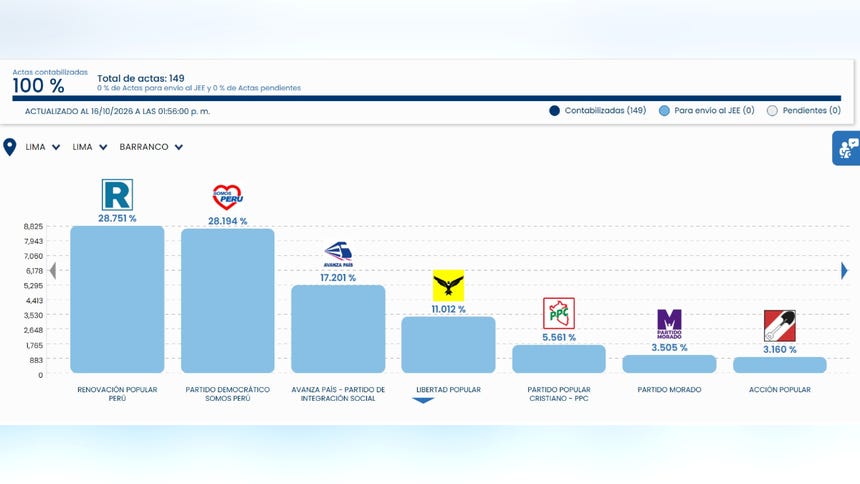
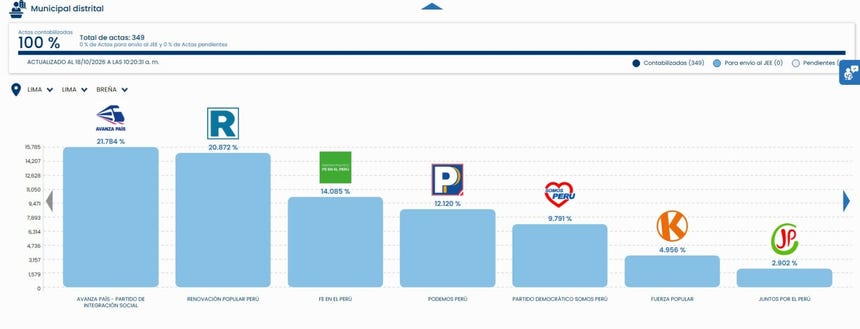
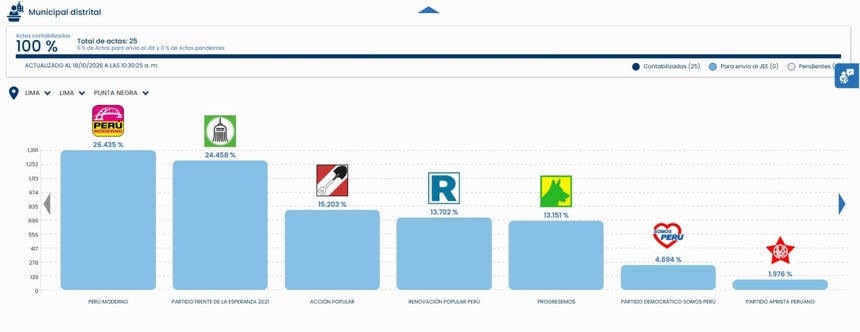
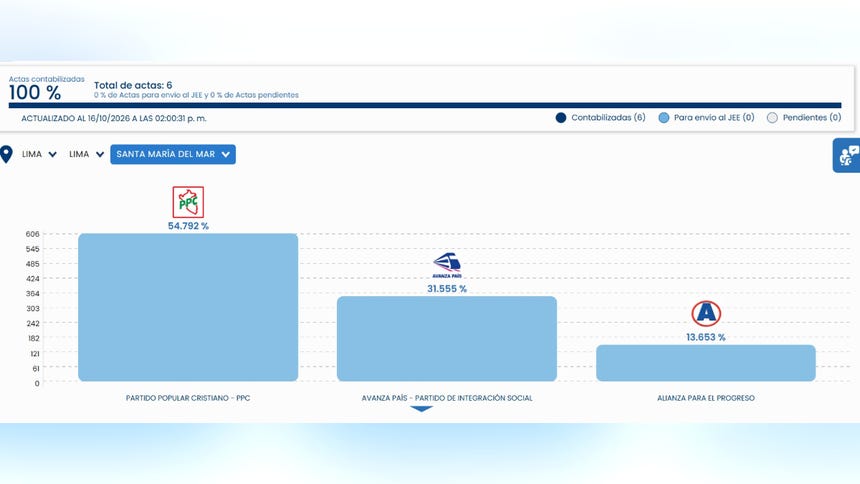
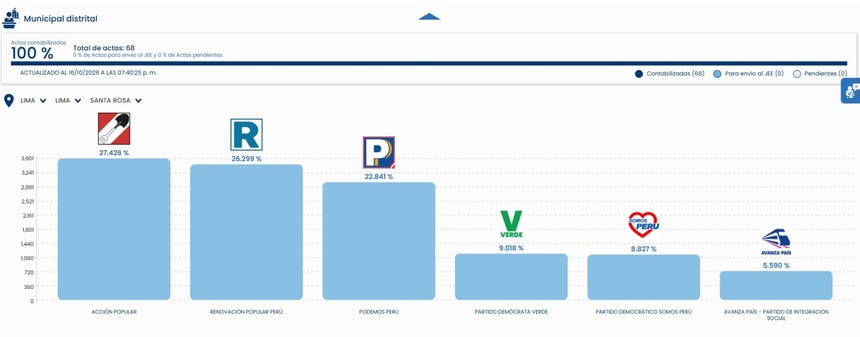
As of Tuesday, October 20, 2026, the ONPE confirmed that 11 districts—including Ancón, Barranco, Breña, Jesús María, Independencia, Punta Negra, San Bartolo, Santa María del Mar, Santa Rosa, Los Olivos, and Punta Hermosa—have reached the 100% threshold of vote counting. Subsequent updates have expanded this list to include Cieneguilla, La Molina, Lurín, Pachacámac, Pucusana, and San Borja.
Key Electoral Highlights
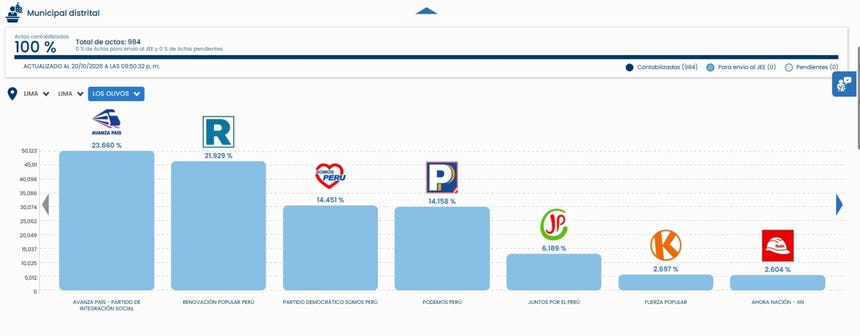
- The Return of the Veteran: In Los Olivos, Felipe Castillo Alfaro (Avanza País) has secured victory with 23.6% of the vote. This victory is particularly notable given his extensive history in the district, having served as mayor for six non-consecutive terms. His win marks a significant chapter in the district’s political history, as he triumphed over a field that included his own son, the incumbent mayor, Felipe Castillo Oliva, who was running as a lead candidate for Podemos Perú.
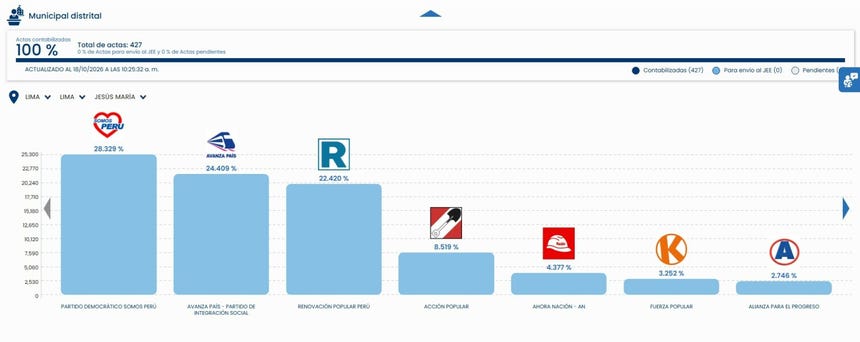
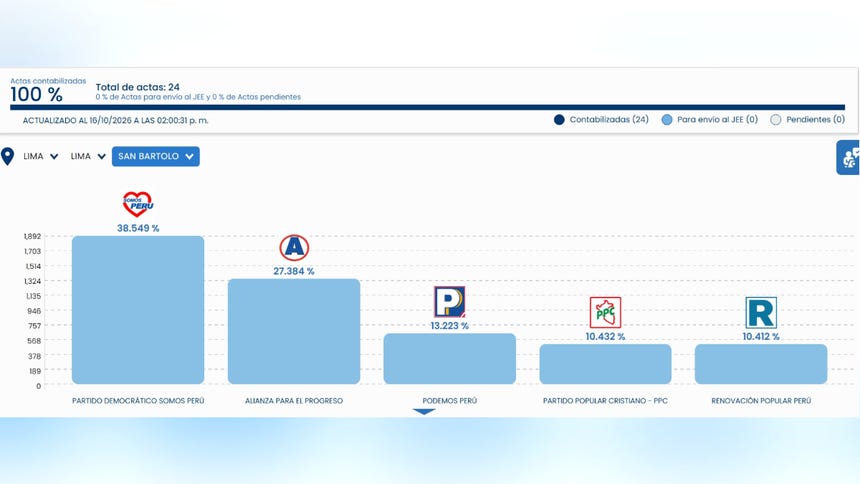
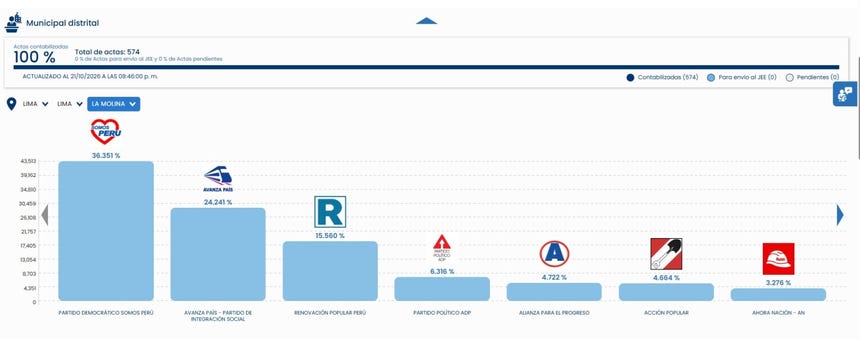
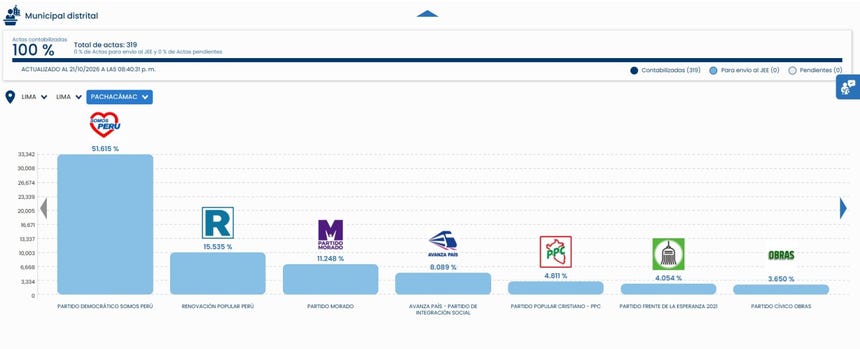
- Somos Perú’s Stronghold: The party has demonstrated significant electoral muscle, securing victories in Jesús María with Luiz Reátegui, San Bartolo with Rufino Enciso Ríos, Punta Hermosa with Max Ampuero, La Molina with Juan Carlos Zurek, and a commanding win in Pachacámac with Guillermo Pomez, who garnered over 51% of the vote.
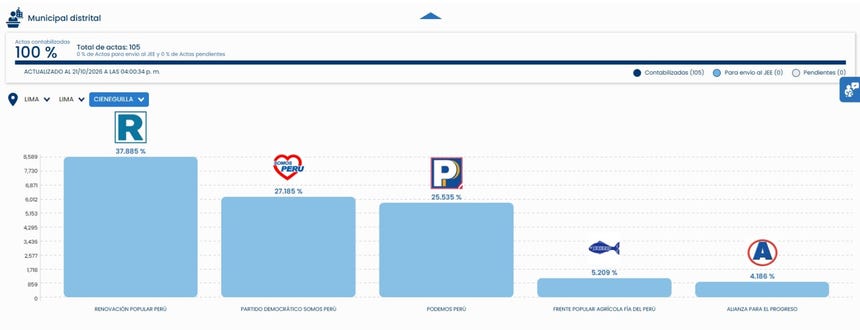
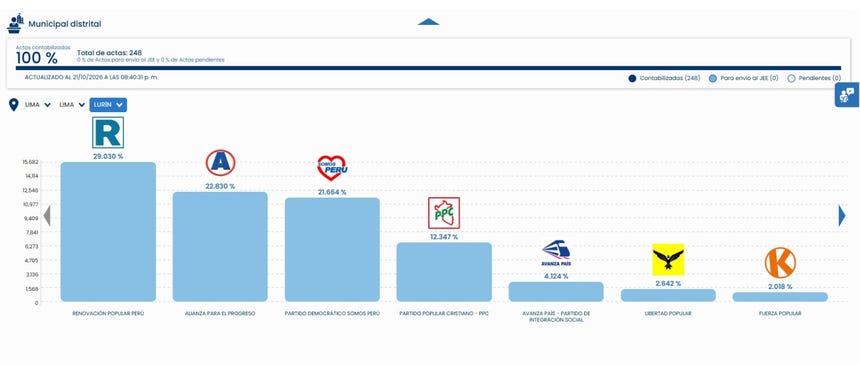
- Renovación Popular’s Influence: The party has maintained a firm grip on several districts, with victories in Barranco (Manuel Espinoza), Cieneguilla (William Salazar Mateo), Lurín (Rosa Torrejón), and San Borja (Javier Diez Gaspard).
Chronology of the Electoral Process
The road to these results began on October 4, 2026, when millions of citizens headed to the polls. The process of counting votes is a meticulous endeavor, managed by the ONPE to ensure transparency and accuracy.
- Election Day (Oct 4): Citizens cast their ballots under the supervision of ONPE and the observation of the JNE. Initial exit polls hinted at the trends that would later be confirmed in the official counts.
- The Processing Phase (Oct 5–Oct 15): The "actas" (tally sheets) were digitized and transmitted to the ONPE data centers. During this time, electoral officials processed millions of individual votes, navigating the complexities of remote areas and suburban districts alike.
- Handling Challenges (Ongoing): A critical part of this period involved the "actas observadas" (challenged tally sheets). When discrepancies arise—such as arithmetic errors or missing signatures—the documents are sent to the Jurados Electorales Especiales (JEE). These bodies hold public hearings to resolve these challenges, ensuring that every valid vote is counted and every fraudulent or erroneous entry is addressed.
- Completion and Proclamation (Current Phase): Once the JEE validates the challenged acts, the final data is integrated into the ONPE’s national database. The JNE then takes the final step of issuing resolutions to proclaim the winners, effectively granting them the legitimacy to hold office.
Detailed District Performance Analysis
To understand the political sentiment across Lima, one must look closely at the percentage splits within these finalized districts.
North and Central Lima Trends
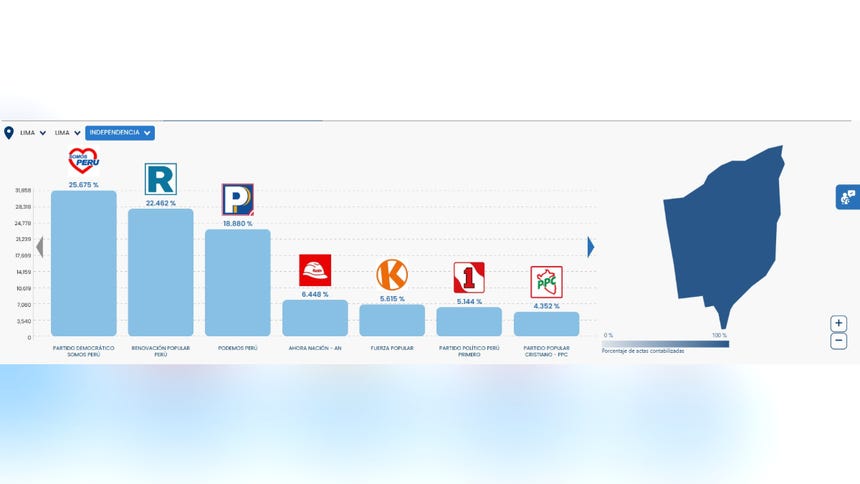
In Independencia, the race was tightly contested, with Somos Perú clinching the top spot with 25.67% of the vote, narrowly defeating Renovación Popular (22.46%) and Podemos Perú (18.88%). This indicates a highly competitive political climate where no single party holds an absolute mandate, necessitating coalition-building and negotiation for the new administration.
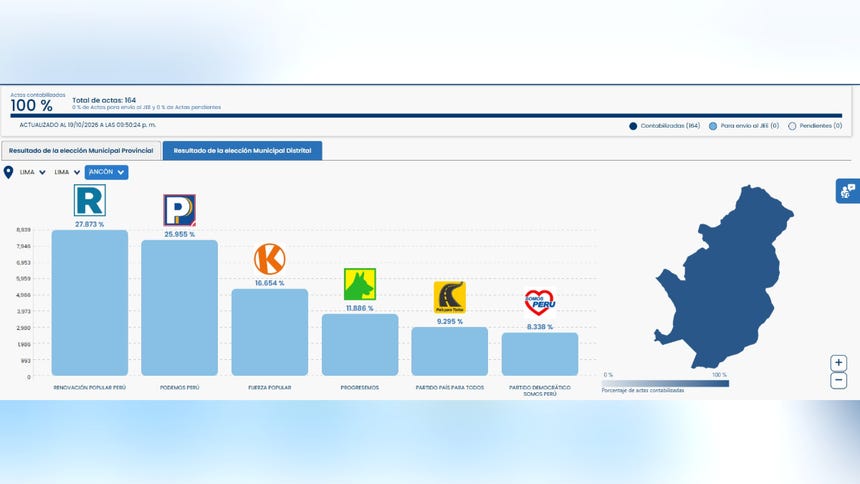
In Ancón, Renovación Popular emerged victorious with 27.87%, followed by a strong showing from Podemos Perú at 25.95%. The presence of multiple parties receiving significant double-digit percentages suggests a pluralistic electorate that demands responsiveness from its local representatives.
Coastal and Southern Districts
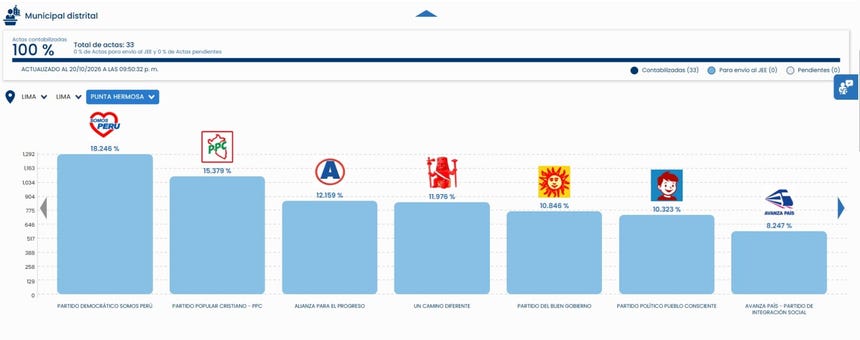
The coastal districts show a clear preference for continuity or specific party platforms. In Punta Hermosa, Max Ampuero of Somos Perú (18.24%) secured his victory after several previous attempts at public office, representing a triumph of persistence in the local political arena.
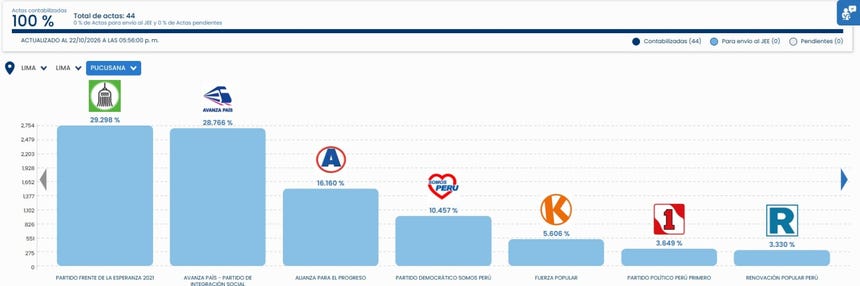
In Pucusana, the race was exceptionally close. The Partido Frente de la Esperanza 2021 won with 29.29% of the vote, closely trailed by Avanza País with 28.76%. This narrow margin of less than one percent highlights the vital importance of every single vote in local elections, where administrative decisions directly impact the daily lives of residents.
The Implications of the 2026 Results
The results of the 2026 elections suggest several broader implications for Peruvian politics:
1. The Fragmentation of Local Power
The data confirms a trend of political fragmentation. In many districts, the winning candidate secured the mayoralty with less than 30% or even 20% of the vote. This indicates that while the candidates have a mandate, they do not necessarily enjoy a majority consensus. Consequently, the incoming mayors will need to be adept at managing municipal councils that will likely be composed of diverse, and potentially opposing, political factions.
2. A Shift in Electoral Loyalty
The defeat of incumbents in key areas, such as the transition in Los Olivos, suggests that voters are willing to cycle through leadership to find solutions to persistent urban problems, including security, public infrastructure, and waste management. The reliance on established figures—like Felipe Castillo Alfaro—shows that in times of uncertainty, voters often revert to "known quantities" rather than experimental candidates.
3. The Role of the JNE and Administrative Integrity
The entire process reinforces the importance of the JNE and ONPE as the final arbiters of democracy in Peru. The public hearing process for challenged acts provides a layer of transparency that is essential for maintaining public trust in the electoral system. By holding these hearings in public, the electoral authorities ensure that the final results are not just a reflection of the ballot box, but a product of a rigorous legal and democratic process.
Official Responses and Next Steps
The ONPE has reiterated that its role is strictly technical: to count the votes as they appear on the actas. The political legitimacy, however, rests with the JNE, which will soon issue the formal credentials to the elected officials.
"The integrity of our electoral system is based on the granular attention to detail," stated an ONPE representative during a recent press briefing. "By resolving challenged acts in a public, transparent manner, we ensure that the will of the people is upheld, regardless of how slim the margin of victory might be."
For the winning candidates, the work is only just beginning. Over the coming months, these individuals will prepare their transition teams. They will inherit the fiscal responsibilities, ongoing infrastructure projects, and the specific socio-economic challenges of their respective districts.
A Look Ahead
As the final results trickle in for the remaining districts, Lima is preparing for a new administrative cycle. The 2027-2030 term will likely be defined by how well these new mayors address the core concerns of their constituents: public safety, the efficiency of public services, and the revitalization of local economies.
The 2026 Municipal Elections have served as a diagnostic tool for the health of Lima’s democracy. While the political landscape appears fractured, the peaceful and orderly completion of the vote count demonstrates the resilience of Peru’s democratic institutions. The next four years will test whether these new administrations can bridge the gap between campaign promises and the concrete realities of municipal governance.
For citizens, the takeaway is clear: the electoral process does not end at the ballot box. It continues through the scrutiny of the results, the formalization of the winners, and the ongoing oversight of the officials they have entrusted with the future of their districts. As the JNE begins the distribution of credentials, the focus shifts from the campaign trail to the city hall, where the real work of local governance will commence in early 2027.