By: Dr. Eng. Raúl Delgado Sayán
UNI 1966, CIP 9927. Chairman of the Board, Cesel S.A.
Member, Director Emeritus of the External Advisory Board, Civil and Environmental Engineering, Georgia Institute of Technology
Introduction: The Myth of the Professional Signature
In the public consciousness of Peru, the discourse surrounding seismic vulnerability is almost exclusively tethered to a single, sobering statistic: approximately 70% of the nation’s housing stock is classified as informal. According to data from the Peruvian Chamber of Construction (CAPECO), this vast majority of homes are built without engineering oversight or technical criteria. Consequently, those living or working in "formal" structures often breathe a sigh of relief, operating under the dangerous assumption that a professional signature acts as a divine shield—a structural talisman that will somehow repel the kinetic fury of a major earthquake.
However, in the unforgiving discipline of structural engineering, there is no such thing as protection by decree. To believe one is immune to seismic risk simply because a building was signed off by an engineer is a dangerous fallacy. This mindset has birthed a phenomenon that is arguably more lethal than blatant informality: the "formal informality" of modern engineering and mega-projects.
The Chronology of Silence: 280 Years of Accumulated Energy
To understand the urgency of the current situation, one must look at the geological clock. The central coast of Peru, home to the nation’s economic and political heart, has been eerily quiet since the catastrophic earthquake of 1746, which reached an estimated magnitude of 8.6 to 8.8 Mw.
For 280 years, the subduction zone has been silently accumulating massive amounts of geotectonic energy. We are currently operating well beyond the logical limits of this seismic silence. An office building or public facility constructed in 1996—designed under the codes and seismic hazard maps of that era—is now facing a tectonic reality for which it was never intended. If these structures are not rigorously audited, retrofitted, and brought up to the standards of current seismic resilience, they represent a latent risk. The "formal" status of these buildings is merely a piece of paper that will offer zero resistance to the energy currently coiled beneath our feet.

The Trojan Horse: Government-to-Government (G2G) Contracting
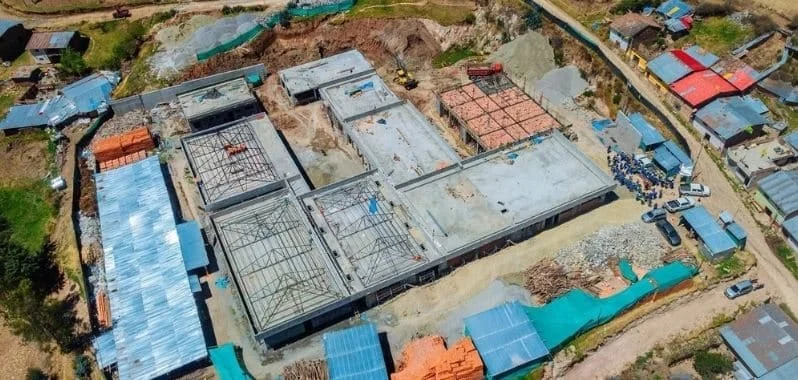
Perhaps the most insidious manifestation of this "formal informality" is found in the high-stakes world of state-led mega-projects, particularly those executed under Government-to-Government (G2G) agreements.
Under the umbrella of these special contractual frameworks, foreign entities are often brought in to spearhead the design and construction of critical national infrastructure. A recurring, alarming trend is the attempt by these international consortia to "import" construction regulations from their countries of origin, effectively bypassing or treating the Peruvian E.030 Seismic Design Code as an optional guideline.
One must ask: To what extent are these foreign professionals truly versed in the unique, high-risk ecosystem of Peru? Our seismic hazard profile and soil characteristics are distinct from those in Europe, North America, or Asia. The E.030 norm is not a bureaucratic hurdle; it is a hard-won code forged in the crucible of our own historical tragedies. It is tailored to the extreme conditions of our territory. To substitute it with international standards—often designed for lower-risk seismic zones—is not merely an engineering error; it is a profound ethical breach and a potential criminal act. When public safety is sacrificed for the sake of contractual expediency, we are not building infrastructure; we are building future ruins.
Supporting Data and the "Venezuela Mirror"
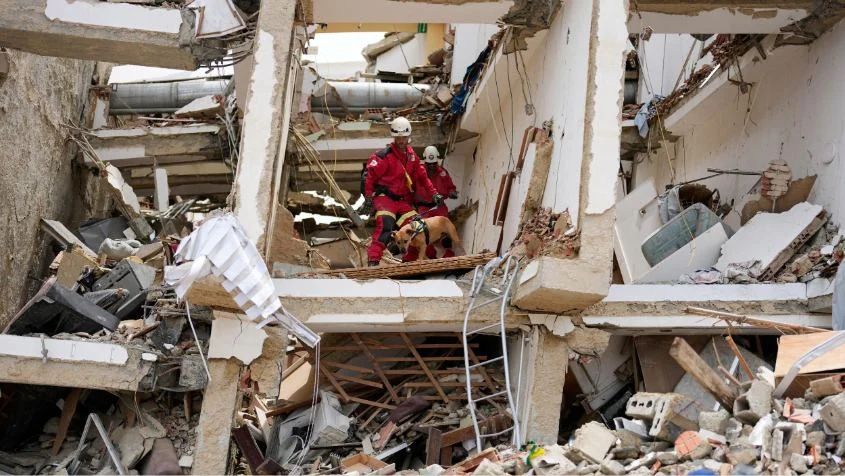
We often treat engineering theory as an abstract debate until reality imposes its cost in blood and rubble. The recent seismic events in Venezuela provide a harrowing case study. The tremors, while of a magnitude lower than what Peru expects to face, resulted in the collapse of numerous "formal" buildings—structures that were professionally designed, permitted, and built by registered companies.
The aftermath has been catastrophic. The United Nations Development Programme (UNDP) estimates direct physical damages at approximately US$ 6.7 billion. However, once the indirect costs—economic paralysis, the destruction of supply chains, and the loss of human capital—are factored in, that figure could easily triple.

Behind these astronomical figures lie thousands of preventable deaths. If we in Peru continue to ignore the necessity of auditing older "formal" structures and enforcing the absolute primacy of the E.030 code, we are essentially inviting a similar fate. We cannot claim to be "prepared" while our critical infrastructure remains a collection of professionalized guesses.
Official Responses and the Regulatory Gap
The regulatory response in Peru has been inconsistent. While bodies like the National Institute of Civil Defense (INDECI) and the Geophysical Institute of Peru (IGP) provide excellent data on seismic risks, the implementation gap remains wide.
The current legal framework often prioritizes the existence of a permit over the substance of the engineering. When a G2G contract is signed, the oversight often shifts to the contracting entity, effectively insulating the project from local technical scrutiny. This is a systemic failure. The state must assert its sovereign right to ensure that every mega-project, regardless of the nationality of the contractor, complies with the most stringent local seismic requirements.
Implications: The Urgent Need for a New Paradigm
The implications of our current trajectory are clear:
- Mandatory Audits: We must launch a national program to audit critical infrastructure built prior to the most recent updates of the E.030 code.
- Regulatory Primacy: It must be legally codified that no international contract or G2G agreement can override the Peruvian seismic code. Any deviation must be treated as a violation of public safety.
- End of the "Formal" Shield: We must stop using the term "formal" as a synonym for "safe." We need a culture of continuous maintenance and structural health monitoring for all major public buildings.
- Professional Accountability: Engineers and project managers must be held personally and professionally liable if they knowingly bypass local seismic requirements in favor of imported, inadequate standards.
Conclusion: No Room for Moral Grandstanding
The tragedy of "formal informality" is that it costs the citizen and the state far more than declared informality. In the former, the public pays a premium for the promise of security and receives, in exchange, a "maquillado" (makeup-covered) danger.

We can no longer afford to hide behind the 70% informality rate as a way to deflect responsibility for the failings within the formal state and corporate sectors. While we strive to educate the population on self-construction, we must simultaneously hold our largest contractors and government entities to the highest possible standard.
The upcoming major seismic event is not a question of if, but when. The earth is storing the energy; our buildings must be ready to release it. We must ensure that our engineering responses are governed by the harsh reality of our soil and our seismic history, not by the convenient flexibility of international contracts. It is time to stop the charade of paperwork-based safety and move toward a true, performance-based resilience. The lives of millions of Peruvians depend on our ability to distinguish between a signature on a page and the structural integrity of the foundations upon which our nation stands.
References:
- CAPECO. Vivienda formal: el mejor mecanismo de prevención frente a fenómenos naturales. Informe Económico de la Construcción – IEC 90 – June 2025.
- BBC Mundo. Cuántos miles de millones de dólares costará la reconstrucción en Venezuela tras los terremotos y con qué recursos cuenta el país para afrontarla. July 8, 2026.
- Instituto Geofísico del Perú. Un día como hoy en 1746. October 28, 2020.