As the 2026 fiscal year approaches its final quarter, the Peruvian government is maneuvering to secure a significant expansion of its public budget. The Commission for the Budget, functioning under the newly established bicameral structure of the Peruvian Congress, has moved to approve a supplemental credit totaling S/ 8.228 billion. This injection of capital is presented by the executive branch as a critical measure to bolster national security, fortify infrastructure against the impending El Niño 2026-2027 phenomenon, and ensure the uninterrupted delivery of public services.
The proposal, which has already cleared the legislative committee stage with broad support, now heads to the full plenary session of the 190-member legislature—comprising 130 deputies and 60 senators. The scale of this budgetary adjustment reflects a government attempting to balance fiscal responsibility with the urgent need for strategic investment in a volatile regional environment.
The Core Mandate: Why Now?
The urgency behind this supplemental credit stems from a combination of cyclical environmental risks and structural economic requirements. As the country looks toward the 2026-2027 cycle, meteorologists and government agencies have flagged the potential return of the El Niño phenomenon, a recurring weather pattern that historically wreaks havoc on Peruvian infrastructure, particularly in the northern regions.
Beyond environmental mitigation, the budget seeks to stabilize the domestic landscape. The government has prioritized security spending, an area that has seen increased public scrutiny due to rising concerns over crime and national defense capabilities. By formalizing this expenditure now, the administration aims to ensure that agencies have the necessary liquidity to execute contracts and finalize projects before the fiscal year concludes, preventing the "stop-start" cycle that has historically plagued public investment in Peru.
A Chronology of the Legislative Push
The path to the current budgetary proposal was not overnight. The process followed a structured timeline that underscores the administration’s focus on long-term planning:
- September 2026: The Ministry of Economy and Finance (MEF) finalized its fiscal year-end projections, identifying a gap between existing allocations and the requirements for national defense and disaster preparedness.
- October 21, 2026: During the thirteenth non-ordinary session of the Bicameral Budget Commission, the executive’s proposal was presented for debate. The session concluded with a decisive vote of 32 in favor and two abstentions, signaling strong inter-party consensus on the necessity of the funds.
- Late October 2026: Following the committee’s approval, the dictamen was forwarded for inclusion in the legislative plenary agenda.
- November 2026 (Projected): The full legislative body is expected to debate and vote on the measure. Should it pass, the funds will be immediately disbursed to the relevant ministries to ensure execution before the 2027 fiscal cycle begins.
Financial Architecture: Balancing Debt and Revenue
A pivotal aspect of this budget expansion is the strategy behind its funding. The S/ 8.228 billion will be drawn from two distinct sources, reflecting a hybrid approach to public finance:
1. Ordinary Resources (S/ 3.799,7 Billion)
Approximately 46.2% of the credit will be funded through "Recursos Ordinarios." This portion is underpinned by an improved fiscal collection performance during the second half of 2026. This demonstrates the government’s ability to capitalize on recent economic gains to fund immediate operational costs without increasing the debt burden.
2. Sovereign Bond Issuance (S/ 4.428,7 Billion)
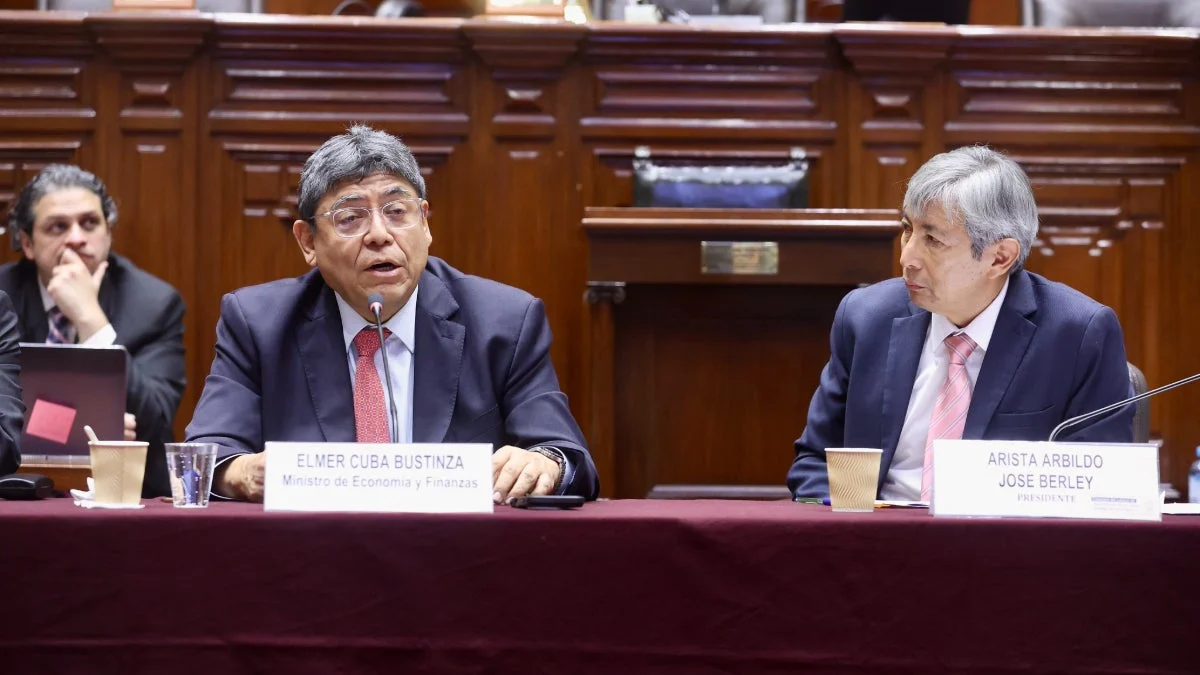
The remaining 53.8%—the majority of the supplemental credit—will be financed through the issuance of sovereign bonds, both domestically and internationally. This move has sparked debate, but the Minister of Economy and Finance, Elmer Cuba, has been quick to defend the strategy, citing the relative stability of Peru’s credit profile.
Economic Implications and Fiscal Rules
The Ministry of Economy and Finance acknowledges that this infusion of capital will alter the year-end fiscal metrics. Currently, the annualized deficit stands at 0.9% of the Gross Domestic Product (GDP). With the incorporation of this S/ 8.228 billion, the projected deficit for the end of 2026 is expected to climb to 1.8% of GDP.
While this represents an increase, the MEF maintains that it remains comfortably within the fiscal rules established for the year, which set a ceiling of 1.8%. Furthermore, the government projects that total public debt will reach 29.3% of GDP post-issuance—a level the administration deems sustainable. This strategy aims to avoid "fiscal shock" while simultaneously injecting enough capital to prevent an economic contraction during the transition into 2027.
Sectoral Allocations: Where the Money Goes
The distribution of the funds highlights the government’s current priorities, which shift away from pure administrative costs toward capital investment and defense:
- Defense (S/ 1.832,3 million): The largest share, aimed at modernizing equipment and strengthening deterrence.
- Interior (S/ 1.097,4 million): Focused on citizen security and law enforcement capabilities.
- Transport and Communications (S/ 1.037,8 million): Essential for maintaining the national road network, especially in preparation for the upcoming El Niño season.
- Education (S/ 762 million): Targeted specifically at the early 2027 school campaign, including the provision of learning materials.
- Health (S/ 691,5 million): Including a specific allocation of S/ 347,3 million for hospital infrastructure improvements.
- Pan American Games 2027 (S/ 237 million): Funding for the organization and logistical preparation of the international sporting event.
The Official Defense: Minister Elmer Cuba’s Perspective
Minister Elmer Cuba has been the primary architect and defender of this budgetary plan. In his address to the Bicameral Commission, he emphasized that the spending is not merely elective but strategic.
On National Defense
Addressing the controversial purchase of combat aircraft, Minister Cuba framed the expenditure as a necessity for national sovereignty rather than an offensive posture. "These aircraft have a deterrent character, not an offensive one," Cuba stated. He argued that in a shifting global landscape, maintaining a visible defense capacity is essential to prevent regional actors from underestimating Peru’s ability to defend its interests.
On Bond Financing
Addressing critics of the 53.8% reliance on debt, the Minister pointed to Peru’s competitive interest rates. He noted that Peruvian Treasury bonds currently pay an average annual rate of 6.3%. Compared to neighboring nations that have faced rates between 14% and 16%, Cuba argued that Peru is utilizing its favorable credit rating to borrow at an efficient cost, avoiding the high-interest traps that have hampered other regional economies.
On Social Programs
Regarding the funding for school kits, the Minister highlighted a secondary benefit: the economic stimulus. By placing orders for the 2027 school season now, the government provides micro and small enterprises (MYPEs) with the necessary working capital to begin production, effectively creating a ripple effect of local economic activity.
Addressing the Climate Crisis: Beyond the Budget
In addition to the main supplemental credit, the government is moving to address the immediate threat of forest fires, which have plagued various regions of the country. Minister Cuba indicated that the executive branch is drafting a supreme decree to allocate S/ 21 million specifically for the purchase of "helibaldes"—specialized equipment for helicopters to fight wildfires. While this is an auxiliary measure, it signals an increased responsiveness from the MEF to urgent, non-planned climate events.
Conclusion: A Delicate Balancing Act
The proposed supplemental budget is a microcosm of the challenges facing the Peruvian state as it closes the 2026 cycle. By opting for a mix of fiscal discipline and targeted debt-financed investment, the government is attempting to ensure that the transition into 2027 is marked by stability rather than stagnation.
Whether this maneuver succeeds will depend on the effective execution of these funds—specifically the ability of the ministries to translate paper allocations into tangible infrastructure and security outcomes. As the legislative plenary prepares to vote, the eyes of the nation remain fixed on whether this injection of S/ 8.228 billion will indeed provide the necessary armor for the challenges of the coming year.