Executive Summary: A Clash Over Executive Powers
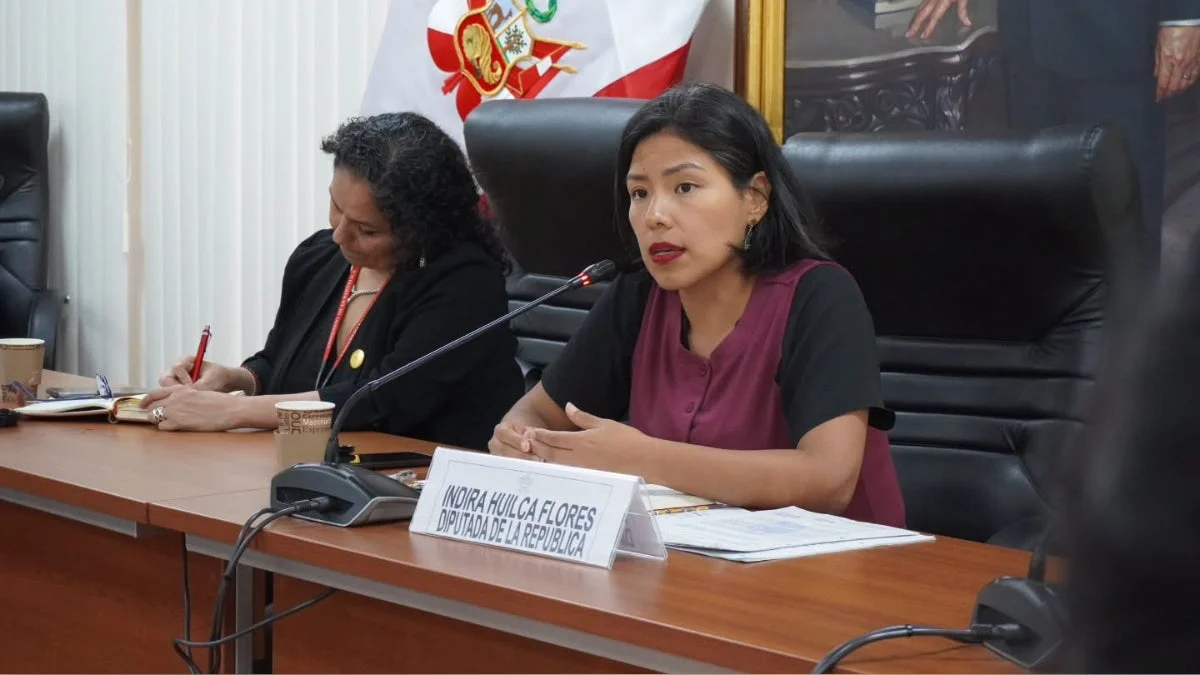
The political landscape in the capital remains volatile following a high-stakes debate within the Senate’s Constitution Commission regarding the delegation of legislative powers to the Executive branch. Indira Huilca, a prominent deputy representing the Ahora Nación bloc, has leveled serious accusations against the Fujimorista faction, alleging a concerted effort to bypass established parliamentary procedures and rewrite legislation that had already secured approval in the Chamber of Deputies.
During an appearance on RPP’s Prueba de Fuego, Huilca asserted that her party stood as a bulwark for democratic principles, preventing a "procedural coup" orchestrated by a faction she characterized as having a tenuous grasp on the requirements of constitutional governance. The core of the dispute revolves not only on the scope of the powers granted to the Executive but also on the integrity of the bicameral legislative process itself.
Chronology of a Legislative Standoff
The current crisis did not emerge in a vacuum; it is the culmination of weeks of strategic maneuvering and shifting alliances.
1. The Initial Approval in the Chamber of Deputies
Weeks prior, the Chamber of Deputies reached a consensus to grant the Executive temporary legislative powers focused on two critical pillars: combatting rising criminal activity and addressing the impending socio-economic threats posed by the El Niño weather phenomenon. Despite the ultimate passage of the bill, the proceedings were marked by significant friction.
2. The Mid-Night U-Turn
Huilca highlighted a curious contradiction in the Fujimorista position. During the initial floor debate, members of the Fujimorista caucus voted against the very measures they later claimed were essential for national security. "They claimed to be deeply concerned about crime and the climate crisis," Huilca remarked, "yet they voted against the measures at the start of the session. It was only at midnight, faced with the embarrassment of their own obstructionism, that they performed a sudden, face-saving reversal."
3. The Senate Commission Intervention
As the debate transitioned to the Senate’s Constitution Commission, the conflict intensified. Huilca alleges that the Fujimorista bloc attempted to use the Senate as a platform to gut the original text approved by the lower house. By attempting to modify the entire scope of the dictamen, the opposition sought to impose a new legislative agenda that strayed far from the original request for powers.
Supporting Data and Policy Implications
The legislative debate is not merely a procedural quarrel; it involves fundamental shifts in state policy.
The Intelligence Agency Controversy
One of the most contentious points raised by Deputy Huilca is the attempt by the Fujimorista bloc to force changes to the structure of the National Intelligence Directorate (DINI). According to Huilca, these proposed changes are an attempt to "return to the 90s," evoking a period of national history marked by surveillance controversies and the consolidation of centralized power.
Huilca contends that these modifications were never part of the original, publicly debated request for powers. Instead, they were "tacked on" through backroom negotiations to ensure they would pass under the guise of an emergency security package.
The Inclusion of Seven Extra Points
The Senate Commission eventually approved seven additional points to the delegation of powers. These additions were facilitated by a controversial alliance between the Fujimoristas and the Obras party. This expansion has been criticized by opposition figures as a "Christmas tree" approach to legislation, where unrelated pet projects are hung onto a necessary executive bill to guarantee their passage without sufficient public or committee scrutiny.
Official Responses and Political Fallout
The political fallout from this session has been swift, with the Obras party—led by Ricardo Belmont—finding itself at the center of a public integrity crisis.
The "Obras" Accountability Question
Huilca was particularly scathing regarding the role of the Obras party in enabling the Fujimorista agenda. She noted that the votes provided by Obras were crucial in securing the majority required to push through the seven extra points in the Senate Commission.
"The Obras party will have to explain their actions to the country," Huilca stated. She emphasized that the constituency of the southern regions, which largely supported the Obras platform, is now bearing the consequences of an alliance that she describes as a "betrayal of the most vulnerable sectors." According to Huilca, the party failed to provide any face-to-face explanation for their alignment with the Fujimorista caucus during the commission session, leaving voters and colleagues in the dark.
The Stance of Ahora Nación
For its part, Ahora Nación has positioned itself as the defender of parliamentary decorum. Huilca’s rhetoric suggests that the party intends to continue highlighting these "democratic deficits." By insisting on the respect of procedures, the requirement for clear, public explanations, and the rejection of last-minute legislative additions, Ahora Nación is attempting to frame the narrative as one of "Institutional Integrity versus Backroom Politics."
Implications for the Future of Governance
The recent events in the Senate have broader implications for the stability of the current administration.
1. The Erosion of Bicameral Trust
When the Senate acts as a tool for the majority to unilaterally dismantle the work of the lower house, the bicameral system loses its function as a check and balance. If the trend of "total modifications" persists, the legislative process becomes unpredictable and susceptible to the whims of shifting, opportunistic alliances.
2. The Security-Power Paradox
The Executive requested powers to fight crime and manage El Niño. By tethering these vital state needs to political restructuring—such as the changes to the Intelligence Directorate—the legislative branch risks stalling the very solutions it claims to support. If the Executive fails to implement effective anti-crime policies, the blame will now be distributed among the architects of these "extra points," complicating the political landscape for the upcoming cycle.
3. Public Sentiment and Trust
The public’s perception of the Congress is currently at a nadir. The "midnight" reversals and the lack of transparency in the Obras-Fujimorista pact further contribute to the growing distance between the political class and the citizenry. Huilca’s public denunciations are a calculated effort to ensure that these maneuvers do not go unnoticed, positioning Ahora Nación as a principled alternative for voters who feel disenfranchised by the current legislative culture.
Conclusion: A Long Road Ahead
As the Senate prepares to finalize the delegation of powers, the shadow of the Commission’s recent debate looms large. The demand for transparency and adherence to democratic norms is unlikely to dissipate. Whether the Executive can effectively utilize these powers—or whether they will be bogged down by the political baggage attached to them by the legislative branch—remains the central question for the coming months.
Indira Huilca’s statements serve as a reminder that in a fragile democracy, the process of lawmaking is just as significant as the content of the laws themselves. The battle for the soul of the Senate is far from over, and as the political temperature rises, all eyes will be on the next session to see if the legislature can prioritize national stability over partisan maneuvering.