In a significant move that signals a regional shift toward energy integration, the Ecuadorian state-owned oil company, Petroecuador, has officially awarded two major supply contracts to its Peruvian counterpart, Petroperú. This deal, valued at approximately US$1.652 billion, marks the formal resumption of commercial relations between the two South American energy giants after a four-year hiatus. The agreement is poised to provide a critical supply of "Oriente" crude to the modernized Talara Refinery, effectively positioning Ecuador as a cornerstone supplier for Peru’s most important refining facility.
The Core Agreement: Supply and Logistics
The deal encompasses the delivery of 16.2 million barrels of crude oil, divided into two distinct timeframes to ensure a consistent flow of raw materials. According to official statements from Petroecuador, the first contract involves the supply of 4.32 million barrels over a six-month period. The second, more substantial contract, accounts for 11.88 million barrels to be delivered over an 11-month span.
Beyond the baseline figures, the contract includes a strategic clause that allows for the procurement of additional volumes, contingent upon market conditions and operational requirements at the Talara facility. This flexibility is a vital component of the agreement, reflecting a shared desire for resilience in an increasingly volatile global energy market.
A Four-Year Hiatus and the Path to Reconciliation
The re-establishment of this commercial bridge follows a period of four years characterized by a lack of operational cooperation between the two state entities. The official announcement of the partnership coincided with high-level diplomatic engagements in Lima, occurring during the Encuentro Presidencial and the XVII Gabinete Binacional.
During this summit, the President of Ecuador, Daniel Noboa, and Peruvian officials emphasized the importance of regional cooperation. The signing of a memorandum of understanding (MoU) serves as the legal and political framework for this renewed alliance. The MoU is designed to foster deeper integration, targeting not only the supply of crude but also exploring collaborative ventures in logistical infrastructure, maritime hydrocarbon transportation, and the optimization of storage facilities.
Chronology: From Stagnation to Strategic Partnership
To understand the significance of this deal, one must look at the recent history of energy politics in the region:
- 2020–2023: A period of commercial distance between Petroecuador and Petroperú. During this time, both nations focused on internal supply chain challenges and sought alternative international partners, leading to a cooling of bilateral energy trade.
- September 2024: Sebastián Maag, the head of Petroecuador, publicly signaled a change in strategy, announcing that Ecuador was actively seeking regional partnerships to swap crude for refined products—a move aimed at stabilizing national refineries and securing stable markets for Ecuadorian exports.
- Early 2025: Diplomatic channels between Quito and Lima accelerated, focusing on the potential for the Talara Refinery to act as an anchor for Ecuadorian oil.
- Present Day: The formal awarding of the 16.2-million-barrel contract signifies the end of the isolationist approach and the beginning of a coordinated cross-border energy policy.
The Strategic Importance of the Talara Refinery
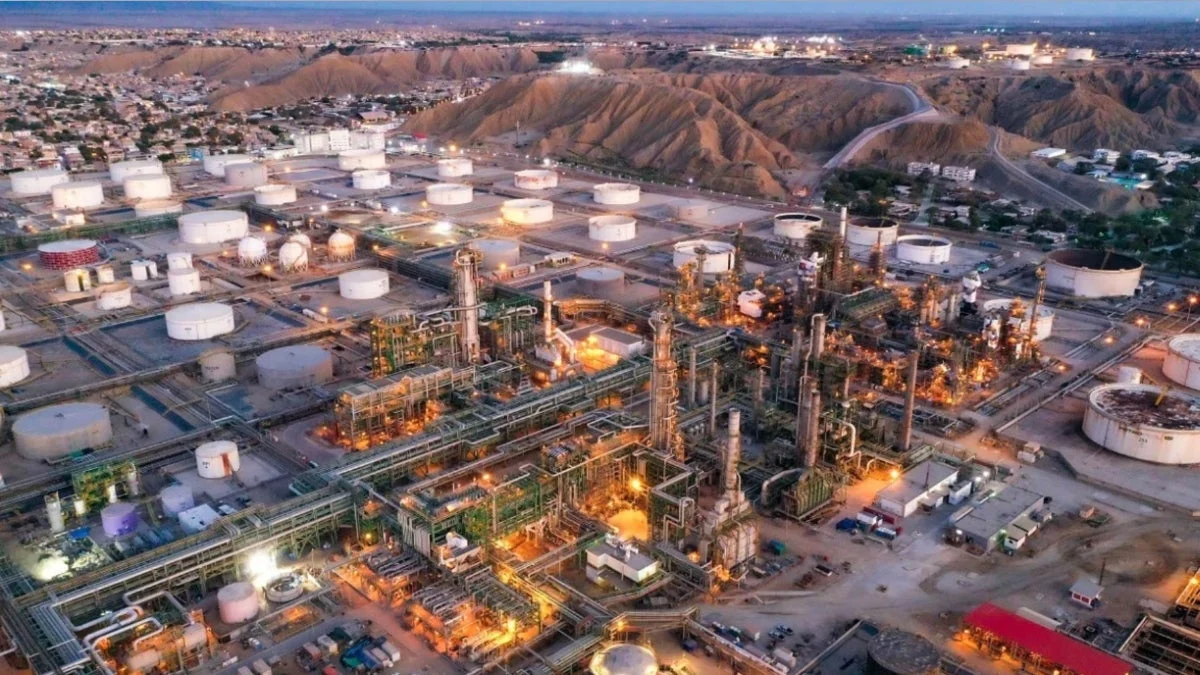
The Talara Refinery is not merely an industrial facility; it is a symbol of Peru’s commitment to energy sovereignty. Located in Piura, the facility has undergone extensive modernization to improve output and environmental standards. However, the refinery’s profitability is intrinsically linked to the steady intake of high-quality crude.
By securing 16.2 million barrels of "Oriente" crude, Petroperú ensures that the refinery operates at optimal capacity. This partnership effectively stabilizes the supply chain for the refinery, reducing the risks associated with global price spikes and logistical delays. For Ecuador, the deal provides a guaranteed buyer for its primary export, allowing the country to diversify its market reach beyond its traditional long-distance shipping routes.
The Lote 192 Factor: Strengthening Local Supply
Simultaneous to the international agreement with Ecuador, Petroperú has made a significant domestic move: the recovery of 100% participation in the Lote 192 in the Loreto region. This was achieved following the approval of the transfer of the 61% stake previously held by Altamesa Energy Perú.
The reactivation of Lote 192 is viewed by analysts and industry groups—most notably the National Federation of Petroleum, Energy, and Related Workers (Fenpetrol)—as a potential game-changer. The heavy crude extracted from this block is expected to complement the supply chain for the Norperuano Pipeline, eventually feeding into the Talara refinery.
While the extraction of this oil involves complex operational challenges, the consolidation of the asset under state control simplifies the decision-making process. The goal is to create a seamless pipeline from the Amazonian fields to the coastal refinery, thereby reducing reliance on imports in the long term, even as the current deal with Ecuador provides the necessary "stop-gap" and base-load supply.
Financial Outlook for Petroperú
The timing of these strategic shifts is critical, given the financial state of Petroperú. By the end of September 2025, the company reported a net loss of US$355 million. While this figure is substantial, it represents a remarkable 52% reduction in losses compared to the US$745 million reported in the same period of 2024.
Several factors contribute to this improving fiscal outlook:
- Increased Domestic Sales: A recovery in the internal market has allowed the company to boost revenue.
- Operational Efficiency: The increased output of refined fuels from the new Talara refinery has begun to yield positive cash flow.
- Strategic Alliances: By entering into agreements like the one with Petroecuador, Petroperú is reducing its exposure to spot-market price fluctuations, allowing for better long-term budgetary planning.
Official Perspectives and Future Implications
The consensus among energy analysts is that the Petroecuador-Petroperú deal is a "win-win" scenario.
"This is about more than just barrels of oil; it is about building a regional energy bloc that can withstand global shocks," noted a policy analyst familiar with the negotiations. "By aligning their infrastructure and supply needs, Ecuador and Peru are reducing the logistical costs that have historically plagued Andean energy projects."
Petroecuador has been vocal about its intention to replicate this model. The company views the deal as a template for future agreements, where the focus shifts from pure commodity trading to "cooperation of interest." This includes potential joint investments in maritime transport—an area where both countries currently face high overhead costs.
Conclusion: A New Era of Andean Energy
The collaboration between Ecuador and Peru serves as a litmus test for regional integration. As both nations face the challenge of modernizing their energy sectors in an era of transition, the reliance on stable, cross-border partnerships becomes essential.
The 16.2 million barrels of crude destined for Talara represent more than just energy; they represent a renewed diplomatic and economic bond. As Petroperú works to stabilize its finances and Petroecuador looks to expand its footprint in the regional market, the success of this agreement could pave the way for a more unified South American energy strategy. With the integration of Lote 192 and the steady supply of Ecuadorian crude, the Talara refinery is well-positioned to become the heartbeat of the region’s hydrocarbon processing, proving that state-owned entities can indeed innovate, collaborate, and thrive in a competitive global landscape.