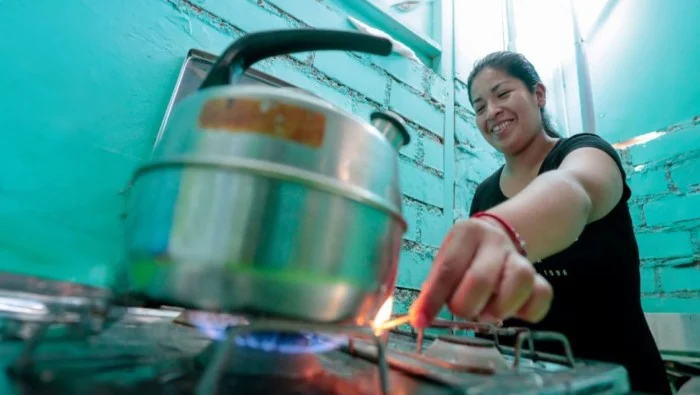
Lima, Peru – [Insert Date] – A comprehensive report released by Promigas Perú, "Natural Gas Sector in Peru 2026," paints a sobering picture of the nation’s natural gas massification efforts. While the service has reached 2.6 million connections, representing 25% of the population, the pace of new user acquisition significantly decelerated in 2025. The report attributes this slowdown primarily to contentious tariff review processes, which are creating a climate of unpredictability and hindering vital investment in expanding the natural gas network.
The analysis, which utilizes data up to and including 2025, highlights a stark decline in new connections. In 2025, approximately 147,000 new users were integrated into the natural gas network, a substantial drop from the 279,000 recorded in 2024 and the 288,000 in 2023. This deceleration poses a significant challenge to Peru’s ambitious goals of making natural gas more accessible and affordable across the country, impacting both residential consumers and industrial development.
Key Findings: A Sharper Look at the Slowdown
The Promigas Perú report underscores that the slowdown is not an isolated incident but a recurring pattern linked to regulatory decisions regarding tariffs. The core issue revolves around the perceived arbitrariness and lack of technical-legal grounding in how tariffs are set, leading to an artificial sense of competitiveness that jeopardizes the long-term viability of concessionaires.
Key takeaways from the report include:
- Reduced Investment Due to Tariff Reviews: Concessionaires are forced to curtail investment in expanding network coverage when tariff reviews result in a significant portion of their incurred investments being unrecognized.
- Impact on Regional Development: The slowdown directly affects the potential for natural gas to reach more households and businesses in various regions, hindering economic growth and energy transition goals.
- Lack of Predictability: The current regulatory environment creates uncertainty for private investors, a critical factor for the continued expansion of the natural gas infrastructure.
- Supply Concerns: Beyond distribution, the report also raises alarms about the long-term availability of natural gas, with current production rates and reserves suggesting a need for proactive exploration and supply diversification.
A Chronology of Challenges: Tracing the Roots of the Slowdown
The Promigas Perú report meticulously details instances where tariff reviews have directly impeded the progress of natural gas massification. These cases provide a clear chronological context for understanding the current challenges.
The Northern Concession: A Precedent-Setting Tariff Review
A pivotal moment highlighted in the report is the tariff review process for the Northern Concession, managed by Gases del Pacífico. During its first tariff review for the 2025-2028 period, the concessionaire saw approximately 45% of its efficient investments unrecognized. This decision significantly impacted the company’s financial outlook and operational strategy.
- Consequence: Faced with a revised tariff structure that did not adequately account for their capital expenditures, Gases del Pacífico was compelled to halt investments aimed at expanding its service coverage. This directly resulted in a drastic reduction in the number of new connections being made in the region.
Ica and Contugas: A Recurring Pattern
The report emphasizes that the situation with Gases del Pacífico is not an anomaly. It points to a similar scenario that unfolded in Ica in 2022, when Contugas, the concessionaire for that region, experienced a significant drop in new connections following its tariff fixation. This historical precedent suggests a systemic issue within the regulatory framework governing natural gas distribution.
- Impact on Contugas: The tariff adjustments in Ica led to a substantial decline in the rate of new customer acquisitions, illustrating the direct correlation between tariff regulation and the pace of massification.
Lima and Callao: The Looming Threat
Perhaps the most concerning projection from the report is the potential for a similar slowdown to affect the densely populated areas of Lima and Callao. The regulatory body, Osinergmin, has reportedly recognized approximately 20% less of the investments substantiated by Cálidda for the 2026-2030 period.
- Anticipated Effect: If this trend continues, it could significantly dampen Cálidda’s ability to expand its network in the country’s most populous and economically vital regions, impacting millions of potential users and businesses.
The report’s analysis firmly places the blame on a tariff-setting process that is characterized as "arbitrary and without technical-legal basis." The underlying concern is that these decisions prioritize an artificial sense of competitiveness over the sustainable operation and expansion of essential energy infrastructure.
Supporting Data and Analysis: Quantifying the Impact
The data presented in the Promigas Perú report provides concrete evidence of the impact of regulatory decisions on natural gas massification. The figures speak volumes about the need for a more predictable and supportive regulatory environment.
- Total Connections: As of 2025, Peru has achieved a total of 2.6 million natural gas connections.
- Population Coverage: This figure represents approximately 25% of the Peruvian population.
- New Connections Decline:
- 2023: 288,000 new users
- 2024: 279,000 new users
- 2025: 147,000 new users (a decline of approximately 47% compared to 2024)
The report’s analysis of the tariff-setting process is crucial. It suggests that the methodology employed by regulators often fails to adequately account for the long-term investment cycles and risks inherent in building and maintaining natural gas distribution networks. This can lead to a situation where concessionaires are unable to recoup their investments, thereby disincentivizing future expansion.
Official Responses and Perspectives: Navigating the Regulatory Landscape
While the Promigas Perú report offers a critical assessment, it also proposes solutions and identifies opportunities for improvement. The report emphasizes the need for greater predictability and viability in the natural gas sector, recognizing that private capital is the primary driver of massification within regulated concessions.
Recommendations for Enhanced Predictability and Stability
The report outlines several key adjustments to foster a more stable and predictable environment for investment:
- Consultation on Demand Projection Methodology: The methodology used to project future demand for natural gas should be subject to public consultation. This would ensure greater transparency and stakeholder buy-in.
- Gradual Transition to Regulated Tariffs: A phased approach to implementing the first regulated tariff is recommended. This would allow concessionaires to adapt and plan more effectively.
- Independent Technical Review Body: The establishment of an independent technical body to review and address discrepancies in tariff calculations and investment recognition is proposed. This would introduce a more objective layer to regulatory decisions.
- Improved Osinergmin Governance: Enhancements to the rules governing the designation of Osinergmin’s board of directors are suggested. This aims to ensure greater independence and expertise within the regulatory agency.
Correcting the "Tarifa Nivelada" (Levelized Tariff)
The report also addresses the issue of the "tarifa nivelada," a regulation that was approved by Congress despite reservations from the Executive branch. As currently drafted, this mechanism excludes users with higher consumption.
- Proposed Equity: To ensure equitable access to competitive natural gas prices across all regions, Promigas Perú proposes extending this mechanism to all regulated users. This would broaden the benefits of the levelized tariff and promote more uniform access to natural gas.
Implications for Peru’s Energy Future: A New Political Cycle and Supply Assurance
The report underscores that the current political cycle presents a crucial opportunity to reignite the momentum of natural gas massification. The incoming administration has reportedly prioritized this objective in its government program, offering a potential window for progress.
A Mature Agenda for Expansion
The natural gas sector is described as having a "mature agenda," with several long-negotiated contract addendums and technically sound projects ready for execution. Crucially, these initiatives rely on private investment, reducing the burden on public finances.
The report highlights four key projects aimed at extending natural gas access to more Peruvians:
- Cálidda Contract Addendum: This is the most advanced project, set to bring natural gas to 15 localities in seven central and southern regions at the same tariff as Lima and Callao. It represents an investment of approximately US$600 million and is expected to benefit over 200,000 users initially.
- TGP Gas Pipeline Extension: Proposed by Transportadora de Gas del Perú (TGP), this private investment of nearly US$2,100 million is under evaluation by the ministry. It aims to extend the gas transportation pipeline, further expanding reach.
- Cusco Regional Gas Pipeline: This project remains in the profile study phase, indicating a longer timeline for its realization.
- New Southwest Concession: The awarding of this concession is not anticipated until 2028, even as the provisional administration of Petroperú concludes in December 2026. This timeline raises concerns about continuity and timely development.
Securing the Supply: A Looming Challenge
Beyond distribution infrastructure, the Promigas Perú report issues a stark warning about the future supply of natural gas. The report notes that no exploratory wells were drilled in 2025. At the current production rate, proven reserves are estimated to last for approximately 13 years.
- Camisea’s Stagnation: The Camisea fields, which account for 95% of Peru’s production, have not seen exploratory drilling since 2017. The primary reason cited is that the existing contract terms do not provide sufficient incentive to recover new investments.
To address this critical supply issue, the report proposes:
- Simplification of Permitting Processes: Streamlining the bureaucratic hurdles associated with exploration and production activities.
- Review of Bidding Conditions: Re-evaluating the terms of oil and gas tenders to make them more attractive for investment.
- Modernization of the Organic Hydrocarbons Law: Updating the legal framework to better align with current industry needs and encourage exploration.
Enhancing Energy Security
The incident on March 1, 2026, where a pipeline rupture in the main transport system reduced Lima’s natural gas supply by nearly 90%, starkly demonstrated the vulnerability of the current system and the urgent need for enhanced energy security. This event underscored the necessity of developing new projects to bolster the nation’s energy resilience.
The report advocates for the concrete realization of initiatives such as:
- Floating Storage and Regasification Units (FSRUs): These offshore facilities can provide flexibility and redundancy in gas supply.
- Micro-liquefaction Plants: Smaller-scale facilities for liquefying natural gas, enabling easier transport and storage.
- Regasification Plants: Facilities to convert liquefied natural gas back into its gaseous state for distribution.
By addressing both the distribution challenges and the critical need for secure and diversified supply, Peru can hopefully navigate the current regulatory complexities and re-energize its commitment to widespread natural gas access, paving the way for sustainable economic growth and a cleaner energy future. The coming period, marked by a new political mandate and a mature set of proposed projects, offers a critical juncture to transform these aspirations into tangible realities.