In a concerted effort to bridge the development gap in Peru’s northern jungle, the Ministry of Transport and Communications (MTC) has initiated a series of high-level evaluations aimed at fast-tracking critical infrastructure projects in the San Martín region. This comprehensive strategy, focused on both aerial and terrestrial connectivity, marks a pivotal shift in how the government intends to integrate isolated provinces like Rioja and Lamas into the national economy.
The push comes following a high-stakes meeting between the Minister of Transport and Communications, José Angello Tangherlini Casal, and key legislative figures, including Senator Víctor Noriega Reátegui and Deputy Arturo Alegría García. This dialogue serves as the foundation for a broader roadmap designed to modernize regional transit, reduce travel times, and ensure that remote communities are resilient against the volatile climatic conditions often associated with the El Niño phenomenon.
Main Facts: A Blueprint for Regional Integration
The central objective of the recent summit was the systematic review of stalled and ongoing investment projects. The MTC has identified San Martín as a priority zone, recognizing that its potential for agricultural and commercial growth is currently stifled by inadequate infrastructure.
The primary focus areas include:

- Aviation Modernization: The expansion and improvement of the Rioja Airport, with a specific focus on increasing capacity for both passengers and cargo.
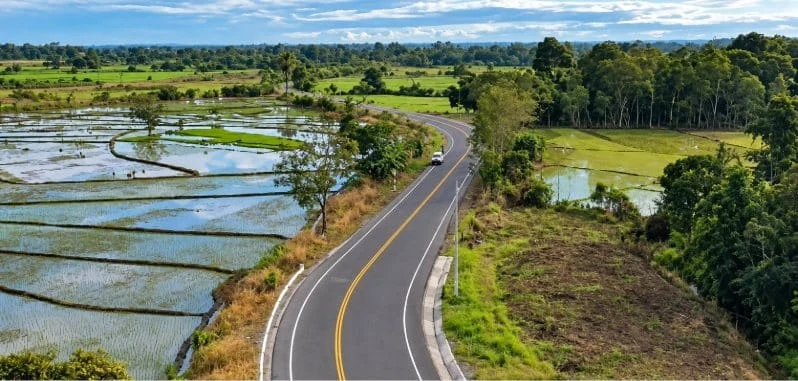
- Road and Bridge Infrastructure: The construction of the Naranjillo and Aguas Claras bridges in Rioja, alongside the rehabilitation of essential village roads.
- Modular Bridge Deployment: A strategic plan to install and replace bridges in the provinces of Lamas, particularly in the districts of Alonso de Alvarado and Pinto Recodo.
By aligning the legislative agenda with the technical capacity of the MTC’s specialized branches—namely Provías Nacional (PVN) and Provías Descentralizado (PVD)—the government aims to bypass bureaucratic bottlenecks that have historically plagued infrastructure delivery in the jungle regions.
Chronology: The Path to Development
The commitment to San Martín’s infrastructure did not occur in a vacuum; it is the culmination of months of technical surveys and political advocacy.
- Initial Phase (Early 2026): Local stakeholders and regional representatives raised concerns regarding the degradation of rural roads and the vulnerability of existing bridge structures in Lamas and Rioja.
- Technical Assessment: The Directorate General of Civil Aeronautics (DGAC) conducted preliminary studies on the Rioja airport, confirming that the facility required urgent sanitation of its physical and legal status to allow for expansion.
- Resource Allocation: Throughout the current calendar year, the DGAC successfully secured and disbursed specific funds to address these legal hurdles, setting the stage for the physical development phase.
- High-Level Summit (Current Month): The meeting between Minister Tangherlini Casal and the legislative delegation served to synthesize these findings and align the various departments of the MTC on a unified schedule for implementation.
- Future Milestones: The coming months are expected to see the finalization of the technical dossiers for the Naranjillo and Aguas Claras bridges, followed by a request for budgetary approval from the Ministry of Economy and Finance (MEF).
Supporting Data: Infrastructure and Connectivity Metrics
The reliance on aerial connectivity in regions like San Martín cannot be overstated. With topography that frequently renders road travel hazardous or impossible during the rainy season, airports function as lifelines.
Airport Infrastructure and Regional Impact
The project to expand the Rioja Airport is part of a larger national initiative. Minister Tangherlini Casal confirmed that the political will exists to secure budget lines not just for Rioja, but for a cluster of strategic airports including Tingo María, Oxapampa, Purús, and Jaén. The technical assessment reveals that by optimizing the physical and legal status of these lands, the government can leverage private-public partnerships to accelerate construction.

The Role of Modular Bridges
In terms of terrestrial connectivity, the MTC has adopted a "Modular First" strategy. Currently, the Executive branch maintains a stockpile of 77 modular bridge structures. These assets are being treated as a strategic reserve to respond to the catastrophic potential of the El Niño phenomenon. By redeploying structures that are decommissioned from other national projects, the MTC aims to maximize efficiency and ensure that the most vulnerable rural districts receive immediate relief without waiting for the lengthy construction of permanent concrete structures.
Official Responses and Ministerial Strategy
During the discussions, the Minister emphasized the need for a collaborative approach between the central government and the regional authorities.
"Our goal is not just to build roads, but to build networks that withstand the test of time and climate," Minister Tangherlini Casal stated during the briefing. He underscored the role of the Vice Minister of Transport, Gabriela Carrasco, in ensuring that the technical standards of the new constructions meet international safety benchmarks.
Furthermore, the participation of the Directorate General of Programs and Projects of Transport (DGPPT) signals that these projects are being integrated into the national master plan. This ensures that the investments in Rioja and Lamas are not isolated local fixes, but are instead designed to plug into the larger, interconnected Peruvian highway system.

Regarding the budget, the Ministry of Economy and Finance (MEF) remains the final arbiter. To mitigate delays, Provías Descentralizado has been tasked with providing direct technical assistance to local governments, helping them navigate the complex administrative requirements to ensure their project proposals are "shovel-ready" when the funding windows open.
Implications: A Sustainable Future for San Martín
The implications of these infrastructure projects extend far beyond the immediate construction phase. For the residents of San Martín, the successful implementation of these initiatives means:
- Economic Resilience: Improved cargo facilities at the Rioja airport will lower the cost of logistics for local agricultural exporters, allowing them to compete more effectively in international markets.
- Public Safety: The replacement of aging bridges in Lamas with modern, modular units will significantly reduce the risk of structural collapse during the annual rainy season, protecting both lives and commerce.
- Social Integration: By improving village roads, the government is effectively reducing the isolation of rural communities, granting them better access to health, education, and social services.
- Climate Adaptability: By creating a "revolving" inventory of bridge structures, the government is building a more flexible infrastructure policy. This allows for rapid response to emergency situations, effectively treating infrastructure as a dynamic, rather than static, asset.
As the MTC moves forward, the success of these projects will serve as a bellwether for the administration’s ability to execute decentralized development. With the backing of both the legislative and executive branches, the region of San Martín stands at the threshold of a connectivity revolution. The coming fiscal cycle will be critical; as the technical assistance from Provías Descentralizado begins to bear fruit, the transformation of the region’s transport landscape is expected to gain momentum, providing a blueprint for sustainable growth across Peru’s most challenging terrains.
In conclusion, the coordination between the MTC, the Congress, and local authorities represents a mature, systematic approach to governance. By prioritizing technical rigor and strategic asset management—such as the modular bridge program—the government is positioning San Martín as a central node in the future of the Amazonian economy, ensuring that geography is no longer a barrier to the region’s prosperity.