Introduction: A Region Under Siege
The Andean region of Cusco, world-renowned for its rich cultural heritage and sensitive ecosystems, is currently facing a dire environmental emergency. A series of intense forest fires have swept across the rugged terrain, threatening biodiversity, local agriculture, and the safety of rural communities. In a decisive move to curb the spread of the flames, the Peruvian government—through the Ministry of Defense and the Peruvian Air Force (FAP)—has launched a high-stakes aerial operation. By integrating sophisticated aviation technology with the tireless efforts of ground-based fire brigades, the state is attempting to bring these uncontrollable infernos under containment before further irreparable damage is inflicted upon the landscape.
The Aerial Strategy: Technological Might Against Nature’s Fury
The logistics of fighting fires in the Andes present a unique challenge. The high altitude, combined with steep, treacherous, and often inaccessible mountain slopes, renders traditional ground-based firefighting equipment insufficient. To address this, the FAP has deployed two of its most versatile assets: a C-27J Spartan transport aircraft and an MI-17 utility helicopter.
The C-27J Spartan and the ‘Guardian’ System
The cornerstone of this aerial intervention is the C-27J Spartan, a tactical transport aircraft known for its ability to operate from short, austere runways. Crucially, this aircraft has been retrofitted with the "Guardian" system, a sophisticated palletized firefighting solution. The Guardian system allows the Spartan to carry over 1,000 liters of water (or fire-retardant solution) in specialized containers. Once positioned over the target, the system facilitates a high-precision discharge, creating a "firebreak" from the sky that stifles the flames and prevents the fire from jumping to adjacent areas.
The MI-17 Helicopter and the Helibucket
Complementing the Spartan’s high-volume capabilities is the robust MI-17 helicopter. Equipped with an underslung "helibucket" (or Bambi Bucket), the MI-17 provides the precision required for targeting specific hot spots in narrow canyons or areas where the Spartan’s larger footprint might be less effective. With a capacity to discharge approximately 600 liters per drop, the MI-17 acts as a tactical surgical tool, cooling down critical zones and protecting specific structures or ecological pockets that are most at risk.

Chronology of the Emergency
The crisis in Cusco did not emerge overnight; it is the culmination of prolonged dry spells and, in many instances, agricultural practices that have spiraled out of control.
- Early Detection: Local authorities reported the initial outbreaks in the province of Calca, which has become the primary theater of operations for the FAP.
- Escalation: As temperatures remained high and humidity levels plummeted, the fires gained momentum, moving from manageable grass fires to full-scale forest blazes that engulfed entire hillsides.
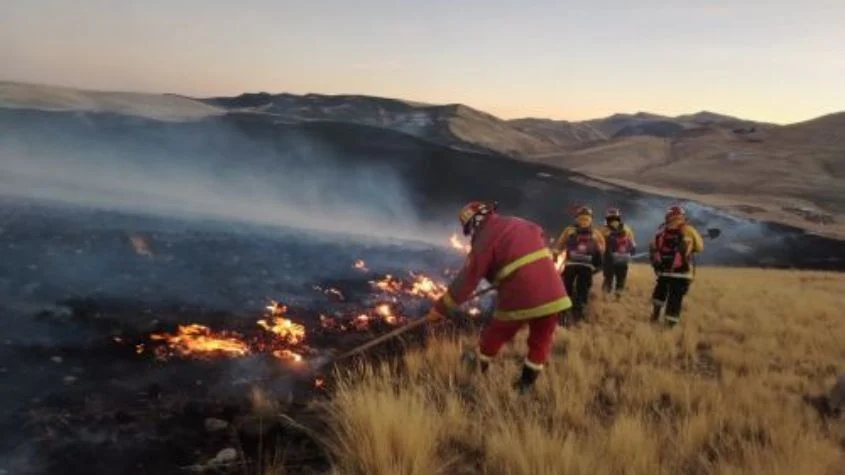
- Mobilization: Upon verifying that ground crews—composed of local volunteer firefighters and community members—were overwhelmed, the regional emergency command requested national support.
- Deployment: Within hours of the request, the Ministry of Defense authorized the movement of FAP assets from Lima to the Cusco theater.
- Current Phase: As of today, the FAP is conducting daily sorties, focusing on creating defensive lines to shield human settlements and critical infrastructure while simultaneously attempting to starve the fire of its fuel source.
Supporting Data: The Scale of the Crisis
The complexity of this emergency cannot be overstated. According to reports from regional authorities and the national fire department, there are at least three major active fires currently being tracked in the Cusco region.
The geographical constraints of the region serve as a force multiplier for the fires. Much of the affected area is located at high elevations where oxygen levels are lower, but wind currents are unpredictable and powerful. These winds, known to sweep through the inter-Andean valleys, can spread embers over several kilometers in a matter of minutes.
Furthermore, the "Guardian" and "Helibucket" operations are governed by a strict tactical doctrine. Captain Javier Pérez of the FAP noted that these missions are not merely about dumping water; they are about "coordinated suppression." The aerial team communicates in real-time with ground spotters who identify the "head" of the fire. By dropping water on the leading edge, they buy time for ground crews to reach the perimeter and physically dig fire lines to starve the blaze.

Official Responses and Strategic Coordination
The response to the Cusco wildfires highlights the evolution of Peru’s emergency management system. Unlike previous years, where aerial support was slower to arrive, the current administration has emphasized a "Rapid Response" protocol.
The Role of the Ministry of Defense
The Ministry of Defense has positioned itself as the central coordinator. By centralizing resources, they ensure that the FAP assets are not idling. When one sector in Calca is successfully cooled, the aircraft are immediately refueled and redirected to the next priority sector. This agility is vital in a region where the fires can be geographically dispersed.
Local Coordination
Captain Pérez emphasized that the success of these operations is entirely dependent on the synergy between military pilots and local civil defense units. "The sky provides the support, but the land provides the victory," says one official. The ground brigades are the ones who finalize the extinction process, ensuring that smoldering embers do not reignite once the aircraft have departed for the nearest airfield to reload.
Environmental and Social Implications
The implications of these fires extend far beyond the immediate smoke-filled horizon of the Cusco valley.

Ecological Impact
Cusco is home to fragile cloud forests and high-altitude grasslands (puna) that serve as crucial water catchment areas. These ecosystems are vital for the regional water cycle. When fire clears the vegetation, the exposed soil is highly susceptible to erosion. During the rainy season, this leads to mudslides and the siltation of rivers, which affects the water supply for both agriculture and urban centers.
Socio-Economic Consequences
For the local communities, the fires represent a direct threat to livelihoods. Many families in the region rely on subsistence farming and livestock. The loss of grazing land and crops, coupled with the potential destruction of property, creates a humanitarian crisis that the government must address with post-fire rehabilitation plans. Beyond the immediate relief, there is a mounting pressure for stricter enforcement of agricultural burning regulations and better public education regarding fire safety during the dry season.
Conclusion: A Resilient Defense
The sight of the C-27J Spartan and the MI-17 helicopter maneuvering through the Andean peaks serves as a powerful symbol of the state’s commitment to its citizens. While the battle against these forest fires is ongoing, the integration of specialized aerial assets provides a fighting chance against a force of nature that is becoming increasingly volatile due to climatic changes.
As the FAP continues its operations, the focus remains on containment. The synergy of technology, military discipline, and local resilience is the current defense against the encroaching flames. The nation watches with concern as the crews work, knowing that the protection of Cusco’s natural and cultural legacy is a responsibility that transcends local borders and touches the heart of the entire nation. Moving forward, the lessons learned from this mobilization will likely serve as the blueprint for future environmental emergency responses in Peru, emphasizing that in the face of disaster, the combination of air and land power is the only way to hold the line.