Main Facts: A Challenging Health Crisis for the Holy See
The global Catholic community and political figures worldwide are currently holding their breath following the official confirmation from the Vatican that Pope Leo XIV has been diagnosed with an adenocarcinoma of the lung. The news, which has triggered a wave of concern, follows a complex surgical procedure performed at the Gemelli Polyclinic in Rome, an institution that has long served as the primary medical facility for the pontiff.
The Vatican press office confirmed that the surgical team successfully performed a lobectomy, removing the lower lobe of the Pope’s right lung. The procedure, conducted via video-assisted thoracic surgery (VATS), was intended both as a therapeutic intervention and a diagnostic necessity. Post-operative pathology reports confirmed that the excised tissue contained a malignant adenocarcinoma—a form of non-small cell lung cancer.
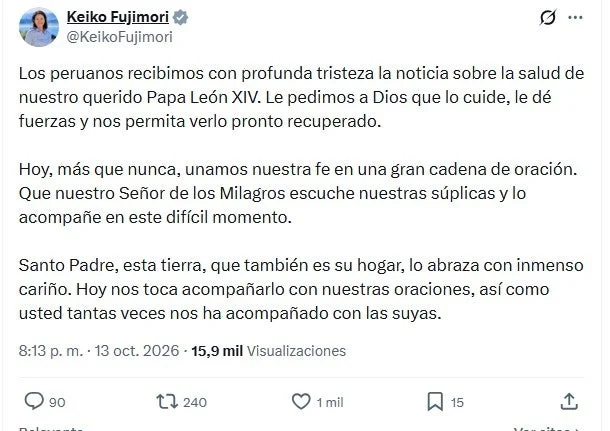
As the news broke, the international reaction was immediate. Among the voices expressing solidarity was Keiko Fujimori, who utilized social media to call for a global "chain of prayer" for the recovery of the Holy Father. Her sentiment reflects the broader apprehension felt by millions of Catholics who view the pontiff not merely as a spiritual leader, but as a central figure in global moral discourse.
Chronology of the Papal Health Crisis
The health of Pope Leo XIV has been the subject of speculation and concern over the past several weeks, culminating in the emergency procedures that have now shifted the focus of the Vatican.
- Initial Symptoms (Early October 2026): Observers noted the Pope’s reduced public appearances and an audible respiratory struggle during his weekly Angelus prayer. While the Vatican initially attributed this to a persistent seasonal infection, medical experts began to suggest that the underlying issues might be more profound.
- The Pre-operative Period: Following diagnostic imaging, which revealed an anomalous mass in the right lung, the medical team at Gemelli Polyclinic recommended an immediate biopsy and subsequent surgical intervention.
- The Surgical Procedure: On the morning of October 13, 2026, the Pope was admitted to the hospital. The surgery lasted several hours, during which the medical team successfully removed the affected lobe.
- Post-Operative Confirmation: By the evening of October 13, the Vatican confirmed the nature of the mass. The term "adenocarcinoma" was officially used in the bulletin, marking the transition from a "suspected mass" to a confirmed cancer diagnosis.
- Current Status: The Holy Father is currently in the recovery wing of the Gemelli Polyclinic. Medical bulletins report that he is stable, although the coming days are critical as the medical team evaluates the necessity of follow-up treatments, such as targeted therapy or adjuvant chemotherapy.
Supporting Data: Understanding Adenocarcinoma
To contextualize the gravity of the Pope’s condition, medical experts have been quick to provide clarity on the nature of his diagnosis. Dr. Elmer Huerta, a renowned oncologist and health correspondent, explained the specifics of an adenocarcinoma for the public record.
What is Adenocarcinoma?
Adenocarcinoma is a type of non-small cell lung cancer (NSCLC) that originates in the glandular cells of the lungs. It is the most common form of lung cancer, even among non-smokers. It typically develops in the outer regions of the lung, which often allows for detection, though it can remain asymptomatic until it reaches a size where it interferes with pulmonary function.
The Role of Video-Assisted Thoracic Surgery (VATS)
The choice of a VATS procedure—a minimally invasive approach—is significant. By utilizing small incisions and a camera, surgeons minimize trauma to the chest wall. However, the severity of a lobectomy remains high, particularly for an elderly patient. The recovery period requires intense respiratory therapy and rigorous monitoring for potential systemic complications.
Critical Unknowns
While the removal of the tumor is a primary success, medical analysts emphasize that the prognosis depends on the "staging" of the cancer. Essential data points currently being analyzed include:
- Lymph Node Involvement: Whether the cancer had migrated to the local lymph nodes before the surgery.
- Tumor Grading: The aggressiveness of the cells under microscopic examination.
- Metastatic Screening: Results from whole-body scans to ensure the malignancy has not spread to other organs.
Official Responses and Political Resonance
The announcement of the Pope’s health status has transcended religious boundaries, eliciting statements from heads of state, political leaders, and interfaith organizations.
Keiko Fujimori’s Call to Action
Keiko Fujimori, a prominent political figure in Peru, expressed her sorrow through a public statement on the social media platform X. "Today, more than ever, let us unite our faith in a great chain of prayer," Fujimori wrote. "May our Lord of the Miracles hear our supplications and accompany him in this difficult moment. Holy Father, this land, which is also your home, embraces you with immense affection."
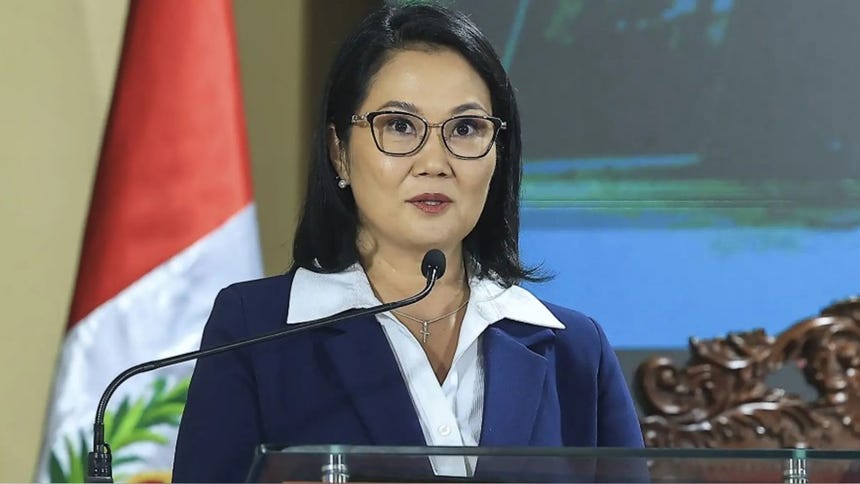
Her statement serves as a representative example of how regional leaders are attempting to provide spiritual comfort to their constituents while acknowledging the global reach of the Vatican. By positioning the Pope as a "neighbor" to the people of Peru, Fujimori highlights the deep emotional connection many in the Global South feel toward the current papacy.
International Diplomatic Channels
The Vatican’s Secretary of State has been receiving a steady stream of well-wishes from diplomatic missions in Rome. The Holy See has maintained a policy of transparency, ensuring that the global public remains informed of the Pope’s progress, while simultaneously requesting privacy for the pontiff’s recovery.
Implications: The Future of the Papacy and the Church
The diagnosis of Pope Leo XIV raises profound questions regarding the future of the Catholic Church and the administration of the Holy See.
Leadership Continuity
The immediate implication is the management of the Church’s administrative functions. While the Pope is recovering, the Vatican’s bureaucracy, led by the Secretary of State, continues to manage daily operations. However, the prospect of a prolonged convalescence raises questions about how much of the Pope’s rigorous travel schedule and pastoral duties will need to be curtailed or reassigned in the coming year.
The Theological Narrative of Suffering
Historically, the illness of a Pope has often served as a focal point for the Church’s theological reflections on suffering, grace, and human fragility. The Pope’s own previous teachings on the "dignity of the sick" are now being revisited by commentators, who see his current medical battle as a continuation of his pastoral message.
Strategic Shifts in Church Governance
If the cancer requires aggressive treatment, it may force the Vatican to accelerate discussions regarding the "health of the papacy" as a formal governance issue. Historically, the resignation of Pope Benedict XVI set a precedent for stepping down due to health; while there is no indication that Pope Leo XIV is considering such a move, the reality of his diagnosis ensures that these discussions will occupy the minds of Cardinals and canon lawyers in the months to come.
The Role of the Faithful
For the global Catholic population, the news serves as a moment of mobilization. Throughout the world, dioceses have begun organizing masses dedicated specifically to the Pope’s recovery. This mass mobilization is not only a display of devotion but a strategic attempt by the institution to project unity and strength during a period of perceived vulnerability.
Conclusion: A Watching World
As the medical team at the Gemelli Polyclinic continues their work, the world remains in a state of watchful waiting. The diagnosis of adenocarcinoma of the lung is a serious medical event, regardless of the patient’s status. For a man tasked with the spiritual guidance of over 1.3 billion people, the implications are multiplied by the weight of his office.
The messages of support, such as those from Keiko Fujimori and other global leaders, underscore the reality that the Pope’s health is a matter of international concern. As the coming weeks unfold, the focus will remain on the Pope’s physical resilience, the clinical effectiveness of his treatment, and the institutional stability of the Vatican as it navigates this unexpected and challenging chapter.
The faithful are encouraged by the Vatican’s optimistic, albeit cautious, reporting, and as they join in the "chain of prayer" requested by supporters, the global community waits for the next bulletin from Rome—hoping for signs of strength and the eventual return of the Holy Father to his full pastoral duties.