In an era where mining operations are pushing deeper into the Earth’s crust, the challenges associated with rock mass stability, seismic activity, and structural integrity have become paramount. Recognizing the critical need for advanced technical proficiency, the Instituto de Ingenieros de Minas del Perú (IIMP) has announced a high-level virtual training program: “Underground Rock Mechanics – Applications of Numerical Modeling.”
Scheduled to take place from November 2 to November 13, this intensive course aims to equip professionals with the sophisticated tools required to predict and manage the complex behavior of rock masses in deep underground mining environments. The initiative features the expertise of Dr. Shahe Shnorhokian, a distinguished researcher and professor from the Department of Mining and Materials Engineering at McGill University, Canada, bringing international best practices to the Peruvian mining sector.
Main Facts: A Deep Dive into Geomechanical Excellence
The IIMP program is designed as a bridge between theoretical geomechanics and practical, field-ready application. As mining operations move toward greater depths, traditional empirical methods are often insufficient to manage the high-stress environments encountered. Numerical modeling has emerged as the industry standard for simulating rock behavior, and this course focuses on how to effectively integrate field data and laboratory testing into these computational models.
Key Course Highlights:
- Duration: November 2 to November 13 (with specific session dates: 2, 4, 6, 9, 11, and 13).
- Format: Virtual (via Zoom), ensuring accessibility for professionals across the country.
- Instruction: Conducted by Dr. Shahe Shnorhokian, with simultaneous translation provided to facilitate seamless learning.
- Audience: Targeted at engineers and students in Mining, Geological, and Civil Engineering fields.
The core objective is to move beyond simple data collection, focusing instead on the interpretation of data to ensure the safety and economic viability of underground excavations.
Chronology: Structured Learning for Modern Professionals
The curriculum is meticulously paced to ensure that participants move from fundamental concepts to complex, case-based problem solving.
The Training Schedule
- November 2: Introduction to the principles of rock mass behavior and the transition from empirical to numerical modeling.
- November 4: Analyzing field data collection techniques: What constitutes high-quality input for simulation?
- November 6: The mechanics of seismic activity in mining: Understanding the physics behind induced seismicity.
- November 9: Deep-dive into rockbursts and managing stress-induced failures in high-pressure environments.
- November 11: Practical applications of numerical models in optimizing stope design and pillar stability.
- November 13: Capstone session: Evaluating the limitations of models and integrating safety systems in mine sequencing.
By structuring the course in six intensive two-hour sessions (7:00 p.m. to 9:00 p.m.), the IIMP allows working professionals to maintain their operational roles while upskilling during the evening.
Supporting Data: Why Numerical Modeling is Essential
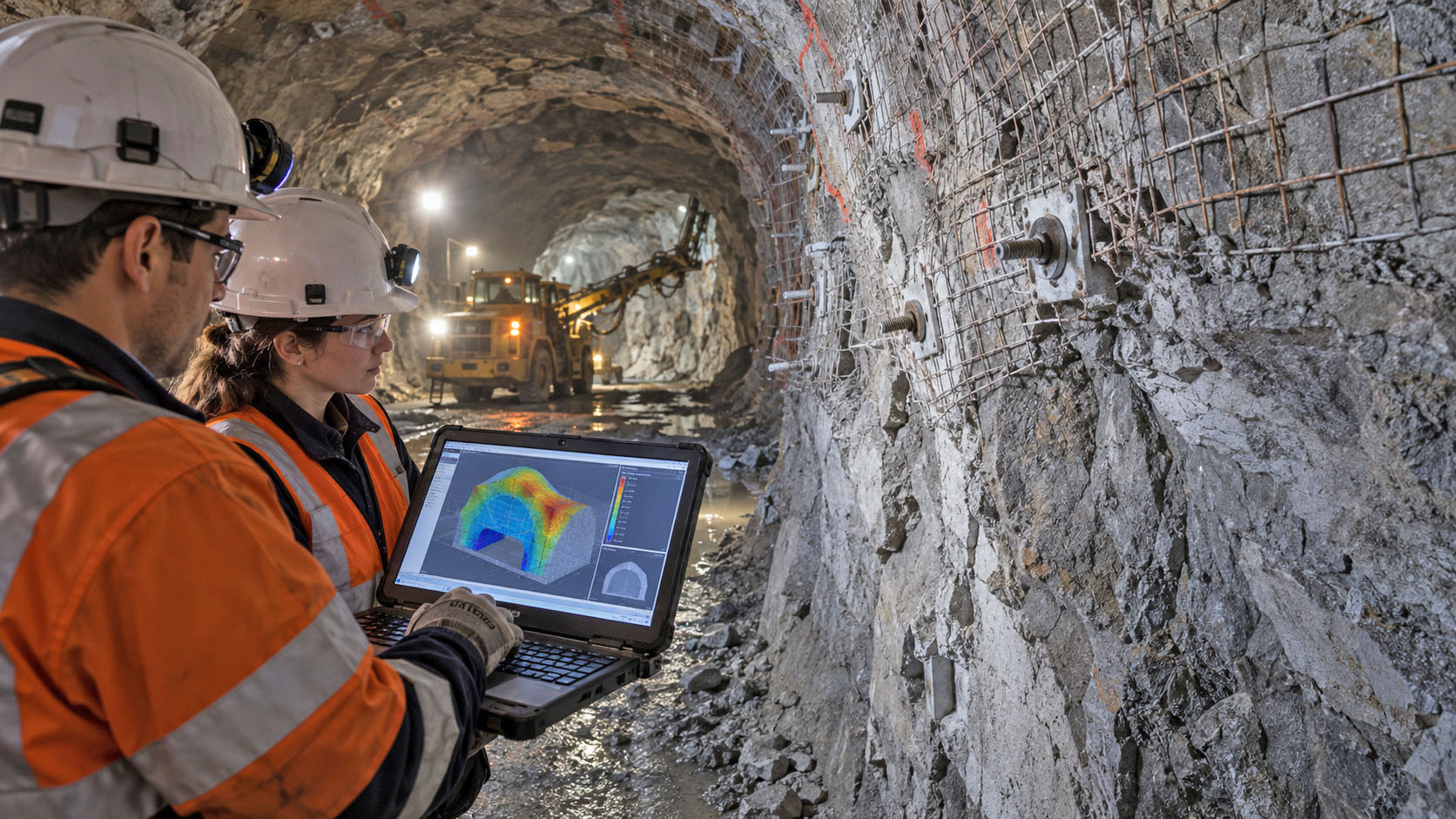
The mining industry is currently facing a "stability crisis" as high-grade, shallow deposits become exhausted. To maintain output, companies are shifting to deep-level extraction. Data indicates that at depths exceeding 1,000 meters, the risk of rockbursts—a sudden, violent failure of rock—increases exponentially.
The Role of Numerical Modeling
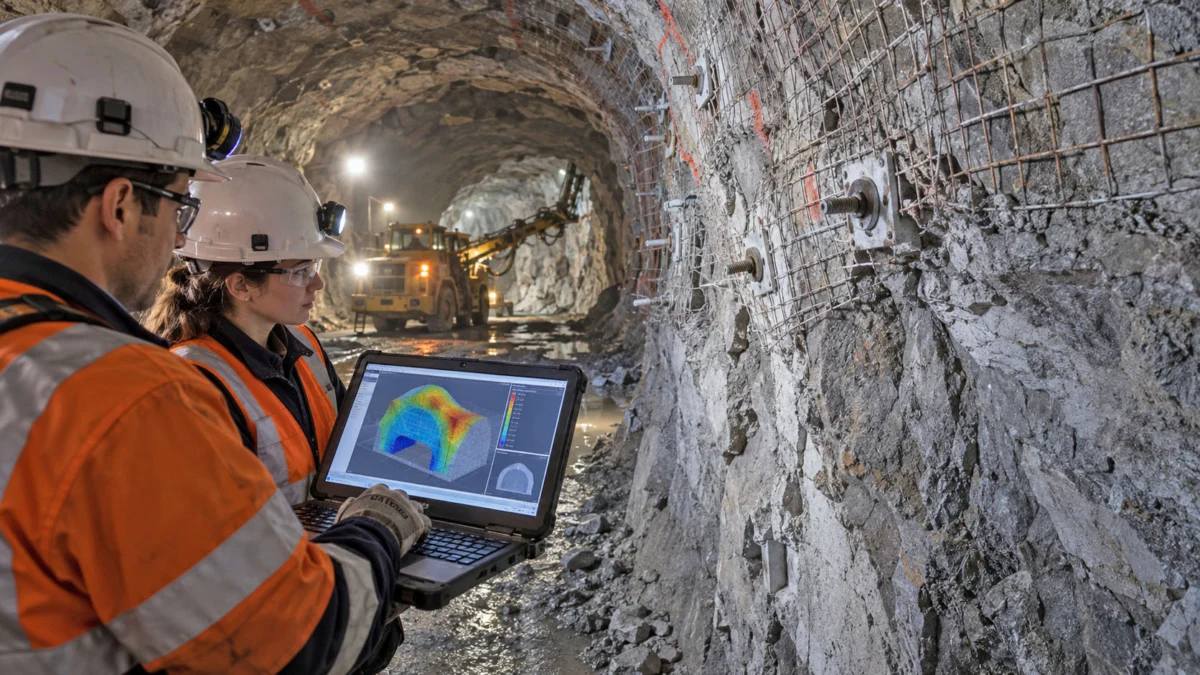
Numerical modeling, such as Finite Element Method (FEM) and Boundary Element Method (BEM), allows engineers to:
- Visualize Stress Redistribution: Predicting how the removal of ore affects the surrounding rock mass.
- Optimize Support Systems: Determining the exact density and type of rock bolts or mesh required based on predicted stress concentrations.
- Enhance Safety: Using "what-if" scenarios to test different extraction sequences before a single charge is set off.
Dr. Shnorhokian’s expertise in this field is well-documented. His research at McGill University focuses on the intersection of geotechnical engineering and environmental safety. By bringing his expertise to the IIMP, the institute is ensuring that Peruvian mining engineers are utilizing the same sophisticated analytical tools used by major international mining houses in Canada, Australia, and South Africa.
Expert Perspectives: The McGill Connection
The involvement of the McGill University Department of Mining and Materials Engineering is a significant coup for the IIMP. Dr. Shahe Shnorhokian brings not only academic rigor but also extensive field experience.
In professional mining circles, Dr. Shnorhokian is recognized for his work in characterizing rock mass anisotropy and his ability to translate complex geophysical phenomena into actionable engineering designs. His teaching methodology emphasizes the "limitations" of models—a crucial lesson for modern engineers. In an era where software packages can produce beautiful, colorful maps of stress, it is vital that the engineer understands the underlying assumptions and the potential for error within those models.
"Models are only as good as the input data," is a mantra frequently cited by experts like Shnorhokian. This course will focus heavily on ensuring that students understand how to perform rigorous validation of their models against actual field monitoring data, such as microseismic sensors and extensometers.
Implications: Building a Safer Mining Future
The implications of this training extend far beyond the individual participant. For the Peruvian mining industry, the widespread adoption of advanced numerical modeling represents a shift toward a more proactive safety culture.
1. Reducing Operational Risk
By accurately modeling stress, mines can reduce the incidence of catastrophic failures, which cost the industry millions in production delays and, more importantly, put human lives at risk. A better-modeled mine is a safer mine.
2. Economic Efficiency
Numerical modeling also has an economic dimension. By optimizing the size of pillars and the orientation of stopes based on precise geomechanical data, companies can extract more ore with less waste rock, significantly improving the net present value (NPV) of deep-level projects.
3. Professional Development
For the individual, this certification serves as a stamp of high-level competency. As the mining sector becomes increasingly automated and data-driven, the demand for "tech-savvy" geomechanics engineers is surging. Professionals who complete this course will be at the forefront of the digital transformation of mining.
Registration and Participation Details
The IIMP has opened registration for the program, with a clear incentive for early adopters. Those who finalize their enrollment before October 23 will benefit from preferential pricing, an initiative designed to encourage timely planning among corporate HR departments and individual professionals alike.
Registration Process:
- Deadline: All applications must be received by November 2.
- Requirements: A background in Mining, Geology, or Civil Engineering is highly recommended.
- Inclusions: All participants will receive full access to the live Zoom sessions, exclusive digital study materials, and a certificate of completion accredited by the IIMP.
Contact Information:
For those seeking further information regarding the curriculum, technical requirements, or payment methods, the IIMP team is available via the following channels:
- Email: [email protected]
- Phone/WhatsApp: 951 294 314
Conclusion
The “Underground Rock Mechanics – Applications of Numerical Modeling” course is more than just a series of lectures; it is a vital step toward modernizing the way the Peruvian mining industry approaches the physical challenges of the Earth. By fostering a culture of technical precision and safety-first engineering, the IIMP continues to cement its role as the leading institution for professional development in the region. Whether you are a student looking to enter the workforce with a competitive edge or a seasoned engineer looking to master the latest simulation technologies, this program offers an unparalleled opportunity to learn from one of the world’s leading experts in the field.