By International News Desk
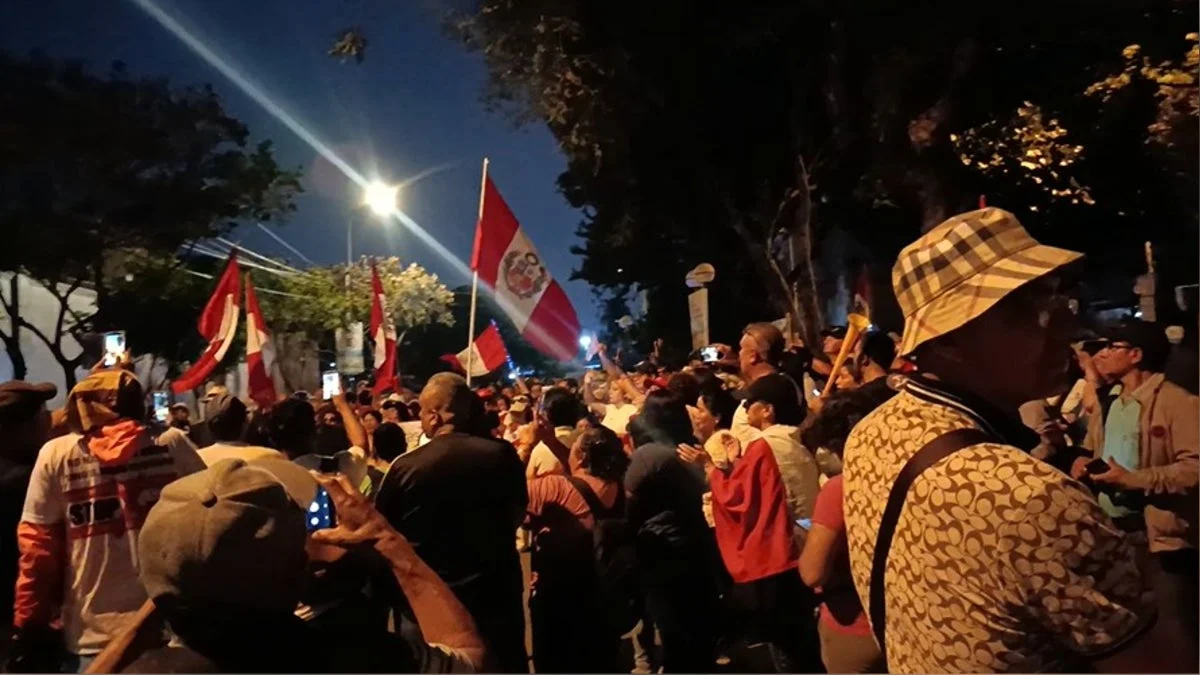
The heart of Peru’s capital, Lima, became the epicenter of civic unrest this Saturday as hundreds of citizens gathered to voice their profound dissatisfaction with the pacing of the electoral process. The demonstrators, converging at the intersection of Jirón Washington and Avenida 28 de Julio, targeted the headquarters of the National Office of Electoral Processes (ONPE) to demand the immediate and full disclosure of results from the Regional and Municipal Elections held on October 4, 2026.
What began as a localized plantón (sit-in) quickly escalated into a broader movement, reflecting a growing crisis of confidence in the nation’s electoral institutions. As the sun set over the capital, the protesters moved toward the Jurado Nacional de Elecciones (JNE), signaling that the pressure on the electoral authorities is far from abating.
The Core of the Grievance: A Delay Beyond Reasonable Limits
The primary catalyst for the protest is the perceived lack of urgency from electoral bodies regarding the tabulation of votes. More than two weeks have elapsed since the October 4th polling day, a duration that participants characterized as "unacceptable" in the context of modern democracy.
"We are not asking for favors; we are asking for our right to know the will of the people," one protester stated during the march. The frustration is rooted in a comparison between the Peruvian system and international standards. Many demonstrators pointed out that in neighboring countries and advanced democracies, electoral outcomes are typically finalized within 24 to 48 hours. By contrast, the slow trickle of information in Peru has fueled rumors, speculation, and a pervasive sense of instability.
The protesters specifically demanded the 100% publication of the final tally, arguing that the current ambiguity leaves the local and regional governments in a state of administrative paralysis.
Chronology of a Stalled Process
To understand the current impasse, it is necessary to look at the timeline of the 2026 electoral cycle:
- October 4, 2026: The nationwide Regional and Municipal Elections take place. Millions of Peruvians cast their ballots to elect governors, mayors, and council members.
- Mid-October 2026: Initial preliminary counts are released, but a significant volume of "observed acts" (actas observadas) creates a bottleneck in the system.
- Late October 2026: Roberto Burneo, president of the JNE, issues a statement indicating that final, definitive results should not be expected until late October or early November. This announcement serves as the immediate trigger for public outcry.
- November 2026 (Present): With the threshold of the "early November" deadline approaching, the lack of a comprehensive final count leads to the organization of the Saturday protests in downtown Lima.
The timeline reflects a recurring structural challenge in the Peruvian electoral apparatus: the manual processing of physical ballots and the time-consuming verification of contested or "observed" records.
Supporting Data: The Bottleneck of Observed Acts
The technical justification for the delay lies in the high number of "observed acts"—ballot tally sheets that contain inconsistencies, errors in calculation, or illegible data that must be reviewed by the Jury of Special Electoral Elections (JEE).
According to recent reports from the ONPE, over 1,800 electoral acts from the Metropolitan Lima region alone remain pending resolution. These are not merely administrative numbers; they represent thousands of individual votes that could potentially alter the outcome of tight municipal races.
Critics argue that the ONPE’s infrastructure has failed to modernize sufficiently to handle the complexities of the 2026 cycle. While the electoral body maintains that the verification process is essential to guarantee the "sanctity of the vote," the protesters argue that the sheer volume of observed acts suggests a failure in the training of poll workers or a lack of robust digital redundancy in the tabulation system.
Official Responses and Institutional Defense
In response to the mounting pressure, officials from the JNE and ONPE have attempted to strike a balance between maintaining order and acknowledging the public’s right to information.
Roberto Burneo, head of the JNE, has consistently defended the integrity of the process. In his most recent press briefing, he emphasized that the electoral authorities are bound by strict legal protocols. "The speed of the count is secondary to the accuracy of the result," Burneo stated. "We are committed to ensuring that every single vote is counted correctly. Rushing this process would only invite the very chaos the citizens claim they want to avoid."
However, the JNE is currently navigating a period of internal transition. Recent news regarding the National Board of Justice (JNJ) and the selection process for the next head of the ONPE has added another layer of complexity. With only one out of ten candidates for the top ONPE position having passed the knowledge examination in recent weeks, the institution is facing a leadership vacuum that critics claim is contributing to the current operational sluggishness.
The Socio-Political Implications
The protest on Saturday is more than a demand for numbers; it is a symptom of a deeper malaise in Peruvian politics.
1. The Erosion of Institutional Trust
When citizens have to take to the streets to demand the results of an election, the perceived legitimacy of the eventual winners is inevitably weakened. If a candidate is declared a winner weeks after the vote, the "honeymoon period" of their administration is replaced by a cloud of suspicion, with opponents likely to characterize them as products of an opaque system.
2. Economic and Administrative Stagnation
Regional and municipal governments are responsible for public infrastructure, waste management, and local security. The delay in finalizing results leaves outgoing administrations in a "lame duck" position, unable to coordinate transitions effectively, while incoming officials are unable to secure funding or prepare their technical teams. This administrative vacuum, if it persists, could lead to a decline in public service delivery across the country.
3. The Risk of Populism
The current unrest provides fertile ground for populist rhetoric. By failing to provide a swift resolution, the electoral authorities have inadvertently handed a tool to those who wish to undermine the democratic process. In the absence of official information, social media has become a breeding ground for conspiracy theories, further polarizing a public already fatigued by political instability.
Conclusion: A Turning Point for Peruvian Democracy
As the demonstrators made their way down Avenida La Peruanidad toward the JNE, their message was clear: they will not return to their daily lives until the 100% tally is published. The marchers have promised to continue their protests, signaling that the pressure on the electoral authorities will only increase in the coming days.
The events in Lima serve as a stark reminder of the fragile balance between bureaucratic procedure and democratic transparency. For the JNE and the ONPE, the challenge is twofold: they must not only finalize the count with absolute precision but also communicate with a public that has lost its patience.
The coming days will be critical. Whether the electoral authorities can accelerate the resolution of the observed acts or whether they will be forced to confront a wider wave of civil unrest remains to be seen. What is certain, however, is that the 2026 electoral process has become a litmus test for the resilience and efficiency of Peru’s democratic institutions—a test that the country, at this moment, appears to be struggling to pass.