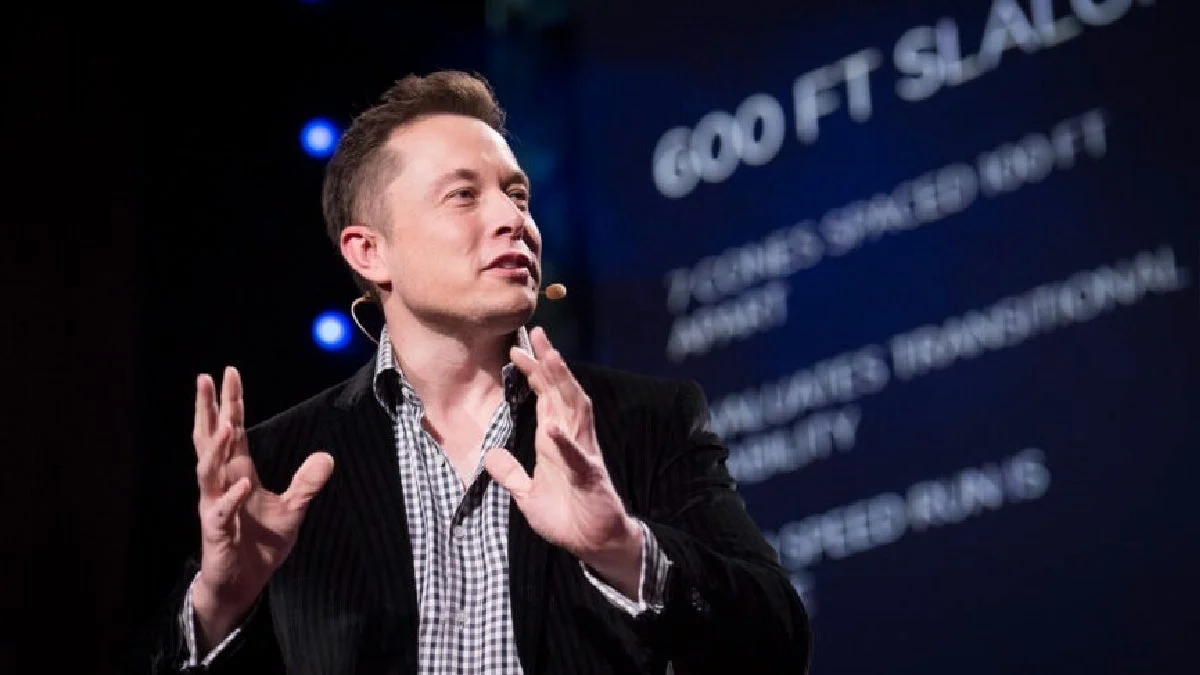
In a pivotal moment for global technology policy, Elon Musk, the visionary CEO of SpaceX and xAI, recently stepped out of the White House alongside President Donald Trump to address one of the most pressing questions of the modern age: What happens to the human workforce when machines begin to think, reason, and create?
Musk’s message was strikingly optimistic, painting a future not of scarcity and displacement, but of "incredible benefit." By shifting the nomenclature from "Artificial Intelligence" to "Superintelligence," the current U.S. administration and its technology advisors are signaling a fundamental pivot in how the world perceives the machines that are poised to redefine the labor market.
Main Facts: The Vision of a "High Universal Income"
The core of Musk’s argument rests on the premise that the technological revolution driven by robotics and superintelligence will act as a catalyst for a new era of human prosperity. Addressing the media, Musk articulated a vision where the integration of advanced systems into the workplace will not lead to mass unemployment, but rather to an "evolution of roles."
"If you could look into the future, it is a future you would want," Musk stated, emphasizing that the most probable outcome is an era of radical abundance. He went further than many of his peers by suggesting that this abundance could facilitate not just a basic income, but a "high universal income," potentially decoupling human survival from traditional labor models.
According to Musk, the fear of widespread job loss is misplaced. Instead, he points to current economic trends where there remains an "enormous demand for people," even as automation accelerates. In his view, the future workplace will be one where AI and robots handle repetitive or dangerous tasks, allowing humans to occupy higher-level, creative, and managerial roles that were previously beyond reach.
Chronology: A High-Stakes Meeting at the White House
The recent statements from the White House were the culmination of a high-level summit involving the titans of the tech industry. The meeting, which brought together a "who’s who" of the artificial intelligence sector, marks a significant shift in the federal government’s approach to tech regulation.
- The Summit: President Trump hosted leaders including Sundar Pichai (Google), Elon Musk (xAI), Dario Amodei (Anthropic), Mark Zuckerberg (Meta), and Jensen Huang (Nvidia).
- The Accord: The leaders signed a voluntary agreement to reinforce the safety and security of AI systems, committing to internal controls to monitor the capacity and behavior of their models.
- Diplomatic Context: Following the summit, it was revealed that President Trump and Elon Musk held discussions regarding global data center infrastructure with Chinese President Xi Jinping, highlighting the geopolitical race to dominate the superintelligence landscape.
- The Rebranding: In a move that surprised many observers, the Trump administration officially ordered all federal agencies to move away from the terms "Artificial Intelligence" and "AI." Moving forward, the government will exclusively use the term "Superintelligence" and the acronym "SI" in all policy documents, public communications, and official correspondence.
Supporting Data: Why the Shift in Terminology Matters
The administration’s decision to mandate the use of "Superintelligence" is more than a semantic change; it is a strategic effort to rebrand the narrative surrounding technology. By moving away from the term "AI"—which has been marred by concerns regarding bias, job displacement, and catastrophic risk—the government is attempting to foster a more positive public sentiment.
Industry data from firms like Anthropic and OpenAI, alongside cautionary warnings from figures such as Bill Gates, have previously dominated the conversation with risks ranging from societal disruption to existential threats. By framing the technology as "Superintelligence," the White House aims to focus the discourse on its potential to solve complex human challenges.
Musk highlighted the medical field as a prime example. With the deployment of SI, he argues that every person on Earth could eventually have access to healthcare that surpasses the current standard of care available to even the wealthiest individuals today. This, he suggests, is the ultimate promise of the technology: a democratization of health, education, and resources that was previously impossible.
Official Responses and Industry Consensus
The meeting at the White House underscored a rare moment of alignment between industry leaders and the federal government. While companies like Anthropic and OpenAI have been the most vocal regarding the need for "alignment" and safety protocols, the consensus among the attendees was that the growth of SI is inevitable and should be steered toward positive outcomes.
President Trump’s involvement has been hands-on, treating the development of superintelligence as a national security and economic imperative. By mandating the use of "SI" across federal agencies, the administration is ensuring that the government’s internal operations are synchronized with a forward-looking vision of technological supremacy.
For the CEOs in attendance, the voluntary safety agreement represents a compromise: they retain the autonomy to innovate, provided they adhere to the government’s rigorous security benchmarks. The goal is to ensure that while the "era of abundance" is pursued, the risks associated with rogue or unaligned models are mitigated through continuous oversight.
Implications: The Evolution of the Human Role
The most significant implication of this shift is the fundamental reimagining of the labor market. If, as Musk suggests, the future is one of "evolved roles," the education and training systems of the 21st century will require a complete overhaul.
1. From Labor to Oversight
As robots and superintelligence handle the heavy lifting—both physical and cognitive—the human role is expected to transition into one of "system oversight." Workers will increasingly act as architects and managers of automated processes, requiring a new set of soft skills, ethical training, and systemic thinking.
2. The Economic Safety Net
Musk’s mention of a "high universal income" suggests that the government is at least beginning to consider the fiscal realities of a post-labor economy. While such a system would require a massive restructuring of the tax base and social spending, it is increasingly being discussed in policy circles as a necessary safeguard against the volatility of technological transition.
3. Geopolitical Competition
The discussions with President Xi Jinping underscore that the race for superintelligence is the new Space Race. The ability to control, develop, and secure these data centers is seen as the primary determinant of national power for the coming century. The U.S. government’s push for standardized terminology and security protocols is intended to project strength and clarity on the global stage.
Conclusion: A Future of Calculated Optimism
Elon Musk’s assertion that the future is "incredibly beneficial" serves as a polarizing but essential counterweight to the prevailing "doom-and-gloom" narratives that have surrounded the rise of artificial intelligence. By focusing on the potential for universal medical care, high income, and the evolution of human roles, the discourse is being pushed toward a proactive, rather than reactive, stance.
However, the path to this "era of abundance" remains fraught with uncertainty. The transition from "AI" to "Superintelligence" is not merely a linguistic change; it is an admission that we are entering a phase of technological development that is beyond our current experience. Whether this leads to a utopian golden age or a period of profound societal friction will depend on how effectively the government and private industry can collaborate to ensure that the benefits of this superintelligence are distributed, rather than concentrated.
As we look toward the horizon, the message from the White House and the tech elite is clear: the machines are coming, but they are not our replacements. They are our tools—and if used correctly, they may just be the keys to the most prosperous chapter in human history.