
A groundbreaking study, conducted by the Lima Chamber of Commerce (CCL) with the strategic support of the European Union, has shattered the long-standing stigma surrounding young people who neither study nor work—the so-called "ninis." The research suggests that the assumption that these individuals—aged 18 to 29—simply lack the ambition to enter the workforce is fundamentally flawed. Instead, the data points to a toxic combination of systemic distrust, traumatic labor experiences, and structural barriers that prevent a significant portion of this demographic from successfully integrating into the formal economy.
Main Facts: A Demographic Ready to Work
Contrary to popular belief, the study reveals that 73 out of every 100 vulnerable young people currently outside the education and labor systems are, in fact, "job-ready." They possess the basic training and, in nearly half of the cases, partial higher education, yet they remain sidelined.
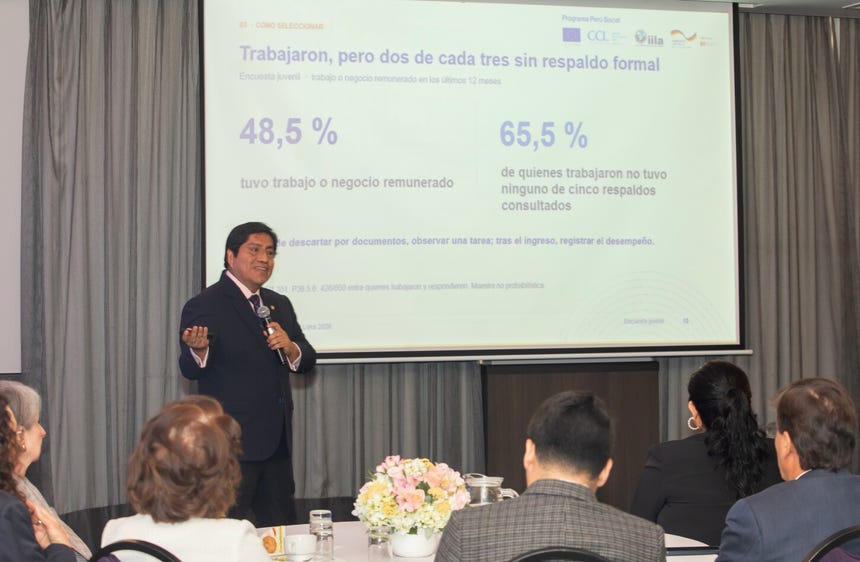
Aristides Vara, the lead researcher, noted that the study spanned eight Peruvian regions, surveying over 1,300 youth who lacked formal employment or educational ties. The findings were stark: three-quarters of this group are highly employable. They possess prior work experience, basic skill sets, and a genuine willingness to engage in the labor market. The core issue, according to the research, is not a lack of "will," but a profound "disconnect" between these young individuals and the formal corporate sector.
Chronology: The Journey from Hope to Despair
The trajectory of a young person in this demographic often follows a disheartening path:

- Entry into the Informal Sector: Many begin their professional lives in the informal economy, where they are often subjected to exploitative conditions, including wage theft, verbal abuse, and a lack of basic rights.
- The "Churning" Effect: This cycle of short-term, abusive, and unstable jobs—what researchers call "labor churning"—erodes the individual’s self-esteem.
- The Failed Formal Transition: When these youths attempt to enter the formal sector, they often face a "cultural shock." They report feeling isolated or misunderstood, lacking the soft skills or the "social capital" (networks) required to survive in a traditional office environment.
- The Retreat: Traumatized by previous systemic failures, these young people eventually stop seeking employment altogether. This is not laziness; it is a defensive mechanism against further "labor victimization."
Supporting Data: Why the System Fails
The research highlights a glaring mismatch between how companies search for talent and where that talent actually resides.
- The Recommendation Bias: 66% of companies surveyed rely on personal contacts and recommendations to hire. This creates a closed loop that excludes thousands of capable young people who lack these connections.
- The Certification Gap: Many young applicants possess legitimate skills gained through informal work, but because they lack formal certificates or documentation, they are automatically filtered out by standard human resources software.
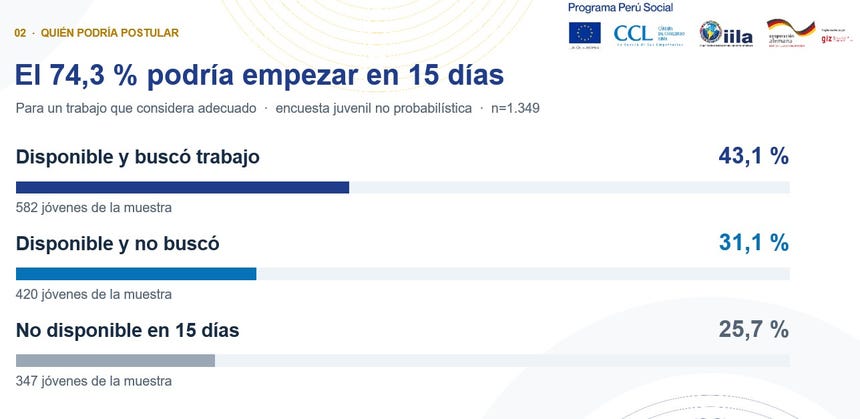
- Availability vs. Participation: Within the "nini" cohort, 43% are actively looking for work, while 31% are available but have ceased searching. It is this 31% that represents the most significant opportunity for intervention.
Official Responses and Expert Insights
Aristides Vara, speaking on behalf of the investigative team, emphasized that the solution is not merely about job creation, but about "regenerating trust."
"When we sat down with these young people for hour-long, in-depth interviews, it became clear that they aren’t hiding from work—they are hiding from humiliation," Vara explained. "They have been mistreated, humiliated, and cheated so many times that they no longer wish to expose themselves to the formal labor market. We are talking about a form of systemic labor victimization."
The study suggests that the onus of change must shift toward the private sector. Companies that continue to rely on traditional, static resumes are missing out on a massive pool of potential talent.
Strategic Implications: How to Bridge the Gap
The report concludes with a roadmap for companies willing to break the cycle of youth unemployment. The findings identify several successful pilot models currently being implemented by forward-thinking organizations:
1. Skill-Based Hiring over Credentials
The most successful companies are abandoning the traditional focus on "antecedents" and "years of experience." Instead, they are implementing practical, task-based assessments. By allowing candidates to demonstrate their ability to perform a specific job function during the interview, companies can bypass the "certification gap" that keeps talented, informal workers from being hired.
2. The Mentorship Model
To mitigate the "cultural shock" experienced by new hires, companies are introducing mandatory mentorship or tutoring during the first 30 to 90 days. This buffer allows the young employee to adapt to professional norms without the pressure of immediate, high-stakes performance, drastically reducing early-stage turnover.
3. Institutionalizing Support
The role of the state and international organizations like the European Union is pivotal. There is an urgent need for public-private partnerships that help formalize the informal skills of young workers, essentially providing them with a "digital badge" or certification that validates their prior experience, making them "eligible" in the eyes of traditional HR departments.
A Call for Institutional Reform
The implications of this study are profound for Peru’s economic future. If 73% of the most vulnerable youth are ready to work within 15 days, the "nini" problem is not a demographic crisis—it is an institutional one.
The report suggests that by reforming recruitment processes, humanizing the onboarding experience, and acknowledging the trauma of labor exploitation, the private sector could solve its own "talent shortage" while simultaneously lifting hundreds of thousands of young people out of poverty.
"This is not a social charity project; it is an economic necessity," the report concludes. "The youth are ready. The question is whether the current business models are ready to meet them halfway."
Moving Forward: The Road to Re-engagement
As policymakers digest these findings, the focus must move toward "trust-building programs." These are not traditional vocational schools, but rather transitional environments where youth can regain their professional confidence.

The data confirms that when young people are given a fair, transparent, and supportive environment, their productivity levels are on par with any other cohort. The challenge for the next decade will be dismantling the exclusionary hiring practices that have kept this generation in the shadows. By shifting from a culture of "policing" applicants to one of "nurturing" talent, the private sector has a rare opportunity to transform a perceived social burden into a thriving, productive workforce.
In conclusion, the "nini" label is a symptom of a broken bridge. As long as the labor market continues to value pedigree over potential and networking over capability, the "disconnect" will persist. However, the solutions proposed by the Lima Chamber of Commerce and the European Union provide a clear, actionable path toward a more inclusive and robust economy. The youth are waiting; it is time for the formal sector to open the doors.