There exists a haunting, almost surreal legend—a narrative of a land where the devastation wrought by natural disasters unfolds in a perfect, tragic circle. In this story, the inhabitants are forewarned, the catastrophe is predictable, and the rulers are alerted well in advance, yet the cycle repeats with mechanical, heart-wrenching precision. It is a tale that feels plucked from the pages of magical realism, a plot so absurd that even the most imaginative literary minds might have dismissed it as too far-fetched.
One cannot help but wonder: what title would Jorge Luis Borges have bestowed upon a short story documenting such a cycle? Would he have called it "The Garden of Forking Paths," where every path chosen by the authorities leads back to the same flooded square? If the reader finds this comparison hyperbolic, a brief survey of the factual landscape in Piura, Peru, provides grim confirmation of this reality.
The Anatomy of Institutional Absence
The severity of the situation in Piura is not merely a matter of environmental volatility; it is a crisis of governance. During a recent multi-sectoral visit to the region, various business guilds, academics, journalists, and national legislators convened to discuss urgent mitigation strategies. Yet, despite the gravity of the mission, a haunting silence permeated the room: not a single representative from the regional government, nor any local mayor, saw fit to attend.
This absence is not a mere lapse in protocol; it is an indictment. Since the last major Fenómeno El Niño (FEN), these authorities have had ample time—years of clear skies and low rainfall—to execute the necessary infrastructure works to prevent rivers from overflowing and mudslides from burying urban centers. Instead, the landscape is defined by stagnant projects and an almost total lack of progress.
The Autoridad Nacional de Infraestructura (ANIN), meanwhile, spent nearly a decade navigating the labyrinthine bureaucracy required to secure technical viability for essential storm drainage and riverbank protection projects. Their approvals were finally granted in the summer of 2026, a delay that represents not just administrative incompetence, but a dereliction of duty toward the millions of residents living in the shadow of predictable tragedy.
Chronology of a Man-Made Crisis
To understand why Piura remains perpetually vulnerable, one must look at the timeline of inaction:
- Post-FEN (2017-2023): The aftermath of previous catastrophic El Niño events provided a clear roadmap for vulnerability. The identification of critical points—riverbeds requiring desilting, drainage systems needing expansion, and urban centers requiring flood walls—was completed.
- The Bureaucratic Quagmire (2018-2025): Throughout this period, the central government and local authorities engaged in a cycle of shifting blame. While the ANIN struggled to finalize the technical blueprints for flood defense, funds earmarked for reconstruction were repeatedly returned to the treasury due to an inability to manage procurement processes.
- The Turning Point (June-July 2026): After nearly ten years of debate, the technical viability for critical infrastructure was finally greenlit. However, by this point, the window for massive civil engineering works had effectively closed, leaving the region exposed once again.
- The Current Impasse (Late 2026): We are currently in a state of high alert. With limited time remaining, the focus has shifted from permanent structural solutions to emergency mitigation—a reactionary approach that replaces long-term prevention with temporary, expensive, and often insufficient fixes.
The Paradox of Prosperity and Poverty
A common defense mounted by "well-intentioned" apologists for these authorities is the alleged lack of budget. It is a convenient narrative, but one that collapses under the weight of hard data. Between 2016 and 2025, the Piura region accumulated nearly S/4,000 million (approximately $1 billion USD) through canon, sobrecanon, and mining royalties. Furthermore, the region has access to an even larger budget through the "Works for Taxes" (Obras por Impuestos) mechanism.
The tragedy is not a lack of resources, but a catastrophic failure of execution. The cost of this inaction is twofold. First, there is the humanitarian toll: lives lost, homes destroyed, and livelihoods erased by floods that could have been diverted or contained. Second, there is the economic impact: the regional economy, a powerhouse for agricultural exports and energy, is repeatedly throttled by the destruction of transport infrastructure and the paralyzation of commercial activity.
Implications for Public Safety and the Economy
The failure to invest the available budget is not a neutral act; it is an active decision to leave the population exposed to preventable harm. When infrastructure projects are stalled for a decade, the "hidden" cost is the compounding damage to the region’s productive capacity.
The Immediate Mitigation Requirement
Given that the time for large-scale, transformative infrastructure projects has effectively evaporated, the priority must shift to "rapid-response" interventions. This involves:
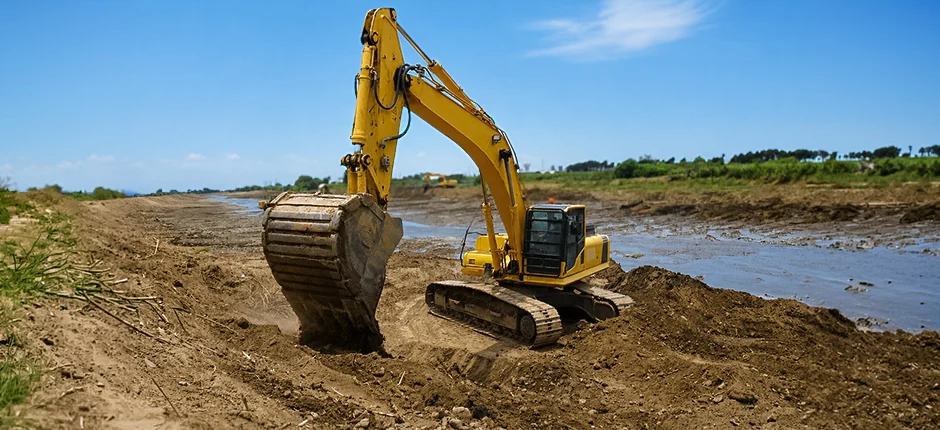
- Desbroce and Cleaning: Clearing vegetation and debris from river channels to allow for maximum water flow.
- Deepening Riverbeds: Essential for managing the increased volume of water during peak rainy seasons.
- Expansion of Defogue Channels: Specifically regarding the Piura River, widening the discharge points is critical to prevent the kind of urban inundation seen in previous years.
The Role of the Private Sector
The private sector in Piura and across Peru possesses the technical capacity and the logistical agility to execute these interventions rapidly. There is a palpable readiness among business leaders to step in and facilitate the necessary works. However, this potential is currently stifled by legislative inertia.
It is imperative that the Executive branch acts immediately to approve the Emergency Decree that expands the usage of the "Works for Taxes" mechanism. This tool is the bridge between private sector efficiency and public sector need. By allowing businesses to bypass the traditional, slow-moving procurement cycles of the state, these critical interventions could be completed in a matter of weeks, potentially saving thousands of lives and protecting billions in economic value.
Conclusion: Turning Fiction into History
The legend of a land that ignores the rain until it is drowning is no longer a story that can be allowed to continue. The cycle of incompetence, inaction, and subsequent tragedy is a stain on the administrative history of the region.
We must act with a sense of urgency that matches the scale of the threat. The goal is clear: to ensure that this recurring nightmare is finally broken, that the infrastructure works are treated as the existential necessity they are, and that, in the years to come, this chapter of Piuran history is relegated to the realm of fiction where it belongs.
The warning has been issued. The resources are available. The only remaining variable is the political will of those in power to break the circle and finally protect the people they were elected to serve. We have three months. The clock is not just ticking; it is echoing with the sound of the next inevitable storm.