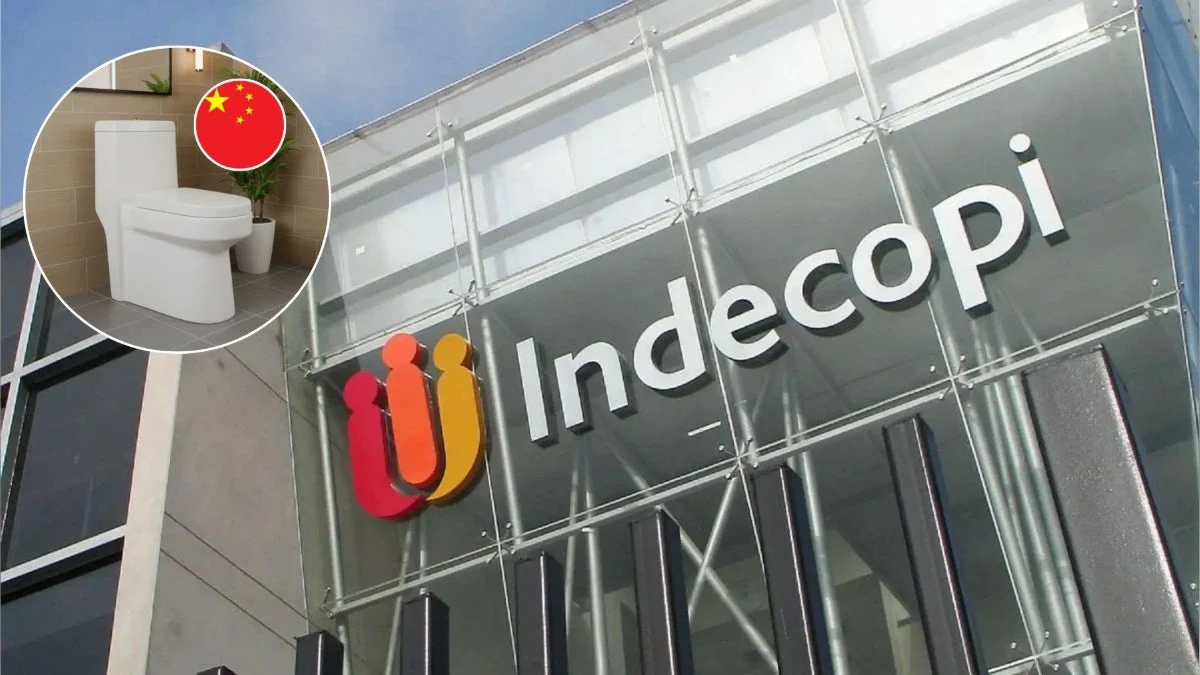
In a landmark move for the Peruvian manufacturing sector, the National Institute for the Defense of Competition and Intellectual Property (Indecopi) has officially implemented definitive antidumping duties on imports of "one-piece" ceramic toilets originating from China. This regulatory intervention, formalized through Resolution 244-2026/CDB-INDECOPI, seeks to rectify what the government describes as a market distortion that has severely weakened the local sanitary ware industry over the past four years.
The decision follows an exhaustive investigation that confirmed a surge in low-cost imports, which consistently undercut the prices of domestically produced goods, leading to a measurable decline in the profitability and operational capacity of key Peruvian manufacturers, specifically Vainsa and Trebol.
Main Facts: The Scope of the Regulatory Measure
The antidumping measure is not a blanket ban, but rather a targeted tariff adjustment designed to level the playing field. The resolution applies specifically to "one-piece" ceramic toilets, a popular segment of the market known for its seamless design and ease of cleaning.
Indecopi has clarified that the measures are not universal; the regulatory body specifically excluded "smart" toilets—which incorporate electronic bidet functions and advanced technology—as well as specialized units designed for marine vessels or recreational vehicles. These exclusions are based on the premise that these items possess unique physical and functional characteristics that do not directly compete with the standard sanitary ware produced by the local industry.
The duties will remain in effect for a period of five years. During this time, every unit of the affected ceramic product imported from China will be subject to an additional fee, calculated based on the specific export company. By imposing these levies, the Peruvian government aims to mitigate the "dumping" effect—the practice of exporting goods at prices lower than their fair market value—thereby allowing domestic firms to compete on a more equitable basis.
Chronology of a Trade Conflict
The path to these protective measures was neither swift nor simple. The regulatory process began in April 2025, sparked by a formal petition from VSI Industrial S.A.C. (Vainsa). The company presented evidence suggesting that an influx of unfairly priced Chinese products was eroding their market share and threatening the viability of local production facilities.
Key Milestones:
- April 2025: VSI Industrial S.A.C. initiates the formal complaint, triggering the Indecopi investigative process.
- 2021–2024 (The Investigative Window): Indecopi analysts meticulously reviewed trade data, financial reports from local firms, and international price indices to determine if a "causal link" existed between imports and domestic damage.
- 2024 (The Critical Spike): Data revealed that 2024 was a turning point, with import volumes from China surging by 75.9% compared to the previous year.
- Early 2026: The Commission for Dumping, Subsidies, and Elimination of Non-Tariff Trade Barriers completes its analysis, finding clear evidence of unfair trade practices.
- Mid-2026: The official issuance of Resolution 244-2026/CDB-INDECOPI mandates the immediate implementation of the antidumping duties.
Supporting Data: Analyzing the Market Disruption
The investigation conducted by Indecopi provides a stark look at how rapidly the market dynamics shifted between 2021 and 2024. The data paints a clear picture of an industry under siege.
Import Growth and Price Compression
Between 2021 and 2024, the cumulative volume of Chinese "one-piece" toilet imports grew by 56.9%. This growth was not merely in volume but in market dominance; the share of Chinese imports in the Peruvian market increased by 11.4 percentage points during the same period.
Perhaps most alarming to regulators was the price disparity. Throughout the study period, Chinese imports entered Peru at prices approximately 40% lower than those of domestic manufacturers. In 2023, this gap reached a staggering 49.8%. Indecopi found that these prices were often below the actual cost of production for the local industry, a hallmark of predatory pricing.
The Impact on Domestic Productivity
The correlation between the surge in imports and the decline of the local industry is statistically significant:
- Production Volume: Domestic manufacturing output plummeted by 11.7% between 2021 and 2024.
- Internal Sales: Domestic sales suffered a double-digit decline of 17.6%.
- Productivity: Operational efficiency fell by 22.9%.
- Profit Margins: The industry’s profit margin contracted by 11.6 percentage points, with the sector recording an alarming -10.9% margin by the end of 2024.
Indecopi’s economists rigorously vetted these figures against external factors—such as fluctuations in the exchange rate, changes in consumer preference, and the impact of imports from third-party nations—but concluded that none of these variables accounted for the systemic damage to the domestic sanitary ware industry.
Official Responses and Strategic Rationale
Indecopi’s decision is rooted in the "causal link" doctrine. The Commission determined that the injury suffered by companies like Vainsa and Trebol was a direct result of the dumping practices.
"The Commission determined that between January and December 2024, there were unfair trade practices that directly harmed the domestic production branch," stated an Indecopi spokesperson. "The investigation proved a substantial volume of Chinese imports at reduced prices, which negatively impacted sales, margins, and the financial performance of local manufacturers."
The government’s stance is that while competition is a healthy component of the Peruvian economy, it must occur on a level playing field. When foreign entities leverage state subsidies or engage in pricing strategies that ignore true production costs, the domestic manufacturing sector—which provides stable employment and contributes significantly to the national tax base—becomes vulnerable. By imposing these duties, the government is signaling that it is prepared to use its regulatory arsenal to protect the industrial base from non-competitive, external shocks.
Financial Implications: How the Duties Work
The antidumping duties are calculated as a fixed amount per unit, tailored to specific Chinese exporters to reflect their varying levels of cooperation during the investigation. This approach incentivizes transparency and compliance from international firms.
The current structure for the duties is as follows:
- Romance: US$ 5.7 per unit.
- Yatao: US$ 12.7 per unit.
- Farns: US$ 14.3 per unit.
For all other Chinese exporters who failed to participate or provide the necessary data during the investigative phase, Indecopi has applied a "residual" duty. This rate is calculated based on the highest duty assigned to a cooperative firm (in this case, Farns), ensuring that non-cooperative entities do not gain a competitive advantage by evading the regulatory process.
Implications for the Peruvian Market
The imposition of these duties carries significant implications for various stakeholders in Peru:
For Consumers
While some might argue that antidumping duties could lead to higher prices, the government maintains that the current market distortion was artificial. By stabilizing the market and ensuring the survival of local manufacturers, the government hopes to prevent a monopoly or oligopoly scenario where consumers might eventually face even higher prices once domestic competition is entirely eliminated.
For Local Industry
For companies like Vainsa and Trebol, this decision is a lifeline. It provides a five-year window of stability to modernize production lines, optimize logistics, and recover market share. The challenge for these firms now is to utilize this period of protection to improve their own competitiveness rather than relying solely on government intervention.
For International Trade Relations
Peru remains an open economy, but this action underscores its commitment to enforcing global trade rules. By strictly following World Trade Organization (WTO) guidelines regarding antidumping investigations, Peru is asserting its right to protect its domestic industry against unfair trade, a move that is likely to be viewed by other regional trade blocs as a signal of regulatory maturity.
Conclusion
The decision to impose definitive antidumping duties on Chinese "one-piece" toilets represents a critical juncture for Peruvian industrial policy. It highlights the government’s willingness to intervene when the data reveals a clear case of unfair trade. As these measures go into effect, the coming years will be crucial in determining whether the local sanitary ware industry can capitalize on this protection to restore its financial health and reclaim its place as a cornerstone of the Peruvian construction and manufacturing sector. The success of this policy will depend not just on the collection of tariffs, but on the ability of local producers to demonstrate that they can thrive in a fair and transparent market.