Executive Summary: Bridging the Gap in Oxapampa
In a significant move to bolster the infrastructure of the Pasco region, the Peruvian Ministry of Transport and Communications (MTC), acting through its executive body Provías Nacional, has commenced the installation of the new Huacapiyacu Bridge. This critical infrastructure project, located at kilometer 124+200 of the PE-18 D highway—a key corridor connecting San Rafael, Alcas, and the scenic town of Pozuzo—aims to restore reliable transit for thousands of residents and commercial transporters.
The project represents a strategic pivot from reactive disaster management to proactive infrastructure resilience. By replacing a vulnerable, single-lane causeway (badén) that was effectively neutralized by a devastating mudslide (huaico), the government is seeking to eliminate one of the most significant bottlenecks in the region’s non-concessioned National Road Network. With an investment of S/ 723,716.70, the new bridge is expected to be fully operational by the end of October, marking a turning point for the economic and social stability of the Oxapampa province.
Chronology of the Crisis and Recovery
The history of the Huacapiyacu crossing is one defined by the volatility of the Andean landscape. For years, the original 25-meter causeway served as the primary artery for local trade, facilitating the movement of agricultural produce and tourism, which are the lifeblood of the Pozuzo valley.
The Triggering Event: The Impact of Nature
The necessity for this bridge was underscored by the recent occurrence of a severe huaico. These rapid-onset mudslides, typical of the high-jungle geography of Pasco, overwhelmed the drainage capacity of the existing causeway. The debris flow not only rendered the path impassable but also caused structural damage that rendered the previous crossing unsafe for heavy traffic.
The Planning Phase (Q2 – Q3 2026)
Following the obstruction, Provías Nacional conducted a comprehensive damage assessment. Engineers identified that a mere repair of the old causeway would be insufficient to withstand future weather events. The decision was made to upgrade the crossing to a modern, metallic modular bridge capable of spanning the entire width of the quebrada (ravine), thereby avoiding direct contact with water and debris during high-flow periods.

Current Status: Execution and Implementation
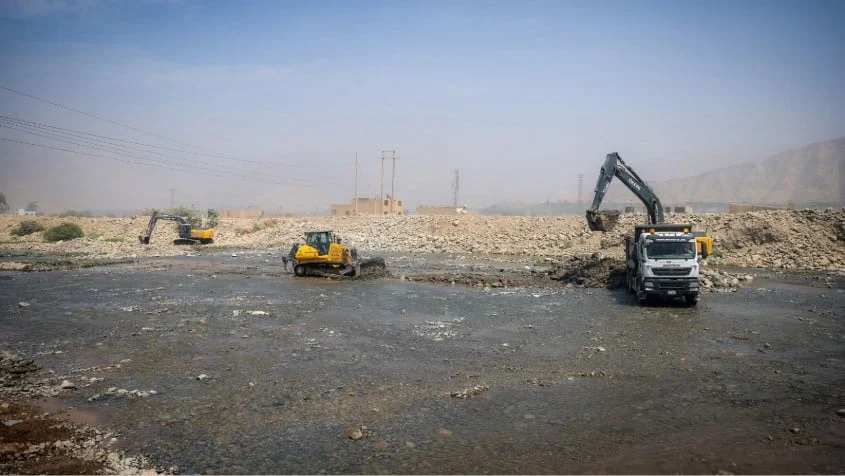
As of late 2026, the installation phase is in full swing. Technical crews have been deployed to the site to assemble the steel sections, ensuring that the 30.48-meter structure meets all national safety and load-bearing standards. The rapid mobilization of resources reflects the government’s prioritization of this route, recognizing the socio-economic isolation that occurs when this specific segment of the PE-18 D highway is severed.
Supporting Data and Technical Specifications
The Huacapiyacu Bridge is not merely a replacement; it is a technological upgrade designed to meet the rigorous demands of the Peruvian transit landscape.
Technical Profile
- Total Span: 30.48 meters (an increase over the previous 25-meter causeway).
- Material: High-grade reinforced metallic structure.
- Load Capacity: Designed in strict adherence to the latest MTC guidelines for heavy-vehicle transit on the National Road Network.
- Budget Allocation: S/ 723,716.70.
- Primary Objective: To provide a permanent, all-weather crossing that mitigates the risk of future mudslide-induced closures.
Economic Importance of the PE-18 D Corridor
The San Rafael–Alcas–Pozuzo route acts as a lifeline for the Oxapampa province. The region is known for its unique cultural heritage—specifically the Austro-German influence in Pozuzo—which drives a consistent flow of domestic and international tourism. Furthermore, the route is essential for the logistics of local coffee, livestock, and forestry industries. The interruption of this route historically resulted in increased freight costs and delayed delivery times, which directly affected the retail prices of goods in the regional capital and surrounding areas.
Official Responses and Strategic Policy
The Ministry of Transport and Communications (MTC) has framed the Huacapiyacu project as part of a larger, systemic effort to address "critical points" across the national territory.
Provías Nacional’s Stance
Provías Nacional has emphasized that the installation of the bridge is part of a broader maintenance and improvement program for non-concessioned roads. In an official statement, a spokesperson for the agency noted: "Our objective is not only to fix the immediate damage but to provide sustainable, resilient infrastructure that protects the mobility of our citizens against the increasing unpredictability of extreme weather events."

Integration with Regional Disaster Prevention
The installation of this bridge comes at a time when the Peruvian government is closely monitoring the potential effects of the El Niño phenomenon. Reports from the National Water Authority (ANA) presented to the Ministry of Agricultural Development and Irrigation (Midagri) suggest that infrastructural interventions must be prioritized to prevent major supply chain disruptions. The Huacapiyacu project serves as a practical manifestation of this policy, ensuring that essential infrastructure is "hardened" against environmental stressors before the peak of the rainy season arrives.
Implications for the Future
The completion of the Huacapiyacu Bridge carries significant implications for the future development of the Pasco region.
1. Social and Connectivity Impact
The most immediate beneficiary of the bridge is the local population. Improved connectivity means better access to emergency medical services, educational institutions, and administrative centers. For the community of Pozuzo, the bridge ensures that they are no longer at the mercy of the weather to receive basic supplies or transport their agricultural output to markets.
2. Economic Resilience
By lowering the risk of road closures, the government is creating a more predictable environment for private investment. Businesses operating in the region can plan their logistics with higher certainty, reducing the "hidden tax" imposed by infrastructure failures. This is expected to stimulate further growth in the hospitality and tourism sectors, which rely heavily on safe and reliable road access.
3. Setting a Precedent for Infrastructure Upgrades
The transition from causeways to bridges in high-risk zones is a strategy that observers hope will be scaled up. The success of the Huacapiyacu project provides a blueprint for other remote regions in Peru where natural geography often complicates traditional road design. By utilizing modular, cost-effective, and durable structures, the MTC can maximize the impact of its annual budget while providing the highest safety standards for the traveling public.

Conclusion: A Step Toward a More Connected Peru
The installation of the Huacapiyacu Bridge is a testament to the resilience of the Pasco region and the dedication of the national government to maintaining the integrity of the country’s road network. As workers put the final touches on the 30.48-meter metallic span, the people of Oxapampa can look forward to a season of improved transit and renewed connectivity.
While the project may appear as a localized engineering task, its broader implications speak to the heart of national development: building infrastructure that is not only functional but also adaptable to the challenges of the 21st century. As Peru continues to navigate the complexities of its geography and the impacts of climate change, projects like the Huacapiyacu Bridge represent the essential building blocks of a more secure, inclusive, and prosperous future. The completion of this bridge by the end of October will be more than just the opening of a road; it will be the restoration of a vital link that keeps the heart of the region beating.