The landscape of artificial intelligence is undergoing a profound architectural shift. For the past several years, the "AI experience"—whether generating hyper-realistic images, querying large language models (LLMs), or automating complex workflows—has been almost exclusively tethered to the cloud. Users have acted as terminals, sending requests to massive server farms and awaiting responses from remote data centers.
However, a new paradigm is emerging. Driven by the evolution of autonomous AI agents and the urgent need for enhanced data privacy, manufacturers are racing to move the "brain" of these systems from the cloud to the local device. This transition is not merely a hardware upgrade; it is a fundamental reconfiguration of where and how intelligence is computed. Leading this charge is AMD, which has recently unveiled a suite of processors designed to handle massive AI workloads directly on the desktop and workstation, signaling a future where your computer is no longer just a window to the cloud, but a powerhouse of local intelligence.
Chronology of the Shift: From Servers to Silicon
To understand why local processing is suddenly the industry’s top priority, one must look at the rapid evolution of the AI ecosystem over the last 36 months.
- The Cloud Era (2022–2023): Following the public explosion of generative AI, the industry prioritized accessibility. By hosting models in centralized data centers, companies could ensure that any device with a browser could interact with high-level AI. However, this created bottlenecks in latency, escalating operational costs for providers, and significant concerns regarding data security.
- The Emergence of Agents (2024): The shift from simple chatbots to "AI agents"—software capable of planning, executing multi-step tasks, and interacting with local software—changed the requirements. Agents need constant, low-latency access to the user’s environment, making the round-trip to a cloud server inefficient and sometimes technically impossible.
- The Hardware Pivot (2025–Present): Manufacturers realized that to unlock the full potential of these agents, the "compute" had to be physically closer to the user. This culminated in the 2026 release of hardware platforms—most notably AMD’s Ryzen AI Max series—capable of handling parameters that were, until recently, strictly the domain of enterprise-grade server clusters.
Supporting Data: The New Limits of Local Compute
The hardware specifications currently hitting the market represent a quantum leap in consumer-grade capability. The introduction of the AMD Ryzen AI Max and Ryzen AI Max PRO 400 series has set a new benchmark for what is possible on a standalone machine.
Key Performance Metrics:
- Memory Integration: The new architecture allows for up to 192 GB of unified memory. This is a critical metric because large models require massive amounts of VRAM to load their parameters. By providing such high ceilings, manufacturers are enabling "on-device" inference for models that previously required dedicated server infrastructure.
- Parameter Scaling: Under specific quantization conditions (a process that reduces the precision of model weights to save space), the Ryzen AI Max+ PRO 495 is capable of executing models with over 300 billion parameters locally. To put this in perspective, this allows a single workstation to run sophisticated, reasoning-capable agents that were previously only available via API calls to massive GPU farms.
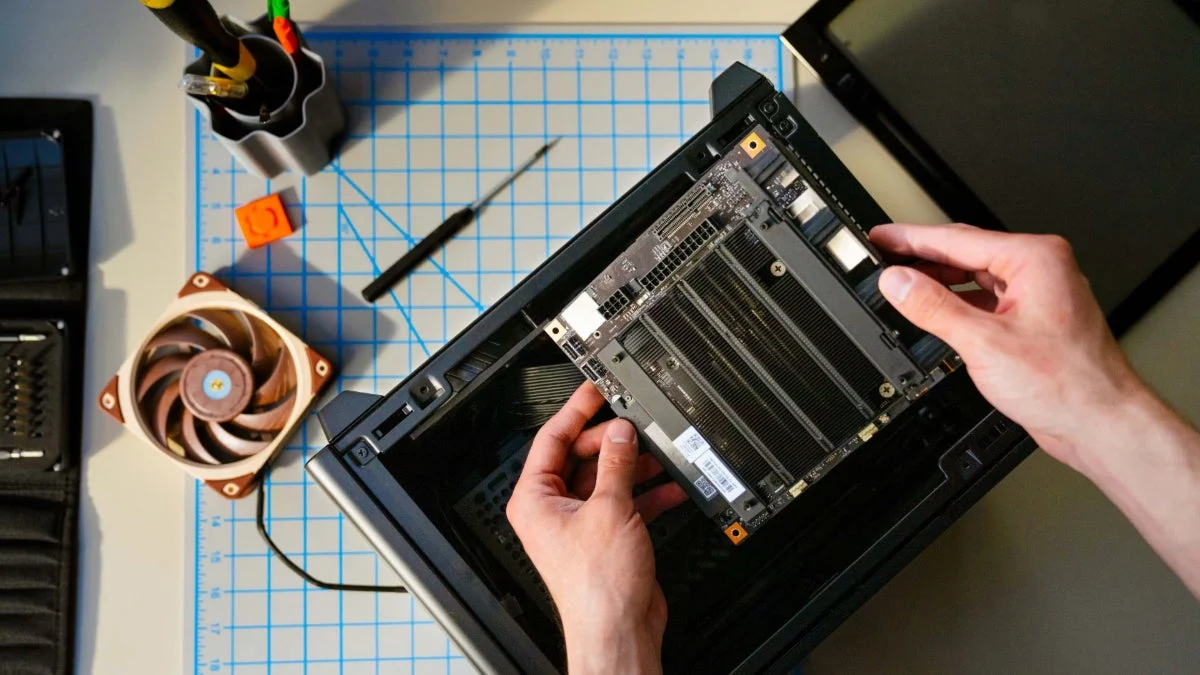
- Form Factor Versatility: This technology is not restricted to massive server racks. It is appearing in 16-inch laptops like the HP ZBook Ultra G3a, compact desktops like the Framework Desktop, and even ultra-compact form factors like the GMKtec EVO-X5 Pro.
However, it is vital to note that these figures are performance ceilings, not guarantees. The efficiency of local AI is a complex matrix involving the specific model architecture, the level of quantization, the underlying software optimization (such as specific driver stacks), and the cooling capacity of the physical chassis.
Official Industry Responses: The Strategic Pivot
The hardware manufacturers are not just releasing chips; they are positioning themselves as the backbone of the next AI wave.
"The goal is not to eliminate the cloud, but to optimize the workload," says a representative from AMD’s engineering division. "By distributing intelligence, we solve three critical problems: latency, privacy, and cost."
The Manufacturer Ecosystem:
- HP: With the ZBook Ultra G3a, HP is targeting the professional market—engineers, data scientists, and creative directors who cannot afford to upload proprietary data to a third-party cloud. By keeping the model local, HP is effectively offering "air-gapped" AI functionality.
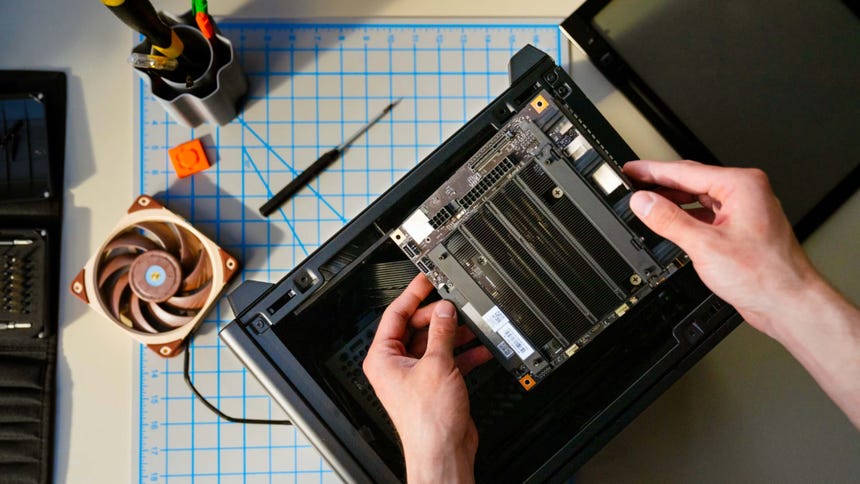
- Framework: By integrating the Ryzen AI Max into their modular desktop systems, Framework is championing the "right to repair and upgrade," suggesting that AI capabilities should be a component you can add to your machine, rather than a service you subscribe to.
- Lenovo: Their approach with the ThinkCentre X Ultra reflects a hybrid philosophy. Lenovo is positioning their machines as "AI-native hubs" that intelligently decide which tasks should be handled by the local processor (privacy-sensitive or high-speed tasks) and which should be offloaded to the cloud (massive-scale data processing).
The Implications: A New Era of Privacy and Performance
The move to bring AI "to the edge" (the local device) carries profound implications for the digital economy and the average user.
1. The Privacy Renaissance
Perhaps the most significant implication is data sovereignty. When an AI agent processes your tax documents, private medical files, or confidential corporate code on your own machine, that data never leaves your possession. This removes the "black box" risk associated with sending sensitive information to cloud servers owned by third-party corporations.
2. Operational Costs and Latency
Running models locally eliminates the "inference tax"—the cost per token charged by cloud providers. While the initial investment in high-end hardware is significant, the long-term cost of running an AI agent for heavy-duty tasks becomes virtually zero. Furthermore, by removing the internet connection from the critical path of the AI’s thought process, latency is reduced to the speed of the local memory bus, allowing for near-instantaneous responses.
3. Redefining the "Computer"
The very definition of a personal computer is shifting. Historically, a computer was a tool for inputting, storing, and displaying data. In the age of local AI, the computer is becoming an active collaborator. It is no longer a static piece of hardware; it is a system that can "think" about its own state, suggest optimizations, and perform complex background operations without human intervention.
4. The Hybrid Reality
Despite this surge in local capability, the cloud will not disappear. The industry is converging on a "Hybrid AI" model. Large-scale models that require terabytes of data and continuous training will remain in the cloud. However, the "execution layer"—the agents that interact with you, your files, and your applications—will reside on your desk.
Conclusion: The Horizon of Autonomous Computing
We are witnessing the final days of the "dumb terminal" era. As chips become more efficient and memory becomes more accessible, the barrier between the user and the AI is thinning. The race is no longer just about who can build the fastest processor; it is about who can create the most capable "local intelligence environment."
For the average user, this means the next generation of computers will be exponentially more powerful, more private, and more autonomous. We are moving toward a future where our devices are not just tools, but intelligent assistants that live with us, learn from us, and—most importantly—keep our data right where it belongs: in our own hands. As this hardware-driven shift continues, the boundary between human intent and digital execution will likely blur, marking the most significant change in computing since the birth of the graphical user interface.