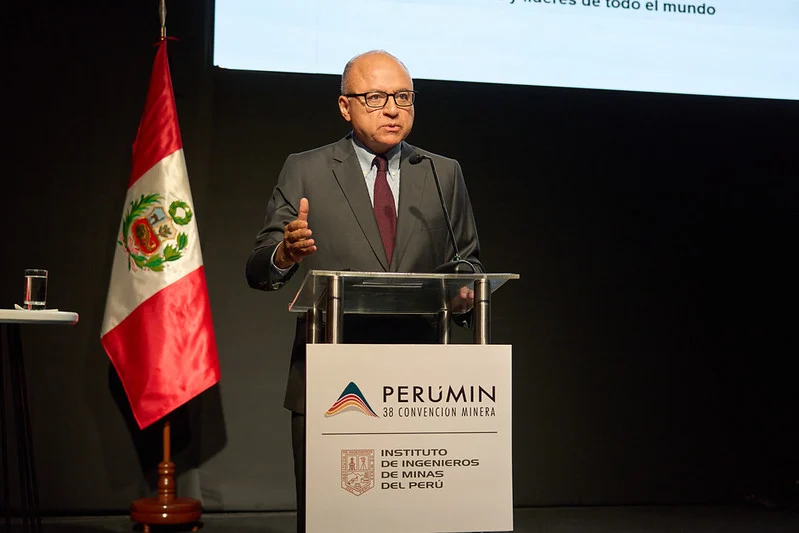
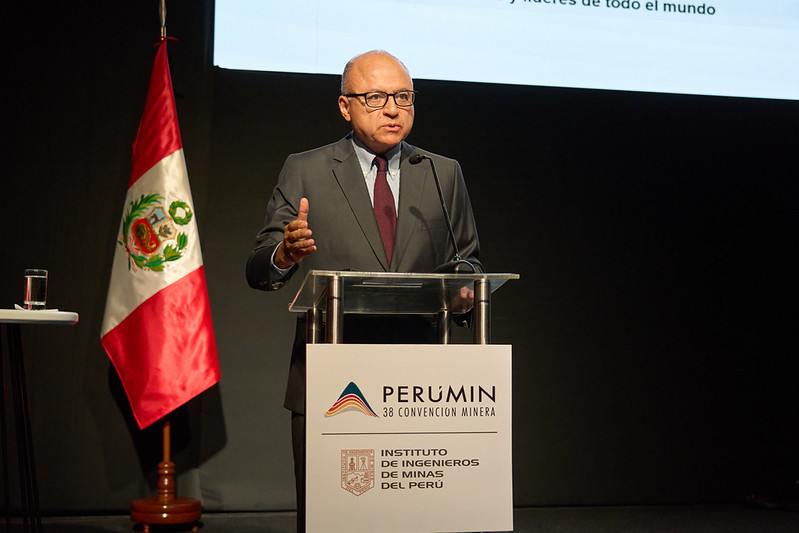
The Peruvian mining sector, a cornerstone of the nation’s economy and a primary driver of its positive trade balance, stands at a critical juncture. As the industry looks toward the horizon of 2027, the conversation has shifted from purely production-focused metrics to the structural reforms necessary to ensure long-term sustainability and social inclusion. Víctor Gobitz, President of PERUMIN 38, has emerged as a leading voice advocating for a paradigm shift in how the state manages the mining industry, specifically regarding the bureaucratic hurdles that currently stifle progress and inadvertently fuel informality.
Main Facts: The Call for a Regulatory Overhaul
In a recent interview, Víctor Gobitz laid out a clear mandate for the next Peruvian administration: the immediate reduction of "tramitología" (excessive red tape) and the implementation of greater predictability in the permitting process. According to Gobitz, the complexity of the current regulatory framework is not merely an administrative nuisance; it is a systemic barrier that prevents small-scale miners from transitioning into the formal economy.
Gobitz’s proposal is rooted in the belief that rigorous safety and environmental standards do not have to be sacrificed to achieve efficiency. "Without lowering standards, we must achieve agility and predictability in permits," he stated, emphasizing that these reforms should be prioritized within the first year of the upcoming government’s mandate.
The core of the issue, as identified by the PERUMIN 38 president, is that the high cost and complexity of navigating legal requirements effectively lock out smaller, legitimate players. By streamlining these processes, the state could democratize access to the mining industry, allowing smaller enterprises to operate with the same legal security as major corporations.
Chronology of the Mining Agenda
The discourse surrounding PERUMIN 38 is part of a multi-year effort to refine the regulatory landscape in Peru:
- 2024–2025: Initial discussions between the IIMP and government stakeholders highlighted the need for a comprehensive revision of the Mining Law, particularly concerning the MAPE (Small-Scale and Artisanal Mining) sector.
- 2026 (Current): Víctor Gobitz articulates the vision for PERUMIN 38, framing it not just as a trade fair, but as a platform for public policy debate focused on integration and formalization.
- September 20–24, 2027: Scheduled dates for PERUMIN 38 at the Cerro Juli Fairgrounds in Arequipa. The event aims to be the catalyst for the policy shifts proposed by industry leaders.
- Post-2027: The anticipated implementation phase for the legislative reforms discussed during the convention, intended to foster a more transparent and inclusive mining ecosystem.
Supporting Data: The Cost of Complexity
The mining sector in Peru is characterized by its high degree of decentralization. Unlike industries concentrated in coastal urban hubs, mining operations are spread across the diverse geography of the Andes and the Amazon. This geographic dispersal is a major contributor to regional development, yet it makes centralized, complex permitting systems particularly ill-suited for the realities on the ground.
Data suggests that the current "frondosa" (overgrown) bureaucracy disproportionately impacts smaller miners. When the cost of compliance—measured in time, legal fees, and administrative labor—exceeds the potential profit margin of a small-scale operation, miners are effectively incentivized to remain in the informal sector.
Furthermore, the informal sector poses significant risks, including poor labor safety, environmental degradation, and the loss of tax revenue for the state. By creating a simplified, "predictable" pathway, the government could incentivize these actors to bring their operations into the formal fold, where they can be regulated and integrated into the national supply chain.
Official Responses and Strategic Proposals
The strategy proposed by Gobitz extends beyond simple deregulation; it calls for a holistic "trazabilidad" (traceability) system. Under a new Law for Small-Scale and Artisanal Mining, the government and industry would work in tandem to monitor the entire supply chain.
The Role of Supply Chain Control
One of the most innovative aspects of Gobitz’s proposal is the inclusion of the supply chain in the regulatory net. He argues that companies responsible for selling explosives and fuels—critical inputs for mining—must be integrated into a control system that tracks where these resources end up. By monitoring these key commodities, the state can identify illicit operations that currently operate under the radar.
The Financial Sector’s Responsibility
Beyond material inputs, the financial sector is seen as a key partner in this transition. Gobitz explicitly called for the banking sector to participate in ensuring transparency. "The banking sector also has to be part of this effort to find transparency in the whole process," he noted. By enforcing stricter compliance for the financing of mining operations, the state can ensure that only formal, environmentally and socially responsible actors receive credit.
Security and Sustainability
The ultimate goal of this framework is to bring small-scale and artisanal mining to a standard of "dignity and security." This includes:
- Worker Protection: Ensuring that safety standards are applied to all, regardless of the size of the operation.
- Environmental Stewardship: Implementing measures to prevent environmental impact, even in the smallest mining sites.
- Community Integration: Ensuring that small-scale mining contributes to the local development of the regions where it operates.
Implications for the Future: PERUMIN 38
The significance of PERUMIN 38, themed "Integration and formalization for regional development," cannot be overstated. As the premier mining event in Peru, it serves as the bridge between domestic policy needs and international expectations.
Engaging Global Leadership
Gobitz intends to use the 38th edition of the convention to engage with global CEOs from the world’s leading mining firms. The objective is to demonstrate that, despite local challenges, Peru remains a premier global destination for investment. By showing that the country is committed to structural reform and formalization, the leadership aims to reassure investors that the Peruvian mining industry is maturing toward a more stable and transparent future.
The Multiplier Effect
The potential for the mining industry to act as an engine for national development is immense. Mining is not just an export sector; it is a decentralized activity that brings infrastructure, investment, and employment to the most remote corners of the country. If the government succeeds in implementing the reforms advocated by the IIMP, the multiplier effect on the Peruvian economy could be substantial, strengthening the trade balance and providing a sustainable foundation for regional growth.
Conclusion: A Vision for 2027 and Beyond
As the countdown to September 2027 begins, the message from the IIMP and Víctor Gobitz is clear: the path to progress lies in clarity, legality, and integration. By reducing the bureaucratic burden and fostering a system of total traceability, Peru has the opportunity to transform its informal mining sector into a formal, sustainable, and highly productive industry.
This vision for the future, centered on the upcoming PERUMIN 38, reflects a broader realization that the mining sector’s long-term success is inextricably linked to the social and legal fabric of the nation. For the next government, the mandate is simple: simplify the rules, enforce the standards, and pave the way for a more inclusive and prosperous mining future. As the global mining community turns its eyes toward Arequipa in 2027, the decisions made in the preceding months will determine whether Peru can successfully navigate this transition to solidify its position as a global leader in responsible, modern mining.