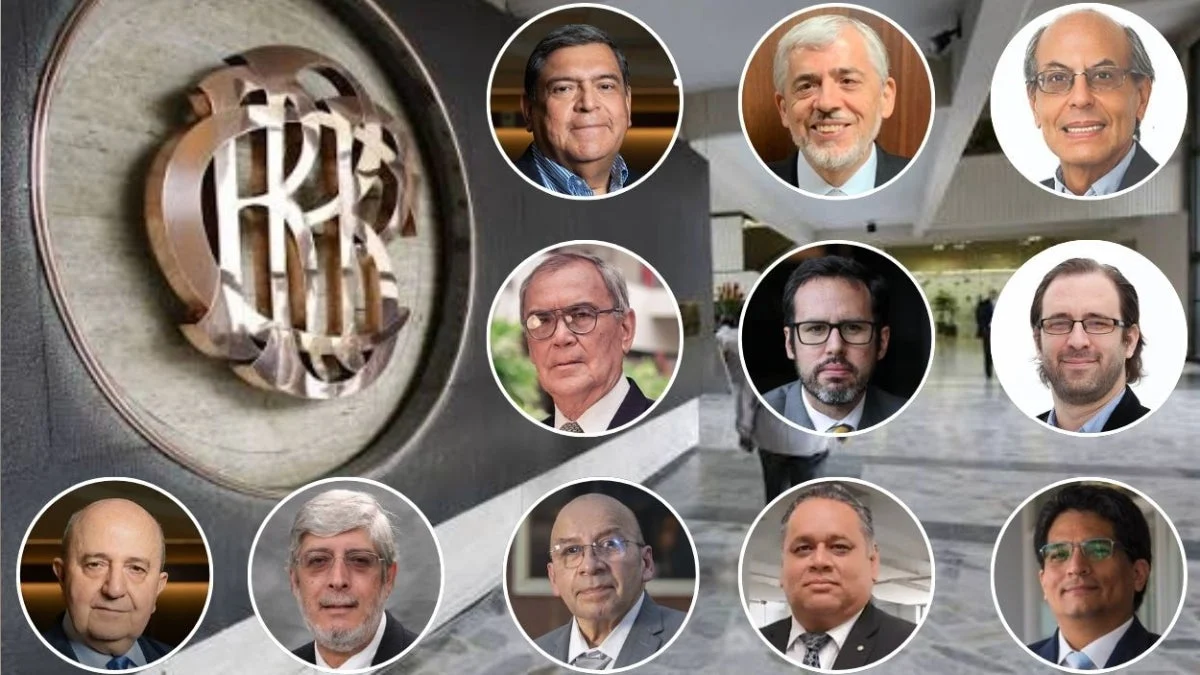
The Senate’s Special Procedures Commission has officially cleared 11 of 12 initial candidates to proceed to the interview stage in the high-stakes competition to fill three vacant seats on the Board of Directors of the Central Reserve Bank (BCR). The selection process, which is critical for maintaining the institutional stability and monetary policy integrity of the nation, has been marred by significant debate regarding the rigor of document verification and the validity of academic credentials not registered with the National Superintendency of Higher University Education (SUNEDU).
While the commission ultimately voted to move forward with the 11 candidates—passing the motion with eight votes in favor, two abstentions, and one vote against—the session highlighted deep procedural fissures within the Senate. At the heart of the controversy was a fundamental disagreement over whether the committee should strictly adhere to formal SUNEDU registries or rely on broader documentation and declarations provided by the candidates.
The Chronology of the Selection Process
The selection of directors for the Central Reserve Bank is one of the most sensitive administrative tasks performed by the Senate, as these individuals are tasked with overseeing the nation’s currency stability and inflation targets. The process began with 12 candidates nominated by various parliamentary benches.
The evaluation phase, which concluded recently, was designed to vet these individuals based on professional experience, academic achievements, and technical expertise. However, the commission quickly encountered complications. During the review of dossiers, four candidates—Alejandro Granda Sandoval, Kurt Johnny Burneo Farfán, Javier Alfredo Escobal D’Angelo, and José Antonio Fernández-Baca Llamosas—faced significant scrutiny.
The scrutiny centered on the "formalization" of their academic records. In several instances, the SUNEDU database did not reflect advanced degrees that the candidates claimed to possess. This triggered a heated debate among committee members regarding the criteria for eligibility. Some senators argued that failing to provide a SUNEDU-registered degree should automatically disqualify a candidate, as it constitutes a failure to meet the formal transparency standards expected of a high-level public official. Others argued that the possession of a master’s or doctoral degree logically presupposes the completion of a bachelor’s degree, even if the bureaucratic registration had not been updated in the national system.
Ultimately, the commission decided to rely on the criteria originally published in the official call for applications rather than adopting a new, stricter interpretive framework during the review. This decision allowed the four challenged candidates to remain in the running, though the decision was not unanimous.
Supporting Data and the Case of the Disqualified Candidate
While 11 candidates advanced, the case of Gonzalo Alegría Varona, proposed by the Obras bench, serves as the outlier in this narrative. Alegría was excluded from the process not due to a lack of academic credentials, but due to a procedural failure regarding the submission of his dossier.
According to the commission, while Alegría sent his documentation via email before the deadline, it failed to enter the Senate’s official Document Management System before the cutoff time. The Obras bench argued that the delay was caused by technical errors in the system, requesting a reconsideration of his status. However, the commission’s chair remained steadfast, asserting that the integrity of the process depends on strict adherence to the formal filing protocols. By denying the appeal, the commission demonstrated a rigid commitment to the administrative rules governing the selection, regardless of the individual candidate’s profile.
Regarding the other candidates, the committee demonstrated a willingness to re-evaluate scoring metrics. For instance, the case of Alejandro Granda Sandoval saw his score rise from 42 to 47 points after the commission determined that certain portions of his professional history—initially dismissed—should have been categorized as "specific experience" under the job requirements. This recalculation highlights the subjective nature of evaluating professional trajectories in high-level public appointments.
Official Responses and Procedural Tensions
The session revealed a significant rift in how the Senate views its role as an oversight body. Two primary schools of thought emerged during the debate:
- The Formalist Approach: Proponents of this view argued that the "evaluation sheet" used by the commission should be treated as a binding rule. This group maintained that if a degree is not in the SUNEDU system, it cannot be legally recognized for points. They argued that the Senate must set a gold standard for transparency, especially for an institution as vital as the Central Reserve Bank.
- The Pragmatic Approach: Proponents argued that the official "call for applications" was the primary governing document, not the internal evaluation sheet. They posited that as long as a candidate provided sworn declarations and proof of higher-level studies (such as a doctorate), the omission of a bachelor’s degree in a database should not be a barrier to entry. They viewed the SUNEDU requirement as a secondary administrative hurdle rather than a primary disqualifier.
The 8-2-1 vote in favor of proceeding suggests that the pragmatic approach currently holds sway within the Senate commission, though the dissenting voices have signaled that they will remain vigilant during the upcoming interview phase.
Implications for the Central Reserve Bank
The stakes for the Central Reserve Bank (BCR) could not be higher. The board of directors is responsible for setting interest rates and managing foreign exchange reserves. Any perception that the selection process was compromised by the inclusion of candidates with "unverified" or "unregistered" credentials could potentially impact market confidence.
Financial analysts warn that the independence and technical reputation of the BCR are its greatest assets. By allowing candidates with documentation issues to reach the interview stage, the Senate faces the risk of accusations of "cronyism" or "lax standards." Conversely, if the Senate had disqualified high-profile, highly qualified economists simply due to a registration error in a government database, the public might have viewed the process as overly bureaucratic and hostile to expert talent.
The upcoming interviews, scheduled for September 23 and 24, will be the final hurdle. Each candidate will have a 60-minute window to prove their mettle. The structure of these interviews is rigorous: parliamentary groups are permitted to ask questions, with each inquiry limited to one minute, followed by a three-minute response time from the candidate. This format is intended to test the candidates’ ability to handle pressure and articulate complex economic policies on the fly.
Moving Forward: The Road to Selection
The interview stage carries a weight of 40 points, meaning that even those who barely scraped through the document verification process still have a significant opportunity to secure their positions based on their performance before the commission.
As the Senate prepares for these final interviews, several key questions remain for the public and the financial community:
- Transparency: How will the Senate reconcile the public’s demand for verified credentials with the pragmatic need to recruit the best economic minds?
- Accountability: Will the interviews be conducted with a level of scrutiny that compensates for the document-related concerns raised during the evaluation phase?
- Institutional Stability: Will the final three selections be viewed by the public as legitimate, or will the controversy surrounding the 11 candidates linger, potentially undermining the incoming board members’ authority?
The Senate’s decision to move forward despite these obstacles represents a gamble on the candidates’ professional reputations over their formal bureaucratic status. For now, the focus shifts to the September hearings, where the candidates must demonstrate that their technical expertise and vision for the country’s monetary policy outweigh the administrative questions that have characterized their path to the board. The outcome will not only determine the composition of the BCR board but will also reflect the Senate’s own standards for institutional governance.