By Editorial Staff
The collapse of the Pampatama Bridge, a critical artery connecting the provinces of Aymaraes and Andahuaylas in the Apurímac region, has ignited a firestorm of controversy and emergency response efforts. As local authorities scramble to restore transit, the incident has served as a backdrop for a broader political confrontation between the Executive branch and the Peruvian Congress.
Minister of Transport and Communications (MTC), José Angello Tangherlini, spoke exclusively to RPP’s "La Rotativa del Aire" this Saturday to address the collapse, the negligence of the transport operators involved, and the growing tension regarding the potential censure of Interior Minister César Astudillo.
The Pampatama Bridge Collapse: A Case of Negligence
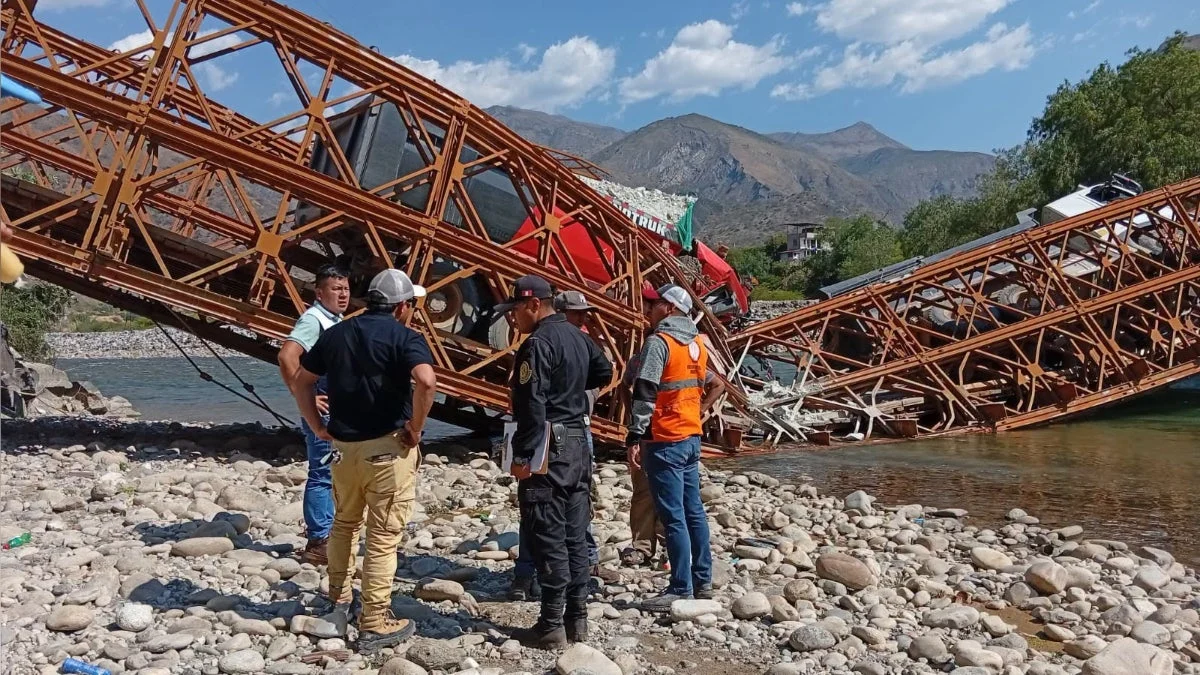
The collapse of the Pampatama infrastructure occurred on a Saturday afternoon, severing a vital economic and social lifeline for the communities of Aymaraes and Andahuaylas. According to preliminary reports, the incident was not the result of structural failure due to age, but rather a direct consequence of blatant operational imprudence.
The Chronology of the Incident
- 13:00 Hours: Witnesses reported the simultaneous entry of two heavy-duty trucks, laden with mineral cargo, onto the bridge.
- Immediate Aftermath: The bridge, unable to withstand the combined weight of the heavy machinery crossing in tandem, gave way, plunging the vehicles into the riverbed below.
- The Escape: In a shocking display of disregard for the law and the safety of the community, the drivers of the heavy vehicles abandoned their trucks within the river and fled the scene.
Minister Tangherlini was categorical in his assessment of the events. "It was an act of extreme imprudence by the drivers to attempt to cross one truck right behind the other. This simultaneous transit, which significantly exceeded the bridge’s capacity, is what ultimately triggered the collapse," the Minister stated.
Emergency Restoration Plan
Recognizing the economic impact that the isolation of these provinces causes, the MTC has initiated an emergency intervention. Following high-level consultations with the Governor of Apurímac, Percy Godoy Medina, a strategic plan was finalized.
The government, through Provías Descentralizado, will mobilize a modular bridge currently situated 51 kilometers away from the incident site. The logistics operation—which involves the decommissioning of the existing modular unit, its transportation across rugged Andean terrain, and the final assembly—is projected to take seven days. This temporary measure is expected to restore the flow of goods and people while a permanent structural solution is engineered.
The Political Landscape: A Clash of Powers
While the MTC is focused on restoring connectivity in the southern highlands, the political climate in Lima remains volatile. The Minister of Transport used his platform to weigh in on the motion of censure filed against Interior Minister César Astudillo, framing it as an obstructionist tactic rather than a constructive legislative measure.
The Censure Debate
The motion to censure Minister Astudillo has become a focal point of legislative debate, with the opposition arguing that the government has failed to curb rising crime rates. However, Minister Tangherlini challenged this narrative, defending his colleague’s performance and the Executive’s long-term strategy.
"Insecurity is a complex, structural problem," Tangherlini emphasized. "I believe there is a consensus among those who understand public policy that this cannot be solved in a mere 60-day window. While the Executive is actively engaging in the fight against organized crime, we are seeing the Congress focus its energy on political maneuvering rather than addressing the core issues of citizen security."
The Call for Legislative Faculties
The tension is further exacerbated by the government’s pending request for a delegation of legislative faculties. The administration is seeking authorization from Congress to enact measures specifically targeting the intersection of security and economic growth.
The Minister of Transport expressed clear frustration regarding the legislative delay: "We have been waiting for approximately 28 days for a response from the Congress. It is imperative that the Parliament accelerates the evaluation of these requests. We cannot afford to be paralyzed by bureaucratic or political delays when the country requires urgent action to foster economic recovery and public safety."
Supporting Data and Contextual Implications
The collapse of the Pampatama bridge is symptomatic of a larger national struggle regarding infrastructure maintenance and the regulation of heavy transport in Peru’s interior regions.
Infrastructure Vulnerability
Peru’s geography, defined by deep canyons and unpredictable river systems, makes bridge infrastructure particularly vulnerable. The use of heavy mining transport on regional roads that were not designed for such loads is a recurring issue. The Pampatama case highlights a lack of enforcement at the local and regional levels, where weight restrictions are often ignored by transport companies looking to optimize logistics at the expense of public property.
The Cost of Political Stalemate
The delay in granting legislative faculties is not merely a political grievance; it has tangible economic consequences. The Executive branch contends that without these faculties, they are unable to implement sweeping reforms to the penal system, border control, and economic incentives required to stimulate the regional economy in areas like Apurímac.
Economists have noted that the "political noise" generated by censure motions and the standoff over legislative powers distracts from the pressing need for long-term infrastructure investment. The loss of the Pampatama bridge is a microcosm of this: the need for immediate, high-cost repairs diverts funds that were otherwise earmarked for long-term development, effectively stalling regional progress.
Analysis: The Road Ahead
As the seven-day countdown for the installation of the modular bridge begins, the people of Aymaraes and Andahuaylas remain in a state of suspended transit. The incident has turned the spotlight onto the Ministry of Transport, forcing a discussion on the oversight of heavy-duty transport vehicles and the accountability of the mining transport sector.
However, the broader implications are strictly political. The Executive’s attempt to link the censure of the Interior Minister to a broader obstructionist trend in Congress suggests that the administration is preparing for a sustained battle.
Key Takeaways for Public Policy
- Regulatory Enforcement: The escape of the drivers involved in the Pampatama collapse raises critical questions about the legal repercussions for those who compromise public infrastructure. Stronger sanctions and better enforcement of weight limits on secondary bridges are essential.
- Executive-Legislative Synergy: The 28-day wait for legislative faculties underscores the fragile relationship between the two branches of government. A breakdown in cooperation will likely continue to manifest in delayed infrastructure projects and stalled security reforms.
- Structural Security: The Minister’s defense of the Interior Minister highlights a pivot in the government’s communications strategy: shifting the narrative from "failure to stop crime" to "long-term structural reform," while characterizing the opposition’s actions as superficial.
In conclusion, the situation in Apurímac is a multifaceted crisis. It is a logistical challenge for the MTC, a legal challenge for regional authorities tracking the runaway drivers, and a litmus test for the political stability of the current administration. Whether the government can deliver the modular bridge within the promised week and whether they can secure the legislative faculties they seek will be the defining markers of their success in the coming month.
As the nation watches, the focus remains on the intersection of physical infrastructure—the bridges that connect us—and political infrastructure—the cooperation that keeps a nation running. Both are currently under immense pressure.