In a high-stakes diplomatic maneuver, the Peruvian government has accelerated its efforts to navigate a complex trade impasse with the United States. Following the imposition of a 12.5% tariff on a significant portion of Peruvian exports, Minister of Foreign Trade and Tourism, Rogers Valencia, led a high-level delegation to Washington D.C. to initiate technical dialogues aimed at restoring the preferential access that has defined the bilateral trade relationship for over a decade.
The mission, which included top-tier trade officials and embassy representatives, underscores the urgency felt in Lima. With the cornerstone of the bilateral relationship—the Trade Promotion Agreement (TPA)—under strain, the Peruvian government is working to decouple its export sector from the fallout of U.S. domestic investigations regarding labor practices.
The Core Conflict: A Departure from the TPA
The friction stems from a 12.5% tariff implemented by the United States on July 24, which has sent shockwaves through Peru’s agricultural and textile sectors. The tariffs target high-value goods, including blueberries, table grapes, asparagus, mandarins, and cotton garments—products that are central to Peru’s non-traditional export portfolio.
For years, the U.S.-Peru Trade Promotion Agreement, in force since 2009, had facilitated duty-free access for the vast majority of these goods. The sudden imposition of the 12.5% levy represents a significant departure from the established rules of engagement, forcing exporters to either absorb the cost or risk losing their competitive edge in the U.S. market.
According to data from the Association of Exporters (ADEX), the impact is substantial. Analysts estimate that the affected products accounted for approximately US$5.3 billion in trade during 2025. While the Ministry of Foreign Trade and Tourism (Mincetur) noted that over 2,000 Peruvian products were exempted from the new tariff—representing about 45% of the total value of U.S. imports from Peru—the remaining 55% faces a precarious future.
Chronology of the Trade Friction
The tension between the two nations did not emerge in a vacuum. The roots of the current situation can be traced back to a series of U.S. investigations focused on labor standards and the potential importation of goods manufactured under forced labor conditions.
- Early 2025: The first round of negotiations regarding trade reciprocity and compliance standards began, setting the stage for months of intersessional technical exchanges.
- Mid-2025: As technical dialogues continued through 2025 and 2026, concerns over labor compliance protocols intensified within U.S. regulatory bodies.
- July 24, 2025: The United States officially implemented the 12.5% tariff. Mincetur officials have been quick to clarify that the U.S. investigation did not conclude that Peru is currently exporting goods produced under forced labor; rather, the tariff functions as a preventative regulatory measure.
- August 2025: Industry leaders, including ADEX President César Tello, publicly called for a return to the 0% tariff structure mandated by the TPA, signaling the growing anxiety among producers.
- Late 2025: President Keiko Fujimori engaged in high-level diplomacy, raising the tariff issue directly with U.S. Secretary of State Marco Rubio. While Secretary Rubio indicated that the matter fell outside his immediate portfolio, he committed to channeling the request to the appropriate U.S. trade representatives.
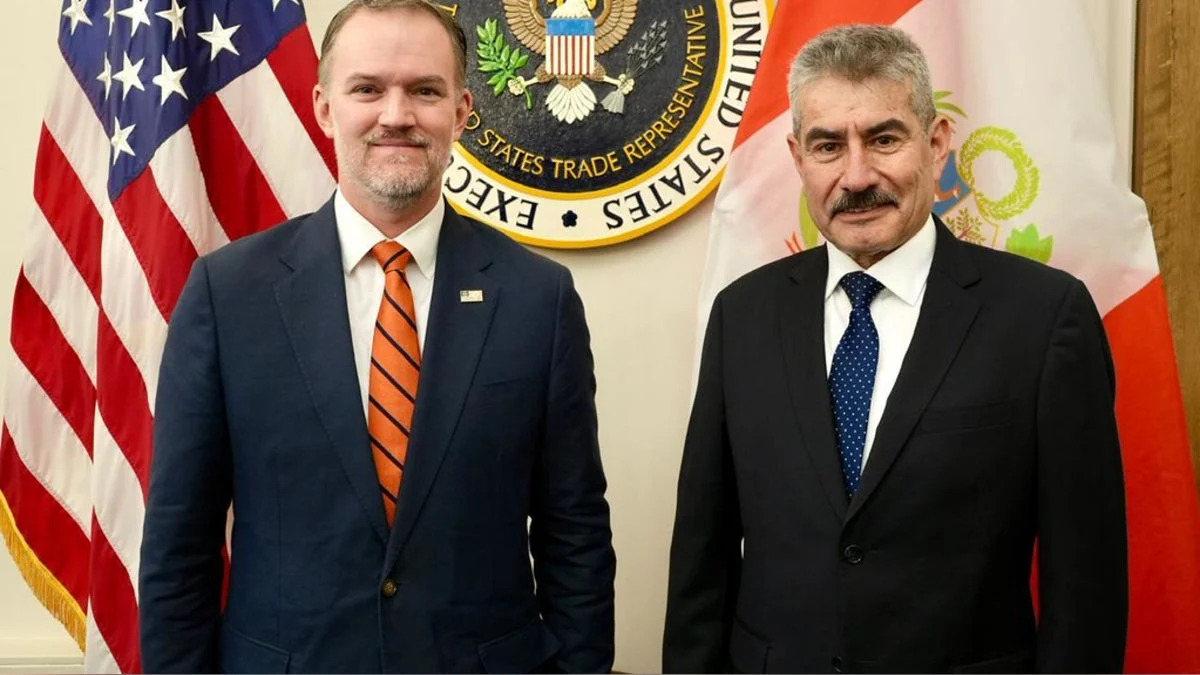
- Current Status: The recent meeting between Minister Rogers Valencia and U.S. Trade Representative Jamieson Greer marks the latest attempt to institutionalize the dialogue and find a path back to the pre-July trade status.
Supporting Data and Economic Stakes
The U.S. market is not merely another destination for Peru; it is the second-largest trading partner and the primary consumer of Peruvian non-traditional exports. The reliance on this market makes the 12.5% tariff a matter of national economic interest.
The agricultural sector, which has been the engine of Peru’s export growth, is particularly vulnerable. The "superfoods" category—blueberries, grapes, and asparagus—has thrived under the TPA. A 12.5% price increase effectively negates the thin margins upon which these highly perishable, capital-intensive industries operate.
Furthermore, the textile industry, which provides thousands of jobs across Peru, faces a dual challenge. The tariff on cotton garments makes Peruvian-made clothing more expensive compared to competitors in Southeast Asia, potentially leading to a permanent shift in sourcing strategies by U.S. retailers. The Mincetur report highlighting that 45% of trade remains exempt offers some solace, but the concentration of the tariff on high-growth sectors suggests a targeted economic squeeze that the Peruvian government is desperate to alleviate.
Official Responses and Diplomatic Strategy
The Peruvian government’s strategy is characterized by a mix of technical rigor and diplomatic persistence. During the Washington meetings, Minister Valencia was accompanied by a robust team, including Vice Minister of Foreign Trade Sayuri Bayona and senior directors from Mincetur, alongside embassy officials.
"This meeting reaffirms the willingness of both countries to continue working constructively to advance toward an increasingly solid relationship," Minister Valencia stated following the meeting with Ambassador Jamieson Greer and Deputy U.S. Trade Representative Jeffrey Goettman.
The rhetoric from Lima is carefully calibrated. By emphasizing the "technical" nature of the negotiations, Peru is attempting to depoliticize the issue, framing it as a regulatory misunderstanding rather than a systemic labor rights violation. By focusing on the 2,000 items that were not included in the tariff, the Peruvian delegation is positioning itself as a compliant partner that is willing to work with the U.S. to ensure that supply chains meet international labor standards.
The Path Forward: Implications for the TPA
The broader implication of this dispute is the potential erosion of the 2009 Trade Promotion Agreement. If the United States can unilaterally impose tariffs for reasons outside the scope of traditional trade disputes, it creates a precedent that could undermine investor confidence in the region.
Potential Outcomes
- The "Compliance" Pathway: Peru implements stricter, U.S.-monitored labor certification processes, leading to the gradual lifting of the 12.5% tariff. This is the most likely scenario, as it allows both governments to save face.
- The Prolonged Tariff Regime: If technical negotiations stall, the 12.5% tariff could become a "new normal," forcing a significant restructuring of the Peruvian export sector, potentially leading to the diversification of markets toward Asia and Europe.
- The Dispute Resolution Mechanism: Should the tariff remain in place, Peru could invoke the formal dispute resolution mechanisms outlined in the TPA, though this is a "nuclear" option that the government is currently avoiding in favor of diplomacy.
Conclusion: A Test of Resilience
The current trade tension represents a critical stress test for the U.S.-Peru relationship. While the economic data points to a painful adjustment period, the ongoing technical dialogues suggest that both Washington and Lima recognize the mutual benefits of their integrated markets.
As the negotiations move into the next phase, the focus will remain on whether Peru can demonstrate the level of regulatory transparency required to satisfy U.S. labor concerns. For the thousands of farmers and garment workers whose livelihoods depend on access to the American market, the outcome of these meetings in Washington will determine the trajectory of their industry for the next decade.
The Peruvian government remains optimistic, holding onto the conviction that the long-standing, robust history of bilateral trade will prevail over the current regulatory friction. However, as the global trade landscape becomes increasingly volatile, the path to restoring the 0% tariff status remains as complex as it is essential.