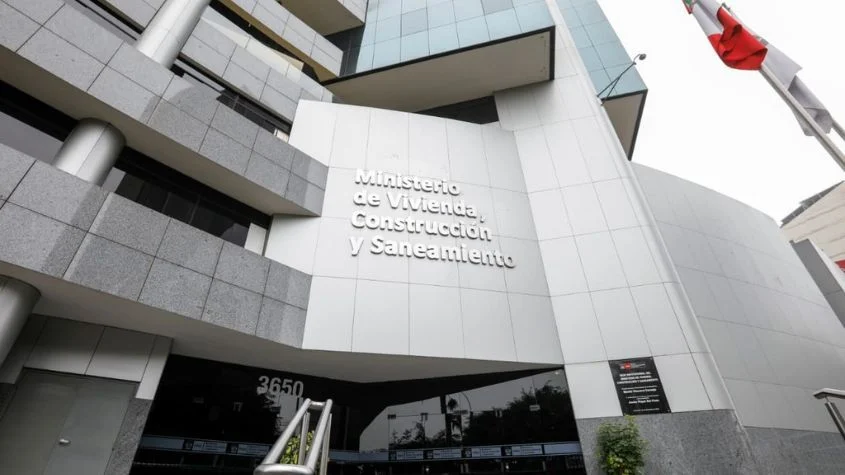
In a significant milestone for public administration in Peru, the Ministry of Housing, Construction, and Sanitation (MVCS) has successfully completed the transition to the updated ISO 37001:2025 international standard for Anti-Bribery Management Systems (ABMS). The Ministry’s achievement—finalized without a single non-conformity—marks a decisive step in the government’s ongoing effort to modernize institutional oversight and fortify public trust in state-managed projects.
The certification, verified by the Global Certification Bureau S.A., confirms that the Ministry’s operational protocols meet the most rigorous global benchmarks for preventing, detecting, and addressing bribery risks. This achievement is not merely a bureaucratic success; it represents a fundamental shift in how the Ministry handles procurement, financial allocations, and inter-institutional communications, ensuring that every sol of public funding is shielded from corruption.
Chronology of the Certification Process
The path to achieving the ISO 37001:2025 certification was characterized by meticulous internal preparation and rigorous external scrutiny. The process culminated in a high-stakes audit conducted between August 19 and August 21, 2026. This period served as the "Second Follow-up to the Recertification" of the Ministry’s Anti-Bribery Management System (SGAS).
Following the exhaustive three-day evaluation, auditors from Global Certification Bureau S.A. concluded that the MVCS had effectively adapted its existing internal frameworks to the updated 2025 international requirements. As a result, the Ministry was issued Certificate No. ER-0061-21-AS, which remains valid until July 8, 2027. This timeline highlights a sustained, multi-year commitment to institutional integrity rather than a one-off corrective measure.
Comprehensive Scope of the Anti-Bribery System
The Ministry’s Anti-Bribery Management System is not confined to a single department; it permeates the core functions of the institution. By integrating these controls into the DNA of the organization, the MVCS has created a comprehensive firewall against unethical practices. The scope of the certified system encompasses:

- Procurement and Acquisitions: Oversight of public tenders and vendor contracts to prevent collusion or illicit influence.
- Financial and Resource Management: Strict tracking of monetary flows to ensure transparency in budgetary execution.
- Human Resources: Implementing vetting procedures and ethical conduct training for staff at all levels.
- Housing and Sanitation Projects: Direct oversight of the core mandate of the Ministry, ensuring that development projects are awarded and executed on their technical merits.
- Strategic Communications and Public Information: Ensuring that information is disseminated transparently and that mechanisms for whistleblowing remain accessible and secure.
During the audit, the evaluators specifically lauded the "culture of integrity" fostered within the institution. It was noted that the commitment was not limited to the leadership level but was clearly understood and implemented by the technical teams responsible for daily operations.
Official Responses and Strategic Vision
The achievement has been framed by current administration leadership as a cornerstone of their governance philosophy. Minister of Housing, Mauricio Arnillas, emphasized that the certification is a tangible manifestation of the government’s promise to the public.
"Integrity is not just an aspiration; it is a permanent commitment of this management team," Minister Arnillas stated during the announcement. "Every public resource is held in trust, and every decision we make must prioritize the interests of the families and citizens who rely on our services. This ISO certification is a testament to our resolve to replace opacity with efficiency and public confidence."
The Minister further explained that this transition is part of a broader, systemic reform. By aligning with international standards, the Ministry is not only reducing the risk of corruption but is also improving the overall efficiency of its operations. A well-controlled system, he argued, is a faster and more productive one, as it eliminates the "leakage" caused by inefficiency and mismanagement.
Implications for the Construction and Sanitation Sector
The implications of this certification for the construction and sanitation sector in Peru are profound. The Ministry of Housing is one of the largest public investors in the country, and its procurement processes set the tone for the entire industry.

Enhancing Investor Confidence
By adhering to the ISO 37001:2025 standard, the MVCS sends a powerful signal to private sector partners, international lenders, and civil society. For private construction firms, this means a more predictable and transparent bidding environment. When the "rules of the game" are standardized and monitored by an external third party, firms can compete on innovation and capability rather than on their ability to influence officials.
Mitigating Risks in Complex Projects
Large-scale infrastructure projects—particularly in the sanitation sector, which often involve complex engineering and multi-year timelines—are historically vulnerable to corruption risks. The implementation of robust due diligence, as required by the new ISO standard, ensures that risk factors are identified long before they can manifest as delays or cost overruns. This proactive stance is essential for the timely delivery of vital public services, such as clean water and housing, to underserved populations.
Strengthening Internal Controls and Accountability
The transition to the 2025 standard requires a continuous improvement loop. It is not enough to pass an audit; the organization must prove that it is constantly updating its risk assessment methodologies. This forces the Ministry to remain vigilant against emerging forms of corruption, such as digital-era bribery or complex procurement schemes. The requirement to maintain a "communication of concerns" channel ensures that whistleblowers—whether they are employees or contractors—have a safe, independent avenue to report irregularities.
A Future-Oriented Strategy: The Path Beyond 2027
As the Ministry looks toward the 2027 expiration of its current certification, the focus shifts to sustainability. Achieving the certification is a major milestone, but maintaining the standard requires an institutional culture that resists complacency.
The Office of Integrity and Anti-Corruption, which led the effort, has already begun outlining the next steps. These include:

- Digital Transformation: Leveraging data analytics to monitor financial transactions in real-time, making it even harder for irregular activities to go unnoticed.
- Training and Capacity Building: Expanding the reach of integrity training to regional offices, ensuring that the same high standards apply to every branch of the Ministry across the country.
- Third-Party Oversight: Strengthening the vetting process for consultants and subcontractors who interact with Ministry-funded projects.
Conclusion
The successful transition to ISO 37001:2025 by the Ministry of Housing, Construction, and Sanitation is a clear indicator that public management in Peru is moving toward a more professional, transparent, and accountable future. By voluntarily subjecting its internal systems to international scrutiny, the Ministry has demonstrated that it is serious about closing the doors to corruption.
For the citizens of Peru, this signifies that the vital resources allocated for their homes and essential services are being protected with the highest level of diligence. As the construction and sanitation sector continues to be a primary engine of economic growth, the Ministry’s commitment to these standards serves as a bedrock for sustainable development and social progress. With the certification secured until 2027, the MVCS has established a robust roadmap for others to follow, proving that through systemic discipline and executive will, public institutions can effectively evolve to meet the challenges of the modern era.