The construction of the Fourth Bridge over the Panama Canal has officially hit a significant milestone, with project managers confirming that the structure has reached 41% physical completion. This ambitious infrastructure project, designed to reshape the logistics and transportation landscape of Panama, remains strictly on schedule. With multiple work fronts operating simultaneously, the consortium in charge is working toward a contractual delivery date of December 2028, a deadline that officials remain confident in meeting despite the logistical complexities inherent in such a massive undertaking.
Main Facts and Current Status
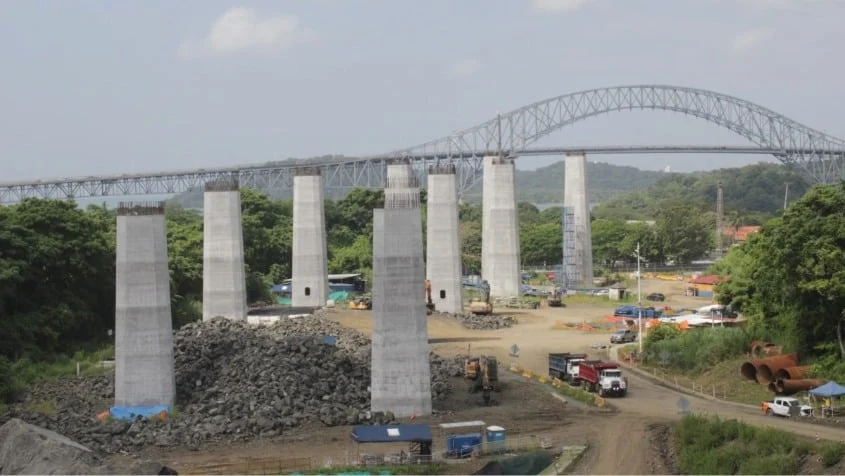
The Fourth Bridge is not merely a transportation link; it is a critical artery intended to alleviate the severe traffic congestion experienced by residents in the western provinces of Panama. Currently, the project is transitioning from deep-foundation works to the highly visible phase of vertical construction and segment assembly.
Key activities currently defining the site include:
- Foundation Completion: The project is nearing the finalization of its piling works, which serve as the subterranean bedrock for the massive towers and viaducts.
- Vertical Expansion: Teams have shifted their focus toward the construction of column heads and the erection of support structures.
- Logistics Operations: The site is preparing for the mobilization of specialized equipment, most notably the "viga lanzadora" (launching girder), a massive crane system essential for the incremental assembly of the bridge’s precast segments.
The Technical Complexity of Assembly
The logistics of building a bridge of this magnitude are immense. A critical upcoming phase involves the transport and installation of 1,511 precast concrete "dovelas" (segments). These segments are not standard construction materials; they are precision-engineered pieces weighing between 60 and 80 tons each.

To mitigate the impact on daily traffic in the Balboa area of the Ancón district, the construction consortium has developed a rigorous nocturnal transport plan. Heavy-duty lowboy trailers will move these segments during off-peak hours to minimize disruption to the public. As of the latest report, approximately 210 of the required 1,511 segments have been successfully manufactured, setting a steady pace for the upcoming assembly phase, where each 60-meter span of the bridge will require 14 segments to achieve its full structural integrity.
Chronology and Milestone Development
The progression of the Fourth Bridge has been a story of methodical engineering. Since the project’s inception, the focus has been on geotechnical stability and the creation of a foundation capable of supporting the immense weight of an atirantado (cable-stayed) bridge.
- Phase I (Foundation and Piling): The initial months were dedicated to earthworks and deep-foundation drilling. The completion of the pilot network was the primary hurdle to ensure the stability of the towers against the seismic and soil conditions near the Canal.
- Phase II (Vertical Growth): As of September 2026, the construction has moved upward. The Eastern Tower (M3), located in the Arenera sector of La Boca, has already reached an impressive height of 53 meters.
- Phase III (Assembly and Deck Construction): Currently in progress, this phase involves the integration of the launching girders and the systematic placement of the concrete segments.
- Phase IV (Completion and Final Integration): Projected to culminate in late 2028, this final phase will involve cable tensioning, deck finishing, and the integration of the bridge into the national highway network.
Supporting Data: The Scale of the "H" Towers
The most striking visual element of the new bridge will be its two massive towers. Both the Eastern Tower (M3) and the Western Tower (M4)—the latter positioned strategically near the Canal’s primary navigation channel—are designed with an "H" configuration.
This architectural choice is driven by both aesthetic and load-bearing requirements. Each tower will rise to a staggering height of 186 meters, a vertical reach equivalent to a 62-story skyscraper. These towers are the literal backbone of the project; they will support the steel cables that hold the bridge deck over the water, allowing the massive structure to span the Canal without impeding the transit of Post-Panamax vessels below.

Official Projections and Strategic Implications
The Fourth Bridge is a cornerstone of the Panamanian government’s long-term infrastructure master plan. By providing a high-capacity link to the western side of the country, the bridge is expected to:
- Boost Economic Integration: By facilitating the movement of goods and labor, the bridge will reduce the "logistical friction" that currently hampers trade between the capital and the western provinces.
- Enhance Canal Efficiency: By diverting land traffic away from the existing bridge structures near the locks, the new crossing will allow for more streamlined operations in areas surrounding the Canal’s administrative and industrial zones.
- Urban Connectivity: The project aims to improve the quality of life for thousands of commuters who currently face hours of transit daily, effectively expanding the labor market and residential options for the metropolitan area.
The Ministry of Public Works and the project’s oversight committees have emphasized that quality control remains the highest priority. The use of specialized equipment, such as the launching girder, ensures that the assembly of the bridge deck is performed with millimeter-level precision. This is essential, as the bridge must withstand not only heavy vehicular traffic but also the environmental challenges posed by the tropical climate and the specific wind profiles of the Canal Zone.
Looking Ahead: A New Horizon
As the construction moves forward, the "41% completion" metric serves as more than just a progress bar; it represents a tangible shift in the skyline of Panama. With the towers rising and the manufacturing of segments accelerating, the project is moving out of the "invisible" phase of foundation work into the "visible" phase of structural assembly.
The logistical challenge of managing such heavy, pre-stressed concrete pieces through an active urban corridor will test the project management team’s efficiency in the coming months. However, with the current trajectory and the adherence to the 2028 delivery date, the Fourth Bridge is well on its way to becoming an engineering landmark in the Americas.

For the people of Panama, the bridge represents the promise of a more connected future. For the engineering community, it serves as a masterclass in modern infrastructure development, balancing the demands of global maritime logistics with the urgent needs of local urban mobility. As work continues into the next quarter, the focus will shift toward the installation of the cable-stay system, which will eventually define the silhouette of this monumental crossing.
In summary, the Fourth Bridge over the Panama Canal stands as a testament to the nation’s commitment to sustained infrastructure development. By maintaining the current pace of construction and overcoming the technical hurdles of segment assembly, the project is set to transform the regional landscape, ensuring that Panama remains the primary hub for logistics and connectivity in the hemisphere.