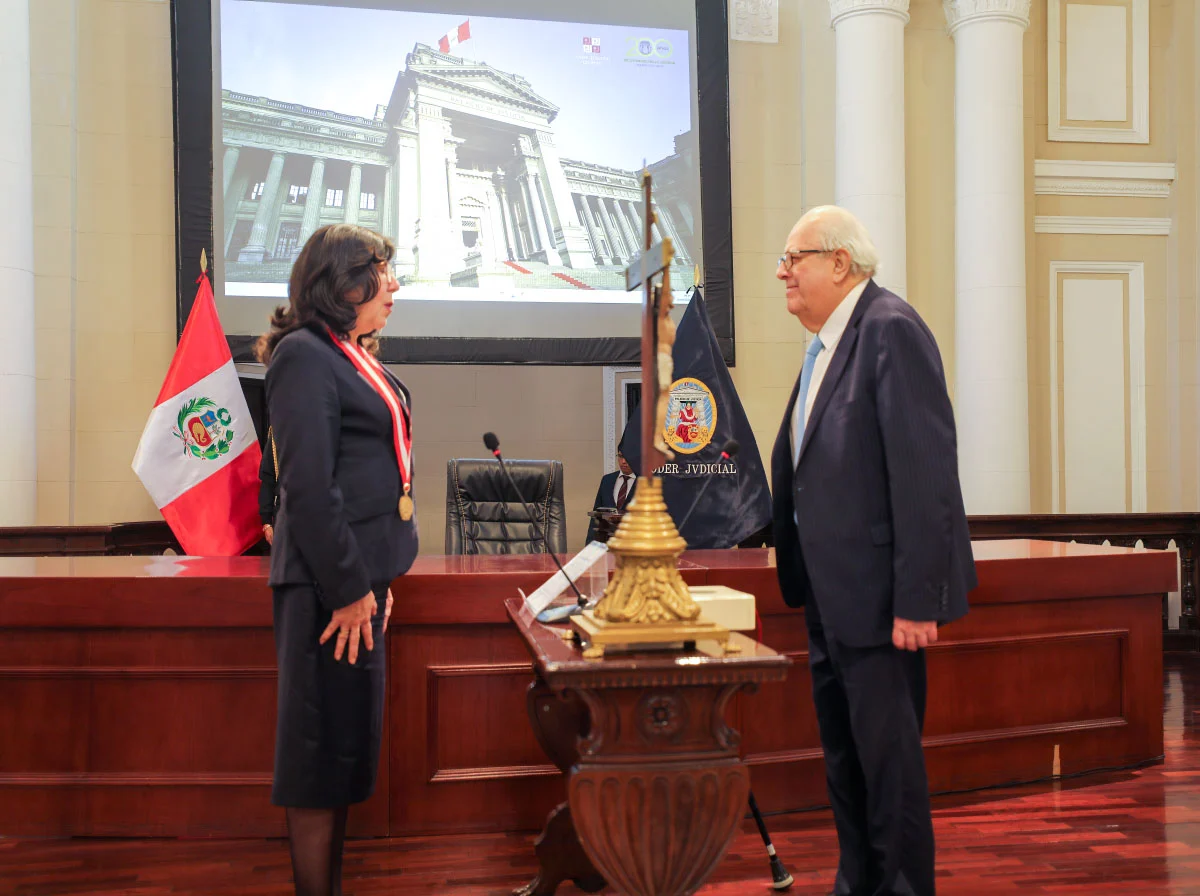
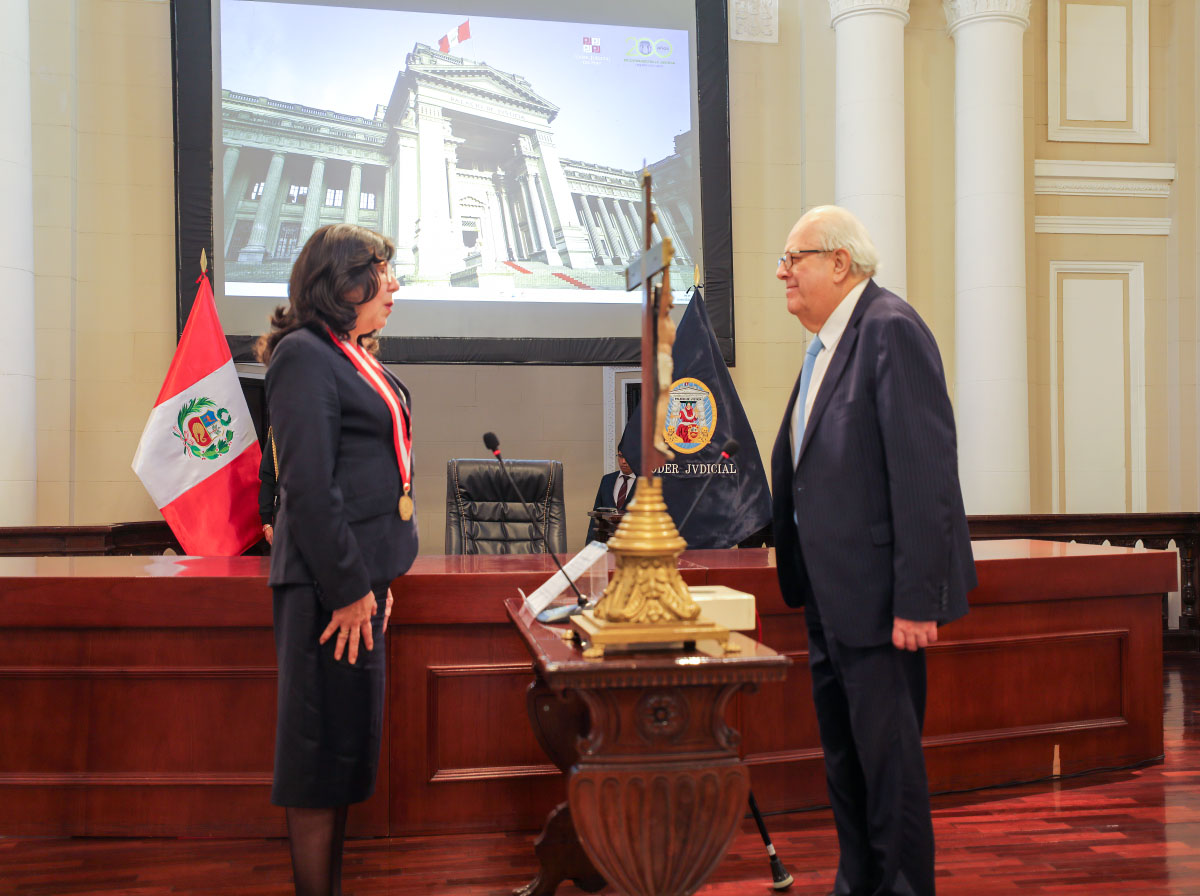
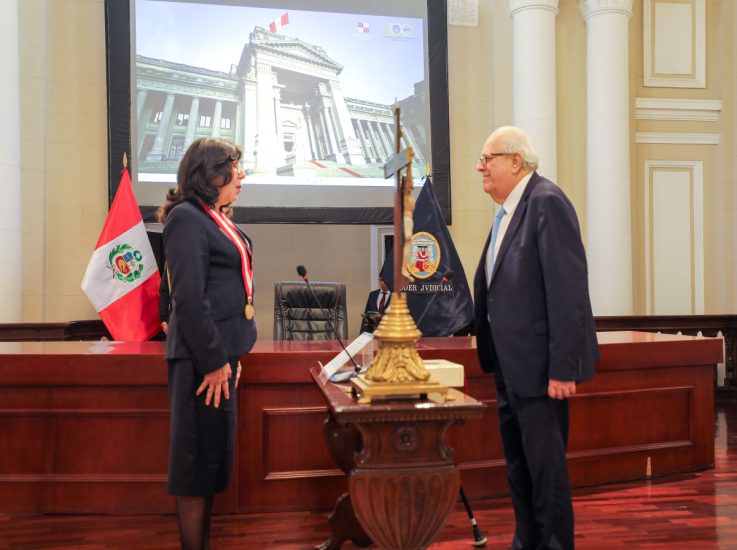
Lima, Peru – September 24, 2026 – In a significant affirmation of economic leadership, Julio Velarde Flores was sworn in today as President of the Central Reserve Bank of Peru (BCR) for an unprecedented fifth consecutive term, slated to extend until 2031. The solemn ceremony, held at the Palace of Justice, saw Velarde take the oath of office before the President of the Judicial Branch, Janet Tello Gilardi, underscoring the independence and institutional gravity of the nation’s monetary authority.
Velarde, an economist who has helmed the BCRP since October 2006, pledged to "faithfully fulfill the duties of the office" before God and country. Tello Gilardi’s lighthearted response, wishing him divine and patriotic rewards for his service, elicited a wave of laughter, including from Velarde himself, highlighting a moment of camaraderie within the usually formal setting. The event was attended by Supreme Court judges Víctor Prado Saldarriaga and Aldo Figueroa Navarro, along with key officials from the BCRP, adhering to Article 14 of the Organic Law of the Central Reserve Bank, which mandates that the President, Directors, and General Manager swear before the Supreme Court.
This reappointment marks a remarkable chapter in Peru’s economic governance, with Velarde now set to preside over the BCRP for nearly two decades. His extended tenure speaks volumes about his consistent performance and the trust placed in his leadership by successive administrations and financial institutions.
A Proven Track Record: The Journey to a Fifth Term
The Executive Branch officially nominated Velarde for his new term via Supreme Resolution No. 258-2026-PCM, published in the official gazette El Peruano on August 21st. The nomination then navigated the legislative process, first gaining approval from the Senate’s Special Procedures Commission, which recommended his ratification with a substantial nine votes in favor, two against, and one abstention. The Senate Plenary subsequently closed the process on September 16th, confirming his reappointment with a decisive 40 votes in favor and 12 against, with no abstentions.
The confirmation process, while ultimately successful, was not without its robust debate. Senator Humberto Morales voiced concerns regarding Velarde’s connections with private enterprises, specifically mentioning his involvement with the mining company Volcan. Other legislators from the same political bloc characterized the evaluation as superficial. Conversely, lawmakers such as José Arista and Patricia Juárez staunchly defended Velarde’s reappointment, citing his proven track record in maintaining low inflation rates compared to regional peers and his technical stewardship, which has been instrumental in providing stability to the Peruvian economy.
Velarde’s extensive experience predates his current presidential tenure. He previously served as a Director of the BCRP from 1990 to 1992 and again from 2001 to 2003. His international profile is equally impressive. He chaired the G24 (Intergovernmental Group of Twenty-Four on International Monetary Affairs and Development) from 2018 to 2019 and served as the Executive President of the Latin American Reserve Fund (FLAR) from 2004 until October 2006. His academic credentials are also formidable, holding a Master’s degree and doctoral studies in Economics from Brown University in the United States, and advanced studies from the Kiel Institute for the World Economy in Germany.
International Acclaim and Academic Recognition
Velarde’s stewardship of the BCRP has not gone unnoticed on the global stage, earning him numerous accolades. In 2020, The Banker, a publication of the Financial Times group, recognized him as Central Banker of the Year for the Americas. His global economic leadership was further acknowledged in 2015 when The Banker named him Global Central Banker of the Year. In 2021, Global Finance magazine awarded him the highest rating among central bankers.
Locally, Velarde has been honored with the Order of the Sun of Peru in the Grade of Grand Cross, Peru’s highest civilian decoration. Furthermore, several Peruvian universities have bestowed upon him the prestigious Doctor Honoris Causa degree, recognizing his significant contributions to economics and public service.
This wave of academic recognition is set to continue. The National Agrarian University La Molina (UNALM) is scheduled to award him an honorary doctorate this Friday, September 25th, in a ceremony led by Rector Alberto Barrón. Following this, on Wednesday, September 30th, the National University of Engineering (UNI) will confer the same distinction upon him during a ceremony at the UNI Grand Theater. This year alone has already seen him receive a similar honor from the Universidad Peruana Unión in April. The investiture ceremony for Julio Velarde Flores as Doctor Honoris Causa by UNALM is scheduled for September 25th.
Navigating Future Economic Headwinds
While Velarde’s reappointment is a testament to his established competence, the upcoming five-year term is not without its significant challenges. The BCRP has projected an inflation rate of 3.8% for the close of 2026, with the aim of returning to the 2% target by 2027. This endeavor will require astute monetary policy management.
The potential economic repercussions of El Niño phenomena, a recurring climatic event in the region, will undoubtedly demand careful monitoring and strategic planning. Furthermore, preserving monetary stability amidst a complex and often volatile political landscape remains a paramount concern for the BCRP.
As Velarde stands on the cusp of completing two decades at the helm of Peru’s central bank, he approaches his fifth term with a steadfast commitment to his core mandate: maintaining a singular and clear objective for the nation’s economic health. His consistent focus on price stability and sound financial management has been the bedrock of his long and distinguished career, and it is this unwavering principle that will guide him as he steers Peru’s economy through the evolving global and domestic challenges of the coming years. His leadership, marked by both technical expertise and a pragmatic approach, will be crucial in navigating the intricate economic currents ahead, ensuring continued stability and fostering sustainable growth for Peru.