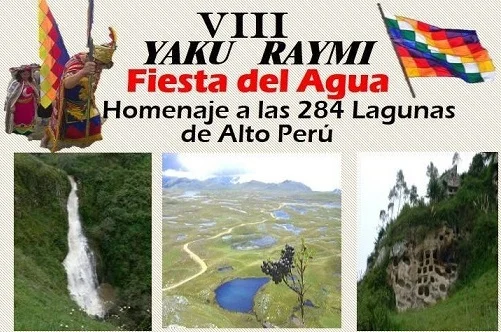
CAJAMARCA, PERU – In a defiant display of grassroots environmentalism, the rural communities of San Pablo and four major river basins in the Cajamarca region have mobilized to safeguard a vital ecological lifeline. As of June 2, 2017, the legendary Ronderos—the self-organized peasant patrol groups that serve as the backbone of rural justice and civil order in the Peruvian Andes—have formally transitioned into a new role: "Guardians of the 284 Lagoons of Alto Perú."
This mobilization serves as a direct response to the perceived threat posed by the Yanacocha mining company, whose operational interests in the area have ignited a protracted and volatile legal battle. With the shadow of a potentially favorable ruling from the Constitutional Court (TC) looming over the company, the local population is drawing a line in the sand to protect the high-altitude wetlands that sustain their livelihoods.
The Strategic Importance of Alto Perú
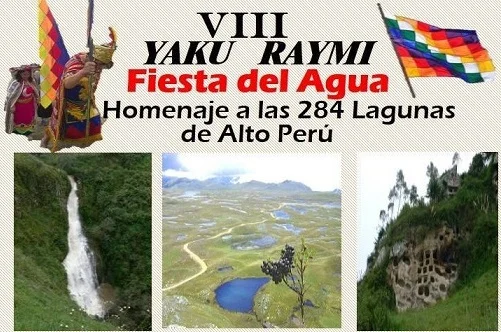
The Alto Perú region is not merely a collection of high-altitude basins; it is a critical hydrological hub. Comprising 284 lagoons, this territory acts as a natural water tower for the region. The wetlands serve as the headwaters for the Jequetepeque, Llaucano, Marañón, and Cajamarquino basins. For the surrounding agricultural communities, these waters are the lifeblood of their economy, sustaining livestock, irrigation, and the very health of their communities.
Environmental experts have long argued that industrial extraction in such fragile, high-altitude ecosystems carries an irreversible risk of acidification and heavy metal contamination. For the communities of San Pablo, the struggle is existential: the scarcity of clean water is already the primary grievance in the region, and the expansion of mining activities into the heart of these wetlands is viewed as a precursor to total resource depletion.
Chronology of a Conflict
The tension surrounding Alto Perú is the result of years of friction between industrial mining interests and community-led conservation efforts.
- 2010–2016: Persistent efforts by the Comité Interinstitucional para la Conservación y Turismo Lagunas de Alto Perú to gain formal state recognition and protection for the area are met with bureaucratic inertia.
- April 2017: Investigative reports surface alleging a conflict of interest within the Constitutional Court. Specifically, questions are raised regarding Magistrate José Luis Sardón, whose past professional affiliation with the NGO "Reflexión Democrática"—presided over by Yanacocha’s Roque Benavides—fuels public suspicion of judicial partiality.
- June 2, 2017: The VIII Yaku Raymi (Water Festival) commences. It serves as a cultural and political catalyst, drawing thousands to celebrate the sanctity of water while organizing the logistical framework for the "Guardians."
- June 3, 2017: The formal swearing-in ceremony for the "Guardians of the 284 Lagoons" takes place, mirroring the organizational structure that gained national attention during the defense of the Conga project.
Organizational Structure: The Guardians
The defense of the 284 lagoons is not a sporadic protest; it is a highly structured, decentralized operation. The "Guardians" are comprised of residents from the four major basins (Llaucano, Marañón, Cajamarquino, and Jequetepeque). They operate under the oversight of the Federación de Rondas de la Región Cajamarca.
Their mandate is explicit: to conduct continuous surveillance of the territory. By assuming the same functions of "fiscalization, care, and preservation" utilized in the defense of the Conga project, the Guardians intend to serve as an informal, yet highly effective, environmental monitoring unit. They represent a fusion of traditional indigenous governance and modern environmental advocacy, effectively turning the Rondas into a sentinel force for biodiversity.

The Judicial Controversy: Conflicts of Interest
At the heart of the community’s outrage is the perception that the Constitutional Court (TC) is no longer an impartial arbiter. The focus of this distrust is Magistrate José Luis Sardón.
Critics point to his ten-year tenure at "Reflexión Democrática," an organization chaired by Roque Benavides, who also serves as the owner/executive of the Yanacocha mining enterprise. The community argues that this professional history constitutes a clear conflict of interest that invalidates any ruling the court might issue regarding the Alto Perú site.
The Comité Interinstitucional has been vocal in its warnings: should the TC rule in favor of the mining company, the fallout will not be limited to the courtroom. They have officially threatened to declare the President of the Constitutional Court "persona non grata" and have signaled the intent to launch a second major regional or provincial strike.
"The main problem in these last few years is the scarcity and the polluted water," the Committee stated in a press release. "A verdict in favor of the mining company would generate a terrible social conflict."
Implications for Regional Stability
The mobilization in San Pablo is a microcosm of a broader national struggle in Peru: the battle between extractive development and community-driven environmental sovereignty. The stakes are significant:
- Socio-Political Instability: The threat of a regional strike indicates that the government’s failure to address community concerns could lead to a paralysis of the region, mirroring the major conflicts of 2011–2012.
- Environmental Recognition: The communities are not just asking to stop mining; they are proposing proactive alternatives. Their demand to have the Alto Perú wetlands declared a "Ramsar Site" (a wetland of international importance) would bring global oversight to the region.
- Scientific Advocacy: By championing a student-led project to turn the region into a "World Hydrological Observatory," the communities are attempting to shift the narrative from one of local protest to one of global environmental stewardship.
The Path Forward: Proposals and Demands
The organizers of the Yaku Raymi are clear about their requirements for peace and development in the region. Their platform rests on three pillars:
- Legal Protection: The formal designation of the Alto Perú lagoons as a protected area, ideally under the Ramsar Convention, to create a permanent legal buffer against industrial exploitation.
- Judicial Transparency: A formal investigation into the alleged conflicts of interest within the Constitutional Court to ensure that any decision regarding the land is based on environmental merit rather than private interests.
- Sustainable Alternatives: The state’s active support for the "World Hydrological Observatory" project, which would integrate academic research with local traditional knowledge, effectively creating a model for high-altitude water conservation that could be replicated throughout the Andes.
As the Ronderos patrol the misty ridges of the Cajamarca highlands, the message to Lima and to the boardrooms of Yanacocha is clear: the water is not merely a commodity for extraction; it is the fundamental basis for the dignity and survival of the people of the Andes. The "Guardians of the 284 Lagoons" are prepared to maintain their watch for as long as the threat persists, signaling a new, more rigorous phase in the defense of Peru’s natural heritage.