Executive Summary: A Strategic Shift for Peru’s Logistics
In a landmark decision aimed at recalibrating South America’s maritime logistics landscape, the National Port Authority (APN), an agency under the Peruvian Ministry of Transport and Communications (MTC), has officially approved the Master Plan for the Corio Port Terminal. Located in the Punta de Bombón district, within the province of Islay, Arequipa, this multi-million dollar infrastructure project is set to become the backbone of Peru’s southern commercial expansion.
With a total projected investment exceeding $800 million, the Corio Port is not merely a regional facility; it is a centerpiece of national strategy. By bridging the gap between the Pacific coast and the vast economic corridors of Brazil via the Southern Interoceanic Highway, the project positions Peru as the primary conduit for trade between South America and the booming markets of the Asia-Pacific region.
Chronology: From Concept to Institutional Approval
The approval of the Master Plan represents the culmination of years of technical studies and geopolitical planning. While the idea of a deep-water port in the south of Peru has been discussed for over a decade, the path to the current milestone has been defined by specific developmental stages:
- Preliminary Feasibility Studies (2015–2019): Initial assessments identified the coastal geography of Punta de Bombón as an ideal location for deep-draft vessels, citing natural topographical advantages.
- Incorporation into the National Plan (2020–2022): The MTC officially integrated the Corio project into the National Port Development Plan, recognizing that existing infrastructure in the south was insufficient to handle the anticipated surge in mining and agricultural exports.
- Technical Refinement (2023): Engineers and logistics experts drafted the comprehensive Master Plan, focusing on environmental sustainability, dredging requirements, and connectivity to the Southern Interoceanic Highway.
- Final Board Approval (2024): The APN Board of Directors officially ratified the document, granting the legal framework necessary to proceed with the tender process and subsequent construction phases.
The Master Plan: Infrastructure and Operational Scope
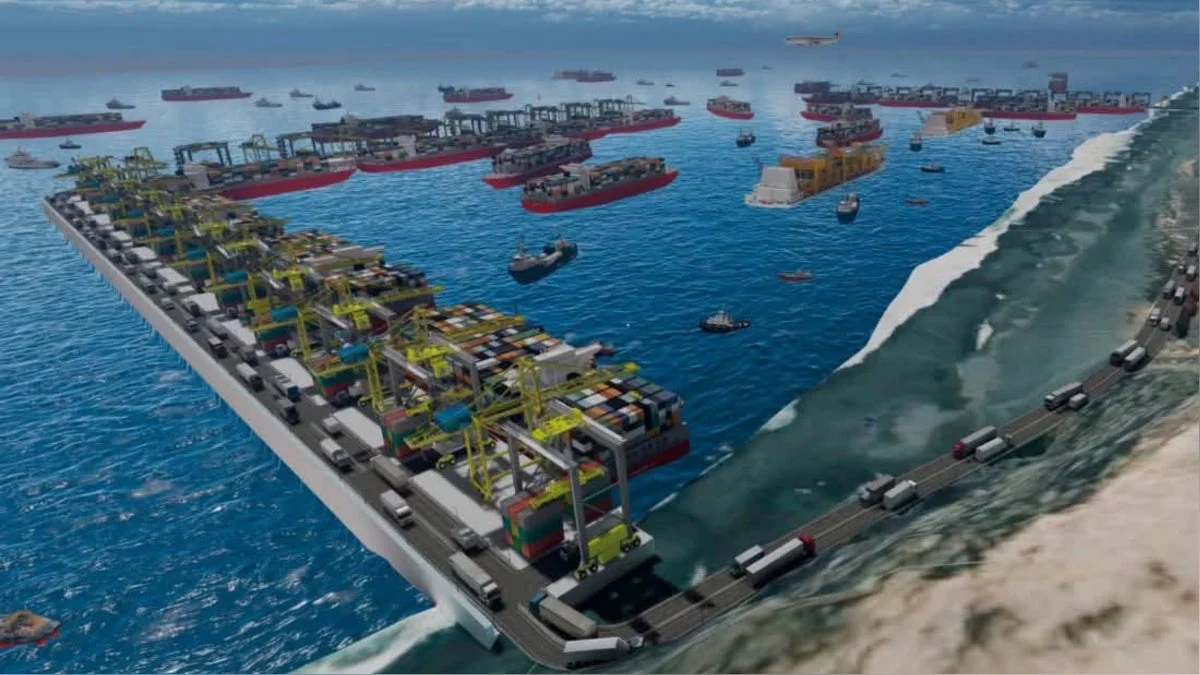
The Master Plan is structured into three distinct phases of development, designed to ensure scalability and operational efficiency. The vision is to create a "multipurpose terminal" capable of handling a diverse range of cargo profiles.
Technical Specifications
The port will feature state-of-the-art facilities designed to accommodate:
- Containerized Cargo: Utilizing automated cranes and digital logistics tracking to minimize turnaround times.
- Solid Bulk: Serving the mining sector of Southern Peru, which requires specialized infrastructure for the export of copper and other concentrates.
- Break-bulk Cargo: Offering flexibility for machinery, raw materials, and agricultural products.
The design philosophy prioritizes the "hub-and-spoke" model, where Corio acts as the primary maritime hub, connected to the hinterland via a network of roads and potentially, in future iterations, rail links.
Supporting Data: Why Corio?
The economic justification for the Corio Port is rooted in geography and existing infrastructure bottlenecks.
1. The Southern Interoceanic Highway Connection
The port’s most significant asset is its strategic linkage to the Southern Interoceanic Highway. This road network connects the Peruvian Pacific coast to the western states of Brazil. By reducing the time it takes for Brazilian goods—primarily soy, corn, and industrial components—to reach Asian markets, Corio offers a shorter and more efficient alternative to navigating the Panama Canal or southern Atlantic routes.
2. Diversification of the Port System
Currently, the Callao Port in Lima handles the majority of Peru’s maritime volume. The concentration of cargo in the center of the country creates logistical bottlenecks and increases land transport costs for businesses based in the south. Corio will decentralize port operations, reducing the "logistics tax" currently paid by mining companies in Arequipa, Moquegua, and Cusco.
3. Investment Multipliers
With an $800 million price tag, the project is expected to generate significant secondary economic activity. Estimates suggest:
- Direct Employment: Thousands of jobs in construction, port operations, and marine engineering.
- Indirect Employment: Growth in the services sector, including warehousing, customs brokerage, trucking, and hospitality in the Arequipa region.
- Private Sector Attraction: The presence of a world-class port typically incentivizes the creation of industrial parks and free-trade zones in the surrounding areas.
Official Responses and Strategic Vision
The Ministry of Transport and Communications (MTC) has been vocal about the project’s role in "re-imagining" Peru’s role in the global economy.
The Government Stance
In recent statements, MTC officials emphasized that the Corio Port is not just a building project, but an instrument of sovereignty and integration. "By approving this plan, we are sending a clear message to international investors: Peru is open for large-scale, long-term infrastructure projects," a spokesperson for the Ministry stated.
The APN, for its part, has reaffirmed its commitment to international standards of port management. By adopting the latest maritime technology, the APN aims to ensure that Corio meets the highest environmental compliance standards, a critical factor given the sensitive coastal ecosystem of the Islay province.
Implications: A New Era for Regional Integration
The ripple effects of the Corio Port will extend far beyond the borders of Peru.
Strengthening Peru-Brazil Relations
The integration with Brazil is a cornerstone of the project’s success. Regional trade blocs, such as the South American Infrastructure and Planning Council (COSIPLAN), have long identified the lack of efficient trans-continental transit as a barrier to growth. Corio serves as the "Pacific window" for the Brazilian agricultural powerhouse, potentially shifting global supply chain patterns for South American commodities.
Competitiveness in the Asia-Pacific
As the trade relationship between South America and China continues to intensify, the ability to process larger vessels (Post-Panamax) is essential. The depth of the water at Corio allows for these larger ships, enabling exporters to leverage economies of scale that are currently impossible at smaller, shallower regional ports.
Sustainability and Social Responsibility
The Master Plan includes rigorous social impact assessments. The development of Punta de Bombón must be balanced with the needs of the local agricultural and fishing communities. Proponents of the plan argue that the economic benefits—ranging from improved road infrastructure to the creation of better-paying jobs—will provide the necessary funding for local development initiatives that have historically been neglected.
Conclusion: The Road Ahead
The approval of the Corio Port Master Plan is a decisive step toward transforming Peru into a maritime logistics superpower. While the path to completion involves complex financing, environmental permitting, and the inevitable challenges of large-scale construction, the fundamental logic of the project remains sound.
By bridging the gap between the Atlantic and Pacific oceans, and by decentralizing its own national port system, Peru is positioning itself to be the preferred gateway for South American trade in the 21st century. The $800 million investment is not merely a cost; it is a down payment on a future where the port of Corio serves as a vital artery for the global movement of goods, fostering prosperity for the Arequipa region and the entire nation.
As the project moves from the planning stage to the execution phase, all eyes will be on the MTC and the APN to ensure that the vision set out in the Master Plan is realized with transparency, technical excellence, and a commitment to sustainable development. The transformation of the Peruvian coast has officially begun.