The Peruvian government is currently embroiled in a high-stakes standoff with the country’s largest teaching union, the Sindicato Unitario de Trabajadores en la Educación del Perú (SUTEP). At the center of the controversy is the government’s recent pledge to challenge the constitutionality of Law 32581—a legislative measure designed to increase the pensions of retired teachers to S/ 3,500. As tensions escalate, the rhetoric between labor leaders and the Ministry of Economy and Finance (MEF) has reached a boiling point, threatening to destabilize the social pact in a critical year for the national budget.
The Core of the Conflict: A Clash of Perspectives
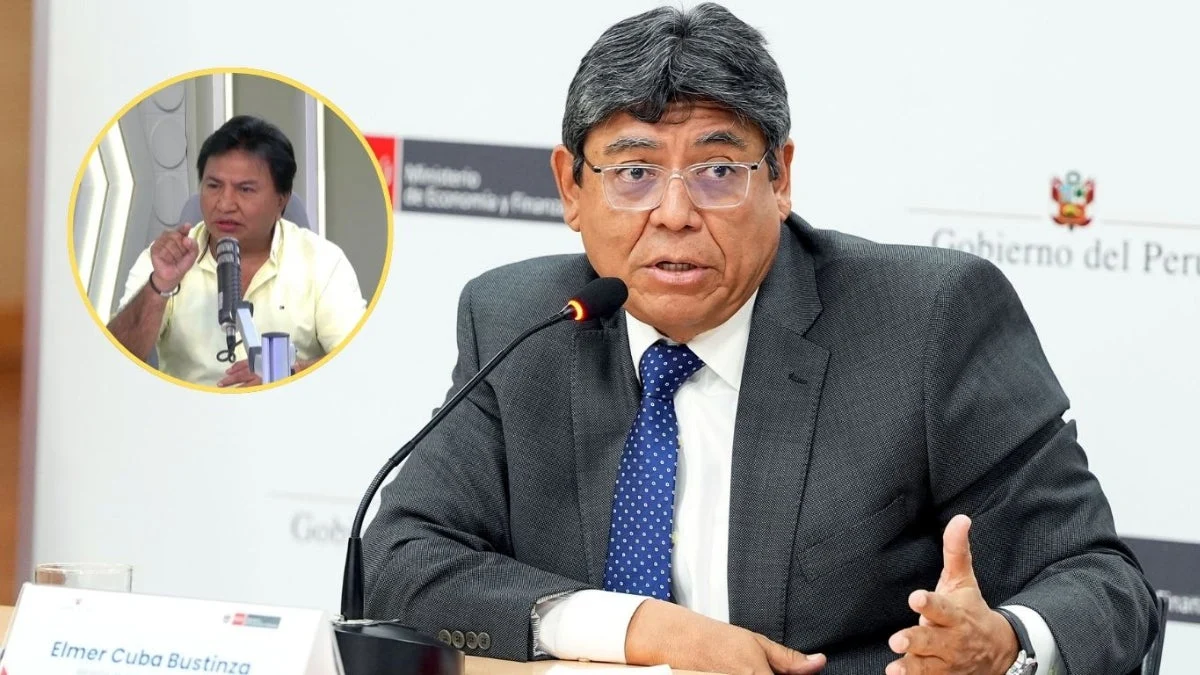
The conflict ignited following comments made by Minister of Economy Elmer Cuba, who signaled that the executive branch intends to bring the pension increase law before the Constitutional Court (TC). Minister Cuba’s stance is rooted in fiscal sustainability; the administration fears that mandating a pension floor of S/ 3,500 could create an unmanageable hole in the national treasury, potentially violating constitutional norms regarding public spending.
However, for Lucio Castro, the Secretary General of SUTEP, the Minister’s position is not merely a technical disagreement over fiscal policy—it is a moral failure and an overreach of executive power. During a recent interview on RPP’s Ampliación de Noticias, Castro did not mince words, characterizing Minister Cuba’s approach as autocratic.
"He is acting like a ‘super-minister,’ placing himself above the Prime Minister and fostering a climate of unnecessary confrontation," Castro declared. For the union, the threat to take the matter to the Constitutional Court is a direct attack on the dignity of over 200,000 retired teachers who currently survive on monthly pensions ranging from a meager S/ 472 to S/ 700.
Chronology of a Growing Discontent
The current friction is the culmination of months of legislative maneuvering and public pressure.
- Early 2026: SUTEP and various labor organizations begin lobbying for a legislative overhaul of the pension system, citing the erosion of purchasing power among retirees.
- Mid-2026: The Peruvian Congress, acting by insistence, promulgates Law 32581, establishing the S/ 3,500 pension floor for retired teachers.
- August 2026: Minister of Economy Elmer Cuba publicly announces that the government is preparing a lawsuit to challenge the constitutionality of the law, citing fiscal impact.
- Late August 2026: The Colegio de Economistas de Lima (CEL) joins the fray, signaling its own intention to challenge pension hikes for police, military, and teaching personnel, citing the long-term sustainability of the national pension fund.
- Present Day: SUTEP leads a series of national mobilizations, demanding direct dialogue and a change in the government’s adversarial tone.
The Economic Argument: Justice vs. Fiscal Responsibility
The debate over Law 32581 is fundamentally a conflict between two valid, yet diametrically opposed, priorities: social justice and fiscal health.
The Union’s Defense: Social Justice as a Right
SUTEP argues that the current pension levels are not merely "low"; they are inhumane. "It is unsustainable and inconceivable to live on 472 or 700 soles," Castro emphasized. The union argues that the state has historically neglected its aging workforce, and that this legislation is an essential correction to a system that leaves former public servants in poverty.
Furthermore, Castro posits that the state’s claim of lacking funds is a matter of political choice rather than financial impossibility. He points toward current tax exonerations as a potential source of revenue. By reviewing these tax breaks—which he claims could free up significant capital—the government could fund the pension increase without resorting to austerity measures that punish the vulnerable.
The Government and Economists’ Stance: The Fiscal Trap
The Ministry of Economy and the Colegio de Economistas de Lima maintain that the law is technically flawed. Their argument is twofold:
- Budgetary Constraints: The Peruvian constitution limits the ability of Congress to initiate spending measures. The MEF argues that the pension law, having originated in the legislative branch, encroaches on the executive’s exclusive prerogative to manage the national budget.
- Long-term Sustainability: Economists warn that indexing pensions to a high, fixed amount without a corresponding increase in the contribution base or a sustainable funding source could trigger inflationary pressure and threaten the stability of the entire pension system, including the public system (Ley 19990) and the private AFP system.
Official Responses and the Call for Dialogue
The political fallout of this debate has placed the government in a precarious position. The SUTEP leadership has explicitly warned that the current path of litigation will only lead to further social unrest and deeper polarization.
"We want the government to sit down with the workers in the corresponding ministries," Castro stated, emphasizing the need for concertation over confrontation. The union is calling for a "social pact" where labor leaders are included in the budgetary discussions, particularly ahead of the August 30 deadline for the submission of the 2027 General Budget.
For its part, the Ministry of Economy has yet to fully pivot toward the dialogue requested by the union. Instead, they appear focused on the legal track, viewing the Constitutional Court as the ultimate arbiter of whether the law is legally viable. This reliance on the judiciary is viewed by SUTEP as a "cold" and "insensitive" administrative response to what they believe is a humanitarian crisis.
Implications for the Future of Peru’s Social Policy
The outcome of the challenge against Law 32581 will have lasting implications for the Peruvian state.
1. The Precedent of Legislative Power
If the Constitutional Court upholds the law, it would significantly shift the power balance in favor of Congress, signaling that the legislature can mandate significant social spending despite executive opposition. If the Court strikes it down, it will reinforce the fiscal authority of the MEF but will likely trigger large-scale strikes and social volatility.
2. The Role of the "Technocrat"
The criticism leveled at Minister Cuba reflects a broader tension in Peru regarding the role of technocrats in government. The public, represented here by SUTEP, is increasingly skeptical of figures who prioritize macroeconomic indicators over social outcomes. The accusation that the Minister is acting as a "super-minister" suggests that the public perception of the administration is becoming increasingly polarized.
3. The Budgetary Tightrope
The upcoming presentation of the 2027 budget is now the focal point of national attention. If the government fails to include gestures toward the teaching sector, it risks a total breakdown of relations with the public sector unions. SUTEP has made it clear: they expect the budget to reflect a "will to solve the big problems."
Conclusion: A Nation at a Crossroads
As the legal battle looms, the case of the retired teachers has become a litmus test for the government’s ability to govern during a period of economic strain. While the Ministry of Economy seeks to protect the coffers of the state, SUTEP is fighting for the survival of those who built the foundation of the country’s educational system.
The resolution of this conflict requires more than a ruling from the Constitutional Court; it demands a political solution that reconciles the necessity of fiscal discipline with the undeniable requirement for social justice. Whether the government chooses to remain in a posture of legal confrontation or shifts toward the dialogue requested by the labor unions will ultimately define the stability of the final year of this administration. For now, the teachers of Peru remain waiting, not just for a pension increase, but for a signal that their contributions are valued by the state they served for a lifetime.