The global mining industry stands at a critical juncture. As traditional ore bodies become harder to access and the demand for minerals critical to the energy transition skyrockets, the sector is undergoing a profound digital metamorphosis. At the forefront of this evolution in Peru is Volcan Compañía Minera with its flagship project, Romina. This venture is not merely a new mine; it is a laboratory for the future, representing the successful integration of real-time data, robotics, and autonomous operations under the banner of "Mining 4.0."
On Tuesday, September 15, the Instituto de Ingenieros de Minas del Perú (IIMP) will host a highly anticipated Business Breakfast dedicated to dissecting the technical and strategic breakthroughs of this project. Under the theme "New Mining Projects. Romina: Innovation and Technology Toward Mining 4.0," the industry will gain an inside look at how Volcan is redefining productivity and safety standards.
The Core Facts: What Defines the Romina Project?
Romina is positioned as a benchmark for modern underground mining. Unlike conventional operations that rely heavily on manual labor in high-risk environments, Romina leverages a "digital-first" philosophy. The project is designed to minimize human exposure to hazardous zones while simultaneously optimizing extraction rates through precision technology.
Key Technological Pillars:
- Autonomous Fleet Integration: The project features the first fleet of autonomous low-profile loaders in Peru—the CAT R1600H. These machines, each boasting a 10.5-ton capacity, handle the complex tasks of hauling and dumping mineral autonomously.
- Remote Control Centers: While hauling is autonomous, loading tasks are executed via advanced remote-control stations. This allows operators to manage machinery from a safe, ergonomic environment, significantly reducing the risk of workplace accidents.
- Automated Drilling: A cornerstone of the Romina 4.0 strategy is the deployment of the Simba E70 S automated drill rig. This equipment represents the cutting edge of precision drilling, ensuring that tunnel development and ore extraction are conducted with mathematical accuracy.
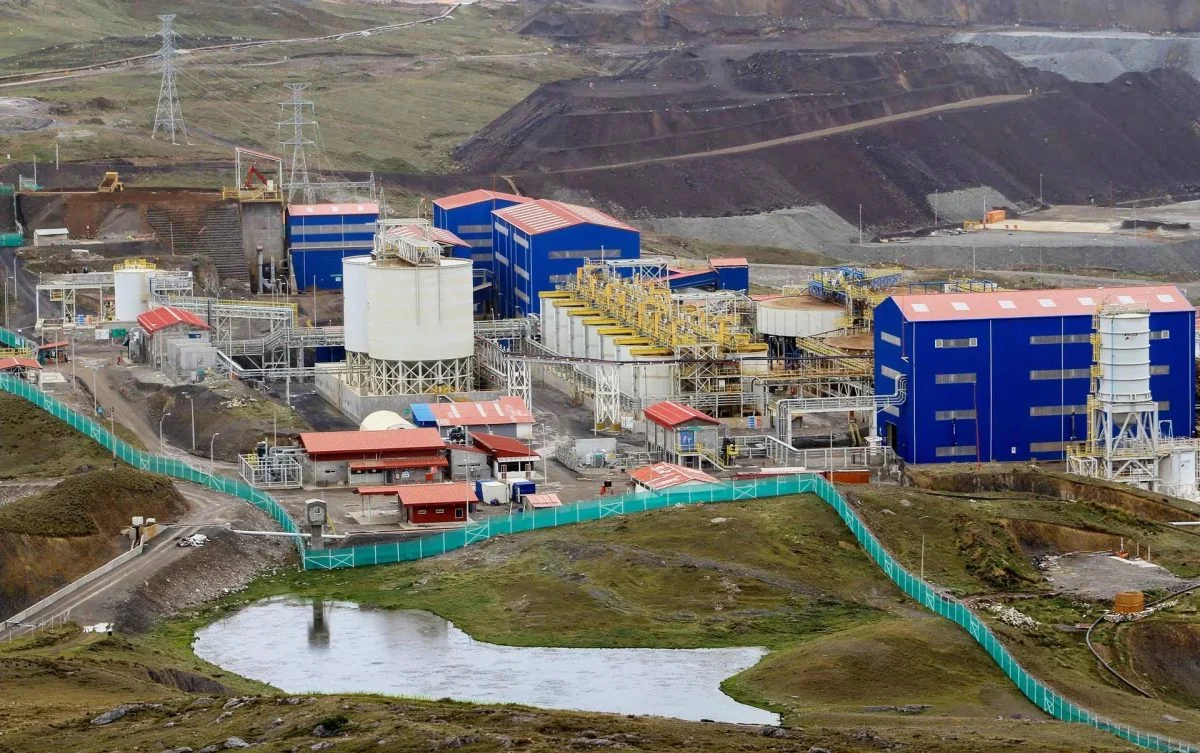
- Synergy with Alpamarca: Volcan has developed a strategic plan to integrate Romina’s output with the existing Alpamarca concentrator plant. This facility is undergoing extensive upgrades to accommodate the specific processing requirements of the ore from the new mine, ensuring a seamless supply chain from pit to product.
A Chronology of Innovation: The Path to Romina 4.0
The development of the Romina project is the result of years of strategic planning and a shift in corporate culture at Volcan.
- Pre-Development Phase (The Conceptualization): Recognizing the need for increased safety and efficiency, Volcan’s leadership began evaluating digital transformation tools. The goal was to move away from the "siloed" data models that characterized mining in the early 2000s.
- The Pilot Initiatives: Before full-scale implementation, Volcan tested remote-operated equipment in smaller, controlled settings. These pilot programs proved that the transition to autonomous machinery could be scaled without sacrificing production volume.
- Infrastructure Adaptation: Over the past 24 months, significant capital has been diverted to upgrading the Alpamarca infrastructure. This involved not just mechanical upgrades, but the installation of high-speed connectivity grids required to support real-time data transmission from the mine face.
- The "Romina 4.0" Launch: The project officially entered its current phase, defined by the integration of the Simba E70 S and the autonomous CAT R1600H fleet, signaling a departure from traditional mining methods to a fully integrated digital ecosystem.
Supporting Data and Technical Implications
The shift toward Mining 4.0 is not merely for aesthetic or branding purposes; it is driven by hard performance metrics. Volcan’s adoption of these technologies addresses three critical pain points:

- Safety as a Priority: By removing workers from the "active face" of the mine, the potential for rockfall accidents or exposure to harmful gases is significantly mitigated. Remote operations provide a "zero-harm" environment for the operator.
- Productivity and Uptime: Autonomous systems do not require shift changes in the same way human operators do. They can work through lunch breaks, shift handovers, and in conditions that might be deemed unsafe for manual labor, leading to higher equipment utilization rates.
- Data-Driven Decision Making: The integration of sensors throughout the mine allows for "predictive maintenance." Instead of waiting for a machine to break down, the system monitors vibration, temperature, and performance data, signaling technicians to perform maintenance before a failure occurs.
Official Perspectives: The Vision for the Future
Miguel Sánchez, General Deputy Manager of Volcan, is the architect behind the presentation of these advancements. According to Sánchez, the philosophy of Romina is simple: "Technology is the bridge between traditional mining and the sustainable requirements of the 21st century."
During the IIMP event, Sánchez is expected to address the challenges that come with this transition. Implementing Mining 4.0 is not as simple as purchasing a new machine; it requires a complete overhaul of the workforce’s skillset. The company has invested heavily in training programs to transition traditional operators into "digital controllers," highlighting that the human element remains vital, albeit in a more sophisticated role.
Broader Implications: What Romina Means for Peru
The Romina project serves as a case study for the rest of the Peruvian mining sector. As the country looks to maintain its position as a global leader in copper, zinc, and silver production, projects like Romina prove that the industry can be technologically advanced and environmentally conscious.
1. Attracting Investment
Investors are increasingly prioritizing ESG (Environmental, Social, and Governance) metrics. By demonstrating that it can operate a mine with higher safety standards and lower carbon intensity through efficient operations, Volcan is making its projects more attractive to international capital markets.
2. The Role of Suppliers
The "Business Room" at the IIMP event underscores the importance of the supplier ecosystem. Volcan’s move toward automation creates a ripple effect, demanding that local suppliers and service providers also upgrade their offerings. Companies that can provide software, specialized maintenance, and connectivity solutions will become the new backbone of the Peruvian mining sector.

3. Sustainability and Efficiency
The integration with the Alpamarca plant is a key efficiency play. By repurposing existing infrastructure rather than building entirely new processing facilities, Volcan reduces its total environmental footprint, setting a standard for responsible project development in the Andean region.
Event Details and Participation
The IIMP event, scheduled for September 15 from 7:00 a.m. to 9:30 a.m., is designed to be a catalyst for further industry collaboration. It is not intended for high-level discussion alone; it is a working meeting for engineers, executives, and suppliers.
- Location: Instituto de Ingenieros de Minas del Perú, Calle Los Canarios 155, San César, La Molina.
- Fees: US$ 80 for IIMP members, US$ 100 for non-members (including IGV).
- Purpose: To foster the exchange of best practices, identify technological partnerships, and expand professional networks within the mining community.
For those interested in the future of the industry, this session provides a rare opportunity to peer into the "engine room" of a major mining operation. Interested parties are encouraged to reach out to the IIMP directly via their official channels (email: [email protected] or [email protected], and phone: +51 982 306 837 / +51 958 962 949).
Conclusion: The New Frontier
The Romina project by Volcan Compañía Minera is more than a mine; it is a testament to the resilience and innovation of the Peruvian mining sector. By embracing the challenges of Mining 4.0—connectivity, autonomous robotics, and data-driven management—Volcan is ensuring that its operations remain competitive in an increasingly complex global market. As the industry gathers at the IIMP, the focus will not just be on the machinery or the ore, but on the intellectual and digital infrastructure that will define the next generation of mining in Peru.