By Editorial Staff
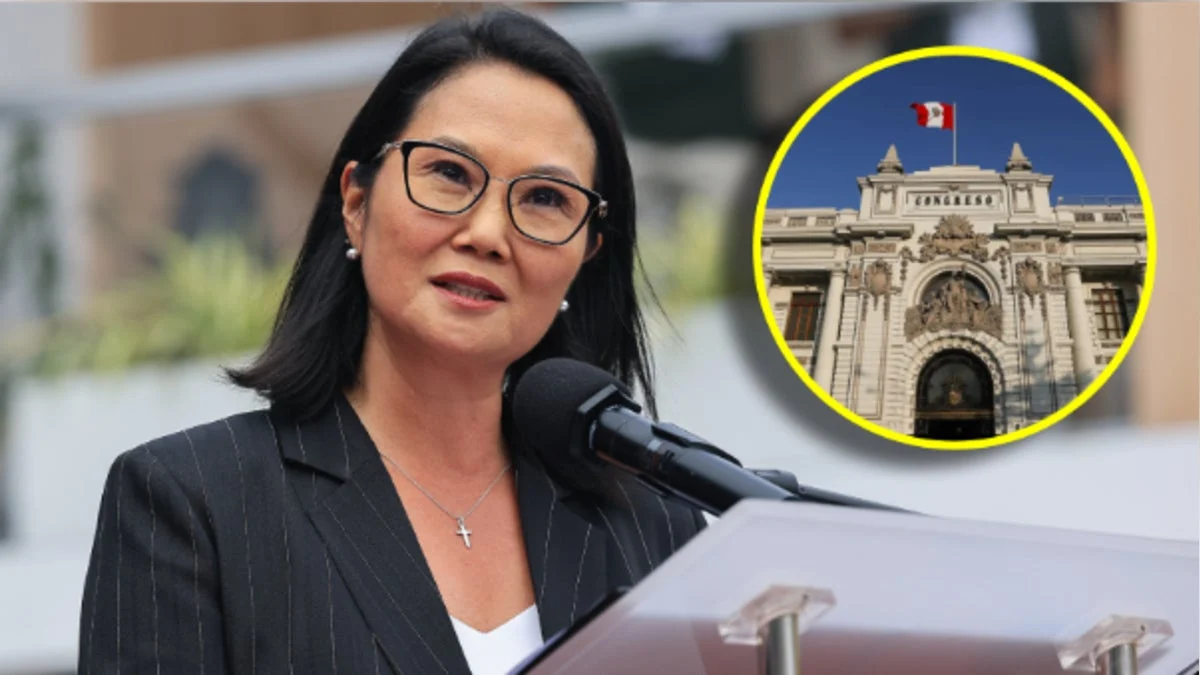
In a significant move marking a new chapter in her administration, President Keiko Fujimori has officially requested authorization from the Senate to depart the country from September 21 to September 25. The purpose of this diplomatic mission is to attend the 81st session of the United Nations General Assembly in New York, marking her first official international trip since assuming the presidency.
The request, submitted jointly by President Fujimori and the President of the Council of Ministers, Luis Galarreta, underscores the administration’s focus on re-engaging with the global community and addressing key regional challenges on an international stage.
Main Facts: A Strategic Diplomatic Engagement
The legislative resolution project presented to the Senate seeks formal approval for the President’s travel to the United States. According to the document, the window of absence spans five days, during which the presidential office will be managed by the First Vice President, Luis Galarreta, who also serves as the Premier.
The centerpiece of this visit is the "High-Level Week" at the United Nations, a period during which world leaders congregate to address the most pressing geopolitical issues of the era. For the Fujimori administration, this represents an opportunity to project a vision of stability and proactive governance. The President is expected to deliver a speech during the General Debate, articulating her government’s stance on national security, regional cooperation, and economic development.
The logistical framework of the trip is tight: departure is set for September 21, with active engagements spanning through September 24, and a scheduled return to the capital on September 25.
Chronology of the Diplomatic Initiative
The road to this request began shortly after the inauguration, as the administration faced a flurry of domestic legislative priorities, including the controversial proposal to categorize criminal organizations like the Tren de Aragua, Los Pulpos, and La Jauría as terrorist groups.
- Early September: The executive branch began coordinating with the Ministry of Foreign Affairs to secure slots for high-level meetings in New York.
- September 15: Preliminary discussions were held with the Senate leadership to ensure that the legislative agenda would allow for a vote on the travel authorization prior to the 21st.
- September 18: The formal request was submitted to the Senate floor, signed by both President Fujimori and Premier Luis Galarreta.
- September 19-20 (Anticipated): The Senate plenary is expected to debate and vote on the resolution, a process that requires a simple majority to authorize the President’s departure.
Supporting Data: The Global Agenda
The itinerary for President Fujimori in New York is exhaustive, reflecting a desire to maximize the utility of her time in the United States. Beyond the General Assembly, the President is slated to participate in several high-profile multilateral and bilateral events.
The UN General Assembly (UNGA)
The 81st session of the UNGA serves as the primary forum for the President to address the international community. Her speech is expected to touch upon the administration’s "Security First" doctrine, which has dominated her early rhetoric. By labeling violent criminal organizations as terrorists, Fujimori aims to gain international recognition and support for cross-border intelligence sharing and financial crackdowns on organized crime syndicates.
Multilateral Engagement
The President is scheduled to engage with the Development Bank of Latin America (CAF). This meeting is of critical importance, as the government seeks to secure investment for infrastructure projects designed to mitigate the effects of environmental phenomena, such as the El Niño oscillation.
Furthermore, a session with the Americas Society/Council of the Americas (AS/COA) is on the agenda. This interaction is designed to reassure foreign investors and the international business community about the long-term economic stability of the country. By presenting a predictable fiscal framework, the President aims to attract capital that has been hesitant due to regional political volatility.
Bilateral Meetings
The Office of the President has confirmed that staff are currently finalizing details for several bilateral meetings. These sessions are intended to strengthen diplomatic ties with neighboring nations and key global partners, specifically focusing on migration management, security cooperation, and trade agreements.
Official Responses and Political Implications
The announcement of the President’s trip has sparked a complex dialogue within the halls of the Senate. The political landscape, currently characterized by a delicate balance of power, necessitates a broad consensus to ensure the trip is approved without political friction.
The Government’s Perspective
Premier Luis Galarreta has been the primary advocate for this trip. He argues that the President’s presence in New York is not a luxury, but a necessity. In his recent remarks to the press, Galarreta dismissed concerns about the timing, stating that the "interconnected nature of modern security threats" requires the President to take these concerns directly to the international community. He emphasized that the government remains fully operational even in the President’s absence, noting that the legislative agenda regarding emergency powers for security will continue unabated.
The Opposition’s Stance
While the opposition has traditionally scrutinized presidential travel, the current sentiment is relatively cautious. Members of the minority blocks have expressed that they will support the trip, provided the President focuses on issues of national interest rather than personal branding. However, some have voiced concerns regarding the domestic security situation, questioning whether the President should be leaving the country while the proposal to declare criminal groups as "terrorists" is still under intense legislative review.
Implications for the Fujimori Administration
The success of this trip will be measured by two primary metrics: the international reception of the "Security First" agenda and the domestic management of the country during her absence.
Projecting Strength on the Global Stage
By framing the criminal organizations currently plaguing the nation as international terrorist threats, Fujimori is attempting to rebrand the domestic security crisis as a regional one. If the UN and other international partners accept this classification, it could lead to increased cooperation in asset freezing, extradition treaties, and intelligence exchange. This would be a major victory for the President, providing her with the political capital needed to push through more aggressive domestic policies.
Managing Domestic Stability
The decision to have Luis Galarreta act as the head of state during her absence is a testament to the trust placed in the Premier. Galarreta, who has been instrumental in navigating the current Congress, is viewed as a steady hand. However, the optics of the transition are being watched closely. Should any major security incident occur during the five days the President is in New York, the administration will face immediate scrutiny regarding the efficacy of the leadership transition.
The Economic Angle
The inclusion of the CAF and AS/COA in her schedule demonstrates a dual-track strategy. While security is the priority, the President is acutely aware that economic growth is the bedrock of her administration’s survival. By signaling to the international financial community that her government is committed to market-friendly policies and structural stability, she is attempting to insulate the economy from the fallout of the current security crisis.
Conclusion
As the Senate prepares to vote on the authorization, the nation watches with anticipation. This trip represents more than just a diplomatic visit; it is a calculated risk. President Fujimori is betting that by elevating the domestic security discourse to an international level, she can consolidate her authority at home while fostering necessary alliances abroad.
The coming days will be pivotal. If the Senate grants authorization, the President will arrive in New York with a clear mandate to seek global support. If she succeeds, she will return with renewed international leverage. If she falters, she will face a reinvigorated opposition at home, eager to challenge her governance strategy. For now, the administration remains focused on the technical preparations, treating this mission as a crucial component of their broader strategy for national recovery and security.
The eyes of the nation remain fixed on the Senate chamber, where the decision to allow this mission will define the tone of the administration’s foreign policy for the months to come. As the 81st session of the UNGA approaches, the message from the Palace is clear: the government is ready to engage with the world, provided the world is ready to engage with the realities of the region.