Executive Summary: The Trade Dilemma
In a significant diplomatic push aimed at protecting national economic interests, Peruvian President Keiko Fujimori has announced a strategic initiative to challenge the 12.5% tariff recently imposed by the United States on Peruvian goods. Despite the existence of a long-standing Free Trade Agreement (FTA) between the two nations, these protectionist measures have triggered alarms within the Peruvian administration, prompting an urgent review of trade relations. President Fujimori has confirmed that she, alongside the Minister of Foreign Trade and Tourism (Mincetur), Roger Valencia, will lead a dedicated working group during their upcoming visit to the United Nations General Assembly in New York to negotiate a reversal of these levies.
The move represents a delicate balancing act for the Fujimori administration: maintaining a strong, strategic partnership with Washington while ensuring that the domestic economy—already bracing for the volatile impact of the El Niño weather phenomenon—does not suffer further setbacks due to external trade barriers.
Chronology of Diplomatic Engagements
The current standoff did not emerge in a vacuum. The escalation of tensions follows a series of high-level meetings between Peruvian and U.S. officials, marking a period of intense lobbying by Lima.
The Initial Outreach
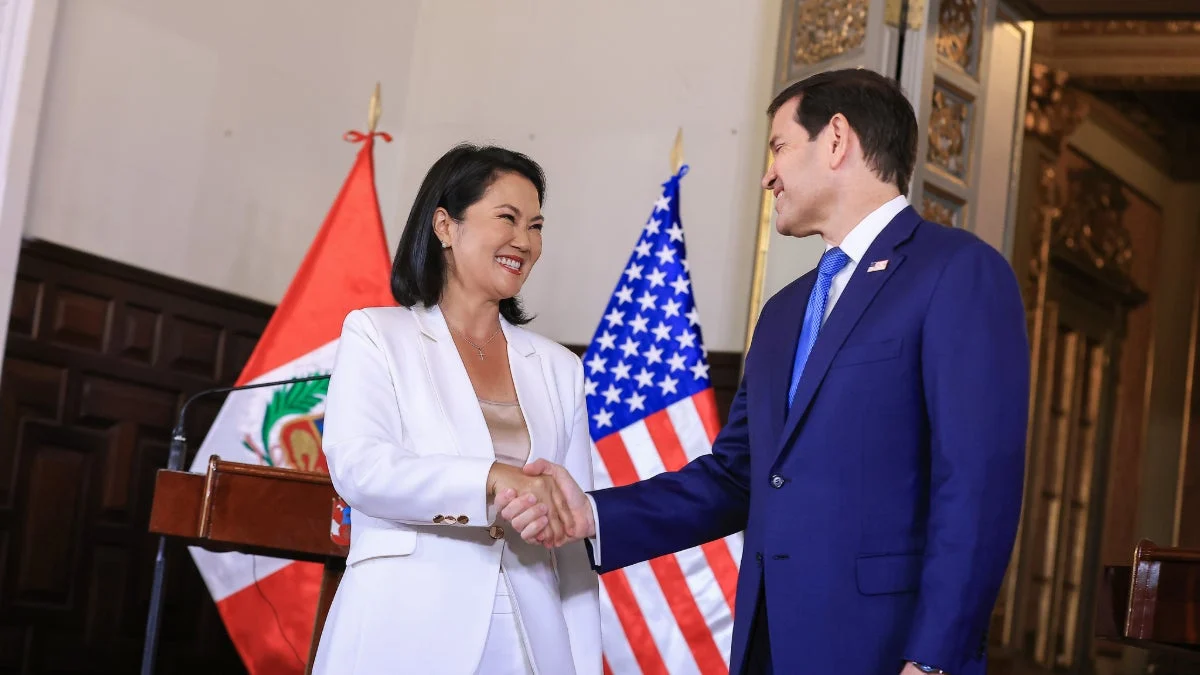
The issue was first brought to the table during a high-profile visit by U.S. Secretary of State Marco Rubio to Lima. During these bilateral discussions, which included key members of the Peruvian cabinet, President Fujimori raised the tariff issue as a primary concern. The discussions were designed to emphasize the inconsistency between the new U.S. trade policy and the spirit of the existing Free Trade Agreement.
The Mincetur Intervention
While President Fujimori initiated the high-level dialogue, the Minister of Foreign Trade and Tourism, Roger Valencia, provided the technical depth necessary for the American delegation to understand the specific economic ramifications of the 12.5% tariff. Minister Valencia’s involvement was crucial, as he presented the data illustrating how the tariff disrupts supply chains and increases costs for both Peruvian exporters and American consumers.
The Response from Washington
During the meetings, Secretary Rubio acknowledged the severity of the concern but clarified the limitations of his portfolio. He noted that trade policy, specifically the implementation of tariffs, falls under the purview of the U.S. Trade Representative and the Department of Commerce rather than the State Department. However, he provided a crucial diplomatic opening by pledging to facilitate the transfer of these concerns to the appropriate U.S. officials, signaling that the dialogue channel remains open.
Supporting Data: The Economic Context
To understand the urgency behind President Fujimori’s mission, one must look at the convergence of economic challenges currently facing Peru.
The Impact of the 12.5% Tariff
The tariff in question affects a broad cross-section of Peruvian exports. For years, the U.S. has been a primary destination for Peruvian agricultural, textile, and artisanal goods. An additional 12.5% cost burden renders many of these products uncompetitive in the U.S. market. Small and medium-sized enterprises (SMEs), which form the backbone of the Peruvian export sector, are particularly vulnerable, as they lack the profit margins to absorb such a sudden tax hike.
The "El Niño" Factor
The timing of these tariffs is particularly unfortunate. Meteorological forecasts indicate that the El Niño (FEN) phenomenon is expected to impact Peru with significant intensity. The climate event is historically associated with severe flooding, infrastructure damage, and reduced crop yields. By highlighting this in her discussions with Secretary Rubio, President Fujimori argued that the U.S. tariff serves as an "economic double-hit." At a time when the Peruvian state needs to maximize revenue to fund disaster relief and infrastructure resilience, the tariff serves to drain the economy of essential foreign exchange.
The Free Trade Agreement (FTA) Argument
At the core of the Peruvian government’s legal and moral argument is the Free Trade Agreement. Peru maintains that the unilateral imposition of these tariffs violates the fundamental premise of the FTA, which was designed to lower barriers and foster predictable trade. By invoking the FTA, the Peruvian government is not merely asking for a favor; it is asserting its right to the agreed-upon terms of the bilateral partnership.
Official Responses and Diplomatic Strategy
The approach adopted by the Fujimori administration is one of "calibrated persistence." Rather than resorting to retaliatory measures that could damage the long-term bilateral relationship, the administration has opted for a multi-layered diplomatic strategy.
The Role of the Senate
President Fujimori has been careful to adhere to constitutional protocols. Her upcoming trip to the United Nations, which will serve as the primary platform for these negotiations, requires the approval of the Peruvian Senate. This transparency is intended to signal to both the domestic public and international observers that the government is operating with a clear mandate and broad institutional support.
The Working Group Framework
The creation of a "working group" during the UN General Assembly is a strategic move. By formalizing this task force, Fujimori and Minister Valencia aim to move the conversation from "general grievances" to "technical resolution." The goal is to present a comprehensive white paper to U.S. counterparts that details the specific industries affected and proposes a timeline for the phased elimination of the tariffs.
Implications for Future Relations
The outcome of these negotiations will have far-reaching consequences for the region and the broader hemispheric trade landscape.
A Test of U.S.-Peru Alliances
The U.S.-Peru relationship is historically strong, characterized by cooperation on security, counter-narcotics, and regional stability. However, the current tariff dispute poses a test of how "America First" trade policies interact with key strategic allies in Latin America. If the U.S. remains inflexible, it risks weakening a key partner at a time when regional stability is increasingly fragile.
The Domestic Political Landscape
For President Fujimori, a successful negotiation would represent a significant political victory. Delivering on the promise to protect Peruvian industry against a global superpower would bolster her administration’s credibility and demonstrate a proactive approach to economic governance. Conversely, a failure to secure relief could provide fuel for political opposition, who may argue that the current administration is unable to effectively advocate for the country’s interests on the global stage.
Long-term Trade Outlook
If the 12.5% tariff remains in place, Peru may be forced to diversify its export markets, potentially turning toward the Asia-Pacific region or the European Union to compensate for the loss of the American market. While this could lead to a more diversified trade portfolio in the long run, the short-term transition costs would be substantial.
Conclusion: The Path Forward
As the delegation prepares for the journey to the United Nations, the message from Lima is clear: Peru values its relationship with the United States, but it cannot allow its economic stability to be sacrificed to protectionist policy shifts. By leveraging the upcoming UN summit as a venue for high-level technical dialogue, President Fujimori is positioning her government to hold the U.S. accountable to the spirit of their partnership.
The road ahead requires meticulous preparation. Minister Valencia’s role will be pivotal in translating diplomatic goodwill into concrete, policy-level adjustments. For now, the world watches to see if the U.S. administration will respond to these appeals with the flexibility required to maintain a robust and fair trade corridor between the two nations. The stakes, involving both the immediate livelihood of Peruvian producers and the long-term integrity of the U.S.-Peru FTA, could not be higher.