Introduction
The long-awaited financial injection for Petroperú, the state-owned oil giant of Peru, appears finally poised for arrival. Luis Del Carpio, the newly returned Executive Director of ProInversión—the agency spearheading the restructuring of the beleaguered company—has confirmed that the $475 million "bridge loan" is scheduled for disbursement within the month of September. This development marks the culmination of a three-month bureaucratic and financial marathon following the initial announcement of the rescue package. As Petroperú faces an unprecedented liquidity crisis that has paralyzed its operational efficiency, this infusion of capital is seen as a critical, albeit narrow, lifeline to keep the country’s fuel supply chain from buckling under the weight of mounting debt and logistical stagnation.
The Core Facts: A Liquidity Crisis at the Breaking Point
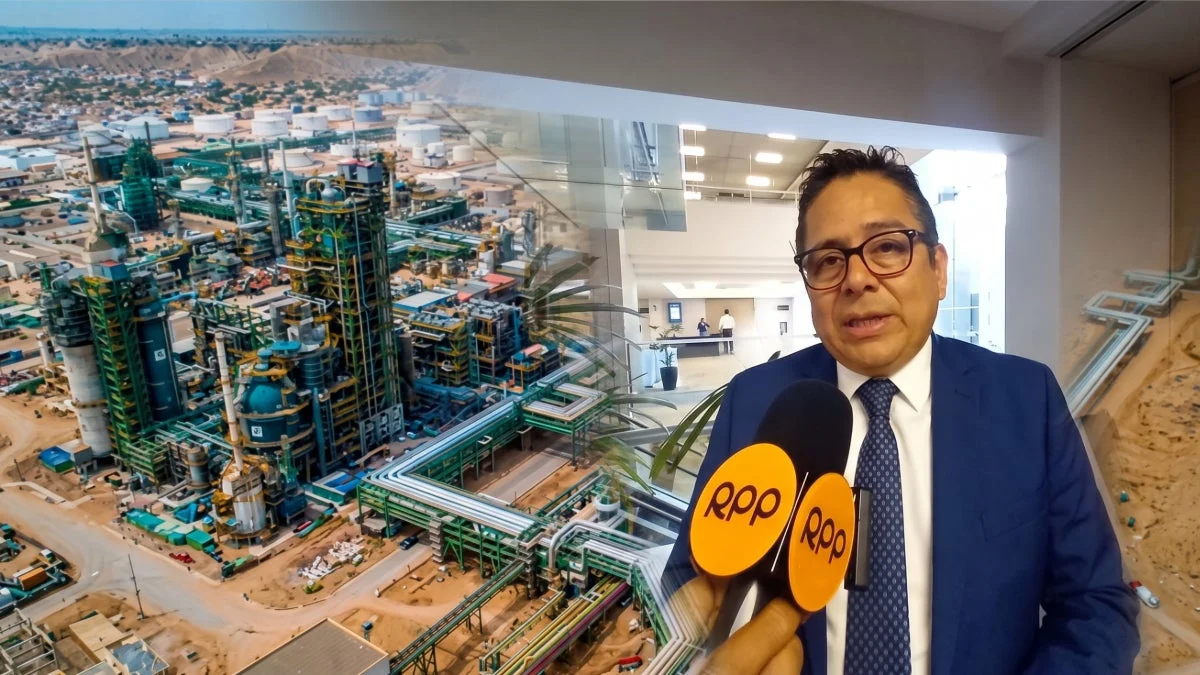
The $475 million credit facility represents the first tranche of a much larger, comprehensive $2 billion private financing strategy initially proposed in May. According to Del Carpio, the deal has transitioned from the negotiation phase to the execution phase. "All documents have been signed, and the Board of Directors of Petroperú has officially communicated the approval of the operation to the stock market," Del Carpio stated in an interview with RPP.
The urgency of this disbursement cannot be overstated. Petroperú has been grappling with a severe lack of working capital, which has rendered the company unable to pay for imported crude oil. This has triggered a domino effect: without the cash to clear payments, suppliers have withheld deliveries, and ships carrying essential fuel have been left stranded off the Peruvian coast, unable to unload their cargo. This operational gridlock has not only crippled the company’s ability to meet market demand but has also invited significant financial penalties that have further drained the firm’s coffers.
A Chronology of the Financial Struggle
To understand the gravity of the current situation, one must look back at the timeline of the crisis:
- May 2024: The government announces a grand strategy to secure $2 billion in private financing to restructure Petroperú, aiming to restore its creditworthiness and stabilize its operations.
- June 2024: Hopes for an immediate turnaround begin to fade as bureaucratic hurdles and the complexity of the financial restructuring delay the actual movement of funds.
- July-August 2024: The company’s liquidity crisis hits a nadir. Reports surface regarding a "bottleneck" of tankers at Peruvian ports, as Petroperú fails to pay for incoming fuel shipments.
- Late August 2024: The government undergoes a shake-up of the Petroperú Board of Directors, bringing back Oliver Stark, an executive who previously sounded the alarm on the company’s financial collapse, to lead the efforts to stabilize the entity.
- September 2024: ProInversión confirms that the $475 million bridge loan is in the final stages of disbursement, with officials pledging that the funds will arrive within days.
The Cost of Inaction: $39 Million in Penalties
Perhaps the most damning indictment of Petroperú’s recent management is the staggering sum of $39 million in penalties incurred between January and August 2024 alone. These costs are directly attributed to "demurrage"—the fees paid to shipping companies for keeping vessels waiting at port beyond the contractually agreed time for loading or unloading.
The Comptroller General of the Republic of Peru has conducted an exhaustive investigation into these delays. Their findings refute claims that the backlog was caused by unforeseen climatic conditions or force majeure events. Instead, the Comptroller concluded that the primary cause was a simple, stark lack of liquidity. Because Petroperú could not pay its vendors, the vessels remained in a state of limbo, burning through millions of dollars in fees while the Peruvian fuel market faced the specter of potential shortages.
This $39 million represents a "sunk cost" that provides no value to the company or the consumer, serving only as a testament to the severe operational inefficiencies caused by the firm’s insolvency.
Official Responses and Internal Tensions
The path to this $475 million disbursement has not been smooth, nor has it been free of criticism. The government’s approach to restructuring has drawn fire from various sectors, including the Federation of National Petroleum Workers of Peru (Fenpetrol).
The Union’s Critique
Fenpetrol has expressed deep skepticism regarding the efficiency of the government’s timeline. Union leaders have pointed out that it has taken nearly nine months since the initial restructuring directives were approved to finalize even the first stage of the bridge loan. Furthermore, the union has raised concerns about the transparency of the financial agreement. Specifically, they have questioned the $25 million "cut" that is set to be deducted from the loan proceeds. This amount is purportedly earmarked for "structuring expenses," including legal fees and the cost of financial consultants overseeing the restructuring process. Fenpetrol is demanding a full breakdown of these costs, arguing that in a time of national crisis, every dollar must be accounted for and directed toward operational sustainability rather than administrative overhead.
ProInversión’s Stance
Luis Del Carpio, representing the government’s interests, maintains that the process, while protracted, has followed the necessary legal and institutional rigor required for a state-owned entity of this size. He emphasizes that the current focus is purely on execution—getting the cash into the company’s accounts so that it can resume its role as a stable supplier of energy to the Peruvian market. The government’s narrative is one of "gradual stabilization," where this bridge loan acts as a stabilizer until the broader $2 billion structural reform can be fully implemented.
Economic and Strategic Implications
The situation surrounding Petroperú is not merely a corporate matter; it is a matter of national energy security. As the primary provider of fuel for the Peruvian economy, any disruption in Petroperú’s supply chain translates directly into inflationary pressure, particularly in the transportation and agricultural sectors.
The Debt Trap
The reliance on a "bridge loan" highlights the precarious nature of the company’s current financial structure. By taking on expensive short-term debt to cover operational deficits, the company is effectively increasing its interest burden. Without fundamental changes to its internal management, revenue generation, and cost-control mechanisms, the risk remains that this $475 million will simply be consumed by past debts and penalties, leaving the company in the same position in a few months’ time.
The Role of Governance
The return of Oliver Stark to the board is seen by market analysts as a signal that the government is finally prioritizing technical expertise over political maneuvering. However, the success of the current administration depends on its ability to enforce a culture of accountability. The fact that the Comptroller had to intervene to highlight the waste caused by demurrage fees suggests that internal oversight mechanisms at Petroperú have been severely compromised.
Looking Ahead: A Fragile Future
As the funds from the $475 million loan begin to flow in September, the immediate pressure on Petroperú will likely ease. Suppliers will be paid, the ships currently anchored off the coast will be discharged, and the fuel market will stabilize in the short term. However, the long-term prognosis remains guarded.
The company is currently caught in a cycle where it must borrow to pay for the fuel it sells, often at margins that are insufficient to cover the high costs of its infrastructure and debt service. The upcoming months will be a litmus test for the new board and the restructuring team at ProInversión. They must demonstrate that they can go beyond "emergency management" and begin the difficult work of optimizing refinery operations, reducing logistical bottlenecks, and restoring the company’s credit rating.
The public and the stakeholders, including the skeptical labor unions, are watching closely. The $475 million is a significant amount of capital, but in the context of the massive financial hole the company has dug for itself, it is a finite resource. If it is used merely to "buy time" without addressing the root causes of the liquidity crisis, the government will find itself back at the negotiating table before the year is out.
For now, the expectation is that the disbursement will proceed without further delays, providing the necessary liquidity to keep the country’s engines running. But for the taxpayers and the national economy, the real success will not be measured by the arrival of these funds, but by whether Petroperú can finally operate without being a constant, recurring drain on the national treasury.
Conclusion
The saga of Petroperú serves as a sobering reminder of the risks inherent in state-owned energy enterprises when financial management is decoupled from operational efficiency. The $475 million bridge loan is a vital injection, a necessary response to a crisis that had reached a point of potential national disruption. As we move into the final quarter of the year, the focus must shift from securing liquidity to ensuring that this capital is the foundation of a more transparent, efficient, and sustainable Petroperú. The time for temporary patches has passed; the era of structural reform must begin in earnest if the company is to survive the challenges of the modern energy market.