Executive Summary: A Milestone for Salta’s Infrastructure
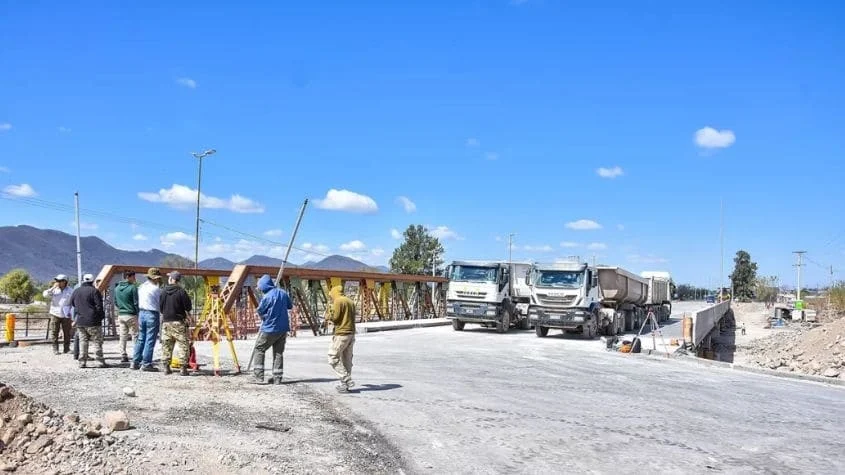
In a significant stride toward modernizing Northern Argentina’s transportation network, the first of the new bridges in Vaqueros, located in the province of Salta, has successfully completed its critical load-bearing trials. This technical milestone serves as a definitive precursor to the structure’s official inauguration and opening to public transit. By subjecting the bridge to extreme weight simulations, engineers have confirmed that the infrastructure aligns precisely with the complex architectural and engineering calculations established during the design phase.
The Vaqueros bridge is not merely a standalone crossing; it is a vital component of a larger, ambitious four-kilometer highway project. This development is set to drastically improve connectivity between the capital of Salta and the northern departments, alleviating long-standing traffic congestion and enhancing safety for thousands of daily commuters.
Technical Analysis: The Science of the Load Test
The recent load test, conducted by a team of specialized structural engineers and civil construction experts, was designed to push the bridge to its limit under controlled conditions. The primary objective was to observe how the materials—primarily reinforced concrete and steel—respond to "worst-case scenario" weight distributions.
Methodology of the Trial
To execute the test, the construction team deployed a fleet of heavy-duty machinery across specific, pre-determined coordinates of the bridge deck. These heavy vehicles were positioned to maximize the stress on the bridge’s span, piers, and support cables.
During the procedure, sophisticated sensors and strain gauges were placed throughout the structure to measure:

- Vertical Deflection: The degree to which the bridge bends under extreme pressure.
- Structural Elasticity: The ability of the material to return to its original form once the weight is removed.
- Vibration Response: Assessing how the bridge handles oscillation, a critical factor for safety in regions that may experience seismic activity.
Preliminary results indicate that the bridge’s behavior remained well within the tolerance margins established by national safety standards. The structural integrity is confirmed, and the bridge is now entering the final "finishing" phase of construction.
Chronology of Development: From Concept to Completion
The journey toward the new Vaqueros bridge has been characterized by careful planning and phased execution.
- Initial Planning Phase: The project was conceived as part of a strategic regional plan to alleviate the bottleneck caused by the old bridge, which had become insufficient for the growing traffic volume of the Salta region.
- Groundbreaking: Construction commenced with the focus on the foundation pillars, which required significant excavation and deep-soil reinforcement to ensure stability near the riverbed.
- Structural Assembly: Throughout the last 18 months, the bridge’s superstructure took shape. The use of pre-stressed concrete beams allowed for a more efficient build, reducing the environmental impact on the river ecosystem.
- The Load Test (Current Status): The successful completion of the weight trials signifies that the core civil works are complete.
- Final Outfitting: Parallel to the structural certification, work is currently underway on the peripheral elements, including the access roundabouts, drainage systems, protective railings, and high-efficiency LED lighting.
Supporting Data: The Scope of the Highway Project
The Vaqueros bridge is the crown jewel of a much broader infrastructure endeavor. The project encompasses a total of four kilometers of new, high-capacity highway. This route creates a seamless corridor starting from the "El Quirquincho" area, stretching to the Vaqueros River, and continuing along the newly constructed arterial road until it reaches the bridge spanning the Wierna River.
Key Project Specifications
- Length of Corridor: 4,000 linear meters.
- Strategic Impact: The highway serves as a northern gateway for the province of Salta, connecting agricultural hubs and residential zones with the city center.
- Safety Enhancements: The project includes the integration of modern traffic flow management, including redesigned roundabouts that significantly reduce the risk of head-on collisions and T-bone accidents.
- Lighting and Sustainability: The integration of modern LED illumination not only enhances night-time visibility but also reduces the energy footprint of the public infrastructure.
Official Perspective and Economic Implications
Government officials have highlighted that this project is a top priority for the province. By investing in such infrastructure, the provincial government aims to stimulate the local economy, reduce logistics costs for transporters, and improve the quality of life for residents who previously faced hours of delays during peak traffic times.
Beyond the physical bridge, the construction sector in Argentina has viewed this project as a benchmark for public-private cooperation. The successful management of the budget and the adherence to strict engineering timelines have positioned this project as a model for future regional infrastructure tenders.

Furthermore, this development comes at a time when Argentina is focusing heavily on its energy and transportation grids. As seen in other large-scale works—such as the massive energy projects currently receiving national attention—the emphasis is on long-term sustainability and economic durability. The Vaqueros bridge serves as a testament to the fact that, despite the macroeconomic challenges the nation faces, strategic infrastructure continues to be prioritized to ensure national competitiveness.
Future Outlook: Implications for the Salta Region
The imminent opening of the Vaqueros bridge will likely result in a "multiplier effect" for the surrounding areas.
1. Improved Logistics and Commerce
The new highway will significantly reduce the travel time for agricultural products and industrial supplies moving from the north of the province into Salta’s central markets. Efficiency in transportation is directly linked to lower prices for consumers and increased margins for producers.
2. Residential Growth and Urban Planning
With improved connectivity, areas previously considered "remote" or difficult to access will become more attractive for residential development. This will help decentralize the urban sprawl of the capital, allowing for more planned and sustainable growth in the northern outskirts.
3. Tourism Accessibility
Salta is a major tourism hub in Argentina. The new highway and bridge structure will facilitate easier travel for visitors heading toward the scenic northern routes, making the journey as comfortable as the destination.

Conclusion: A Structure Built to Last
The success of the load testing on the Vaqueros bridge is a testament to the technical prowess of the local engineering teams. As the final safety installations—including the finishing of access roads and the activation of lighting systems—are completed, the province of Salta prepares for a grand opening.
This infrastructure is not just a path across a river; it is a vital artery that will pump new life into the regional economy, provide a safer commute for thousands, and serve as a symbol of progress in Argentina’s ongoing commitment to modernizing its national landscape. As the project nears its final handover, the focus shifts from construction to long-term maintenance, ensuring that the legacy of this bridge serves the citizens of Salta for generations to come.
The successful testing phase serves as the final seal of approval, proving that when meticulous planning meets robust engineering, the result is a safer, more connected, and more prosperous future.