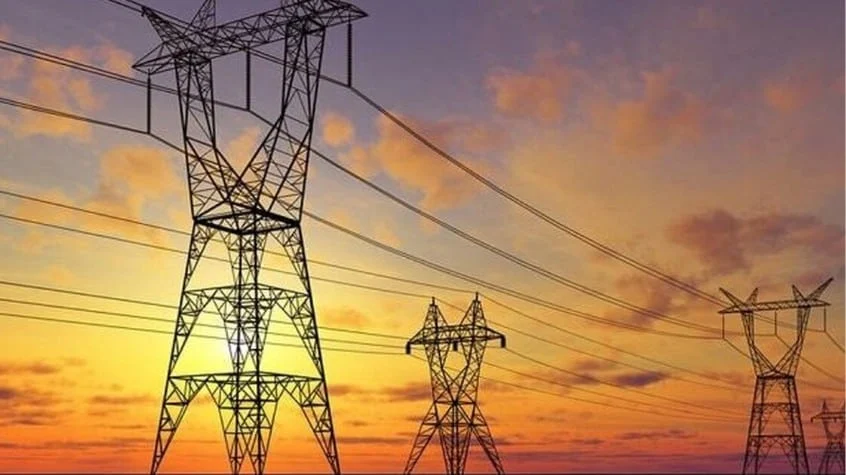
The Argentine government has officially designated the Rio Diamante-Charlone-O’Higgins Extra-High Voltage Transmission Line as a project of critical national priority. This move marks a significant shift in the country’s infrastructure development policy, signaling a renewed commitment to solving the chronic bottlenecks that have long hampered the stability and expansion of the national interconnected system. With an estimated investment of $1.25 billion, the project is poised to become the backbone of regional energy integration, linking the industrial and resource-rich province of Mendoza more effectively to the national trunk network.
Main Facts: A Project of Continental Scale
The Rio Diamante-Charlone-O’Higgins line is not merely an engineering endeavor; it is a strategic necessity for Argentina’s energy future. Spanning approximately 487 kilometers, this extra-high voltage link is designed to address the increasing demand for electricity in central and western Argentina.
By integrating these key points—Rio Diamante in Mendoza, Charlone in the northern Buenos Aires province, and O’Higgins—the government aims to create a more resilient, redundant, and efficient electrical highway. The project’s inclusion in the official list of prioritized works is the culmination of years of persistent lobbying by Mendoza’s provincial government, which has long argued that the lack of adequate transmission infrastructure was stifling its economic potential, particularly in the mining and renewable energy sectors.
The total investment requirement of $1.25 billion highlights the scale of the endeavor. This capital is expected to cover not only the construction of the transmission towers and lines but also the necessary substation upgrades and technological integrations required to stabilize the grid against fluctuations.
A Chronology of Persistence: The Road to Prioritization
The journey to this announcement has been marked by a decade of delays, feasibility studies, and political negotiations.

- 2015-2018: The Initial Concept: The project was first conceptualized as a way to evacuate excess energy generated from hydroelectric and potential solar projects in the Cuyo region. However, economic instability and shifts in government priorities relegated the project to a secondary status.
- 2019-2022: Rising Demand and Bottlenecks: During this period, the national grid experienced frequent capacity warnings. The limitations of the existing lines became glaringly apparent, as industrial growth in Mendoza was frequently limited by the inability to transport power to the industrial centers of the pampas.
- 2023-2025: The Mendoza Push: The provincial government of Mendoza launched a sustained diplomatic effort, aligning with private sector stakeholders, to prove that the lack of transmission was a national, rather than local, liability.
- August 2026: Official Designation: The Argentine government formally incorporated the line into the national concession scheme, marking the most significant administrative milestone in the project’s history. This transition from a "planned project" to "prioritized infrastructure" effectively puts it at the front of the queue for future financing rounds.
Technical and Economic Implications
The technical implications of the Rio Diamante-Charlone-O’Higgins line are profound. Currently, the regional grid operates near its maximum capacity, which forces a reliance on local, often more expensive, generation sources to prevent blackouts. By extending the extra-high voltage network, the government will effectively "unlock" the transmission capacity needed to integrate future utility-scale solar and wind farms currently planned for the region.
The Mining Connection
Mendoza’s mining sector has been a primary advocate for this project. Large-scale mining operations require consistent, high-capacity power supplies that the current, aging distribution network cannot reliably provide. The new transmission line will provide the "energy reliability" required to attract international mining investment, particularly in copper and lithium, which are essential components of the global energy transition.
Alleviating Grid Bottlenecks
The term "bottleneck" has become synonymous with Argentina’s energy sector. The current radial distribution model is highly susceptible to failures. The new line will provide a redundant path for electricity, significantly increasing the "N-1" security criteria—the ability of the system to remain stable even if one major component fails. This is vital for the stability of industrial production, which suffers millions of dollars in losses during unplanned outages.
The Role of Private Investment: A New Model
The government’s strategy for the Rio Diamante-Charlone-O’Higgins project differs from traditional public works. Recognizing the constraints on the national treasury, the administration is championing a Public-Private Partnership (PPP) model.
While the inclusion in the priority list does not trigger an immediate "turnkey" construction contract, it creates the regulatory certainty necessary for private firms to bid. The state is looking for investors—likely a consortium of energy infrastructure funds and construction firms—to finance, build, and operate the line under a long-term concession agreement.

This model is intended to shield the state from the immediate fiscal burden of the $1.25 billion price tag while ensuring that the project remains economically viable through long-term tolling or availability payments derived from the national energy tariff structure.
Official Perspectives and Industry Reaction
Government officials have described the move as "the cornerstone of the next decade of Argentine energy development." The Minister of Energy recently noted that "the modernization of our transmission network is a prerequisite for our national re-industrialization."
Industry experts, however, remain cautiously optimistic. While the priority status is a massive win, they point out that the success of the project will hinge on the government’s ability to provide a stable regulatory framework that encourages long-term capital commitment. "Investors need to see that the rules of the game will not change halfway through a twenty-year concession," noted an analyst from a leading regional energy think tank.
Future Outlook: A Catalyst for Regional Growth
The potential for this project extends beyond mere electricity. It serves as a test case for Argentina’s ability to execute large-scale infrastructure projects in a complex macroeconomic environment. If successful, the Rio Diamante-Charlone-O’Higgins line could set the blueprint for other corridors, such as those connecting Patagonia’s wind-rich regions to the industrial core.
Furthermore, as Argentina continues to position itself as a key exporter of energy and mineral resources, the ability to move that energy from the interior to the coast will be the deciding factor in the country’s competitiveness. The project is expected to create thousands of direct and indirect jobs, ranging from high-skilled electrical engineering roles to large-scale civil construction labor.

The Path Forward
In the coming months, the government is expected to release the tender documents for the preliminary engineering and environmental impact studies. These studies are critical for securing multilateral financing from organizations like the Inter-American Development Bank (IDB) or the Andean Development Corporation (CAF), which often require rigorous environmental and social standards to be met before committing funds to large-scale infrastructure.
As it stands, the Rio Diamante-Charlone-O’Higgins project represents a rare moment of consensus in Argentine politics, where the needs of the provinces, the demands of the energy industry, and the long-term national interest have finally converged. While the $1.25 billion investment is significant, the cost of inaction—continued energy insecurity and suppressed industrial output—would have been far higher.
The successful implementation of this line will be closely watched by international investors as a barometer of Argentina’s commitment to building the essential infrastructure required for 21st-century economic growth. The energy of the future is being planned today, and for the residents and industries of the Cuyo region, this transmission line is the literal light at the end of a long, dark tunnel.